
Independent guidance for confident surgical decisions
Surgical Advisor
Home About Us
Blog Contact Us Get Surgical Guidance
Surgical Advisor Treatment

URSL / RIRS – Kidney & Ureter Stone Surgery

Uro Surgery

Looking for a Kidney Stone Specialist in Mumbai?

A medical advisory service can help you connect with experienced urologists and endourology specialists in Mumbai based on stone size, location, symptoms, and treatment requirements.

URSL / RIRS – Kidney & Ureter Stone Surgery

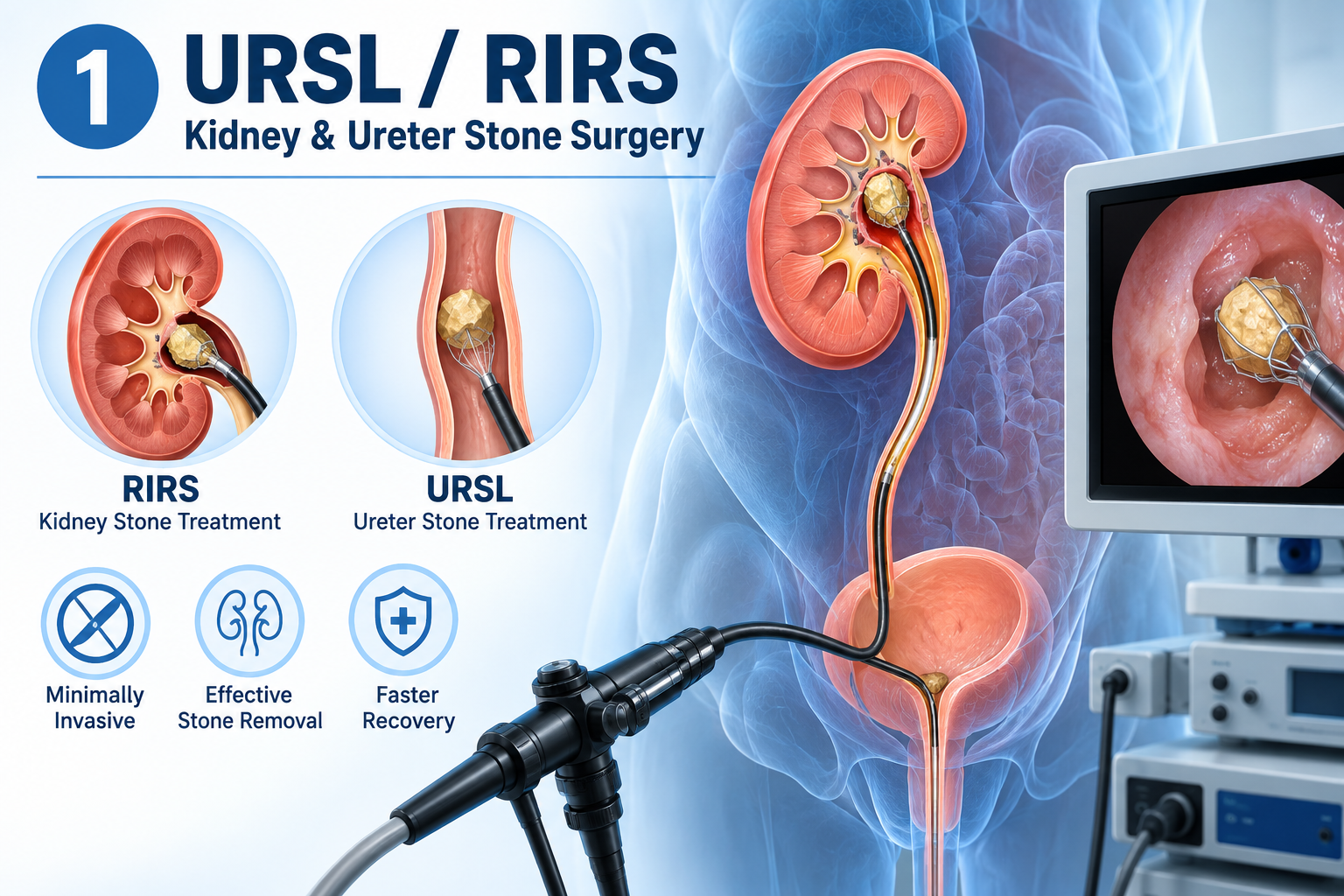
URSL (Ureteroscopic Lithotripsy) and RIRS (Retrograde Intrarenal Surgery) are minimally invasive procedures used to treat stones in the ureter and kidney. A thin endoscope is passed through the urinary passage without making a large external incision. The stone is identified, broken into smaller fragments using laser energy, and removed or allowed to pass naturally.

Need help understanding this treatment?

Discuss your questions with
our Mumbai advisory team.

Treatment Information

Understanding URSL / RIRS – Kidney & Ureter Stone Surgery

URSL is commonly used for stones located in the ureter, while RIRS is generally used for stones inside the kidney.

During the procedure:

  1. A ureteroscope is passed through the urethra and bladder.
  2. The stone is located.
  3. Laser energy may be used to break the stone.
  4. Fragments may be removed using specialised instruments.
  5. A temporary ureteric stent may be placed.

These procedures may be considered for stones causing pain, obstruction, infection, or failure to pass naturally.

BEFORE SURGERY

Pre-Care

Patients may be advised to:

  1. Complete urine and blood tests.
  2. Undergo CT, ultrasound, or X-ray imaging.
  3. Inform the doctor about blood-thinning medicines.
  4. Treat any urinary infection before surgery.
  5. Follow fasting instructions.
  6. Inform the doctor about allergies and medical conditions.


AFTER SURGERY

Post-Care

Patients should:

  1. Drink adequate fluids if permitted.
  2. Take prescribed medicines.
  3. Expect mild burning or blood in urine temporarily.
  4. Follow stent-removal instructions.
  5. Avoid strenuous activity initially.
  6. Attend follow-up imaging if recommended.

Seek medical attention for high fever, inability to urinate, severe pain, persistent vomiting, or heavy bleeding.

Common Questions

Questions patients
often want clarified.

These answers provide general guidance. Your treating specialist should assess your individual condition and medical requirements.

Is URSL/RIRS performed through an incision?
Usually no external incision is required.
Is the procedure painful?
Anaesthesia is used during the procedure. Mild burning, discomfort, or urinary urgency can occur afterward.
Will I need a stent?
A temporary ureteric stent is commonly placed in selected patients.
How soon can I return home?
Many patients can return home the same day or after short observation.
Can stones recur?
Yes. Hydration, dietary changes, and metabolic evaluation may help reduce recurrence.
What are the risks?
Possible risks include infection, bleeding, ureteric injury, residual stones, and temporary urinary discomfort.
Doctor discussing surgical treatment with patient
Independent Surgical Guidance

A clearer conversation
can change what comes next.

Understand the questions worth asking before your next consultation.