
Independent guidance for confident surgical decisions
Surgical Advisor
Home About Us
Blog Contact Us Get Surgical Guidance
Surgical Advisor Treatment

Pyeloplasty

Uro Surgery

Looking for a Pyeloplasty Specialist in Mumbai?

A medical advisory service can help you connect with experienced reconstructive and robotic urology specialists in Mumbai.

Pyeloplasty

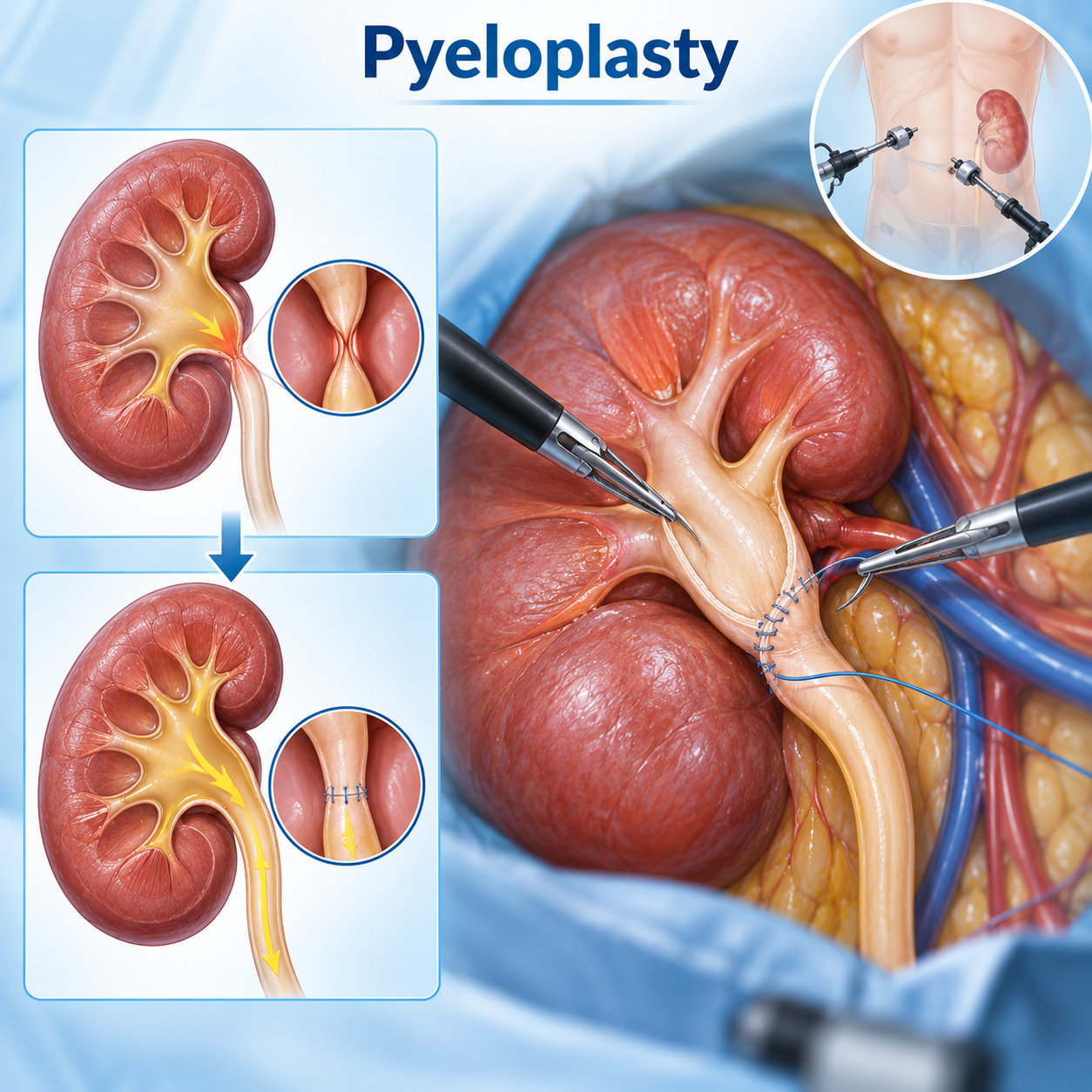
Pyeloplasty is a surgical procedure used to correct narrowing or blockage where the kidney joins the ureter, known as ureteropelvic junction (UPJ) obstruction. Surgery improves urine drainage from the kidney and helps protect kidney function.

Need help understanding this treatment?

Discuss your questions with
our Mumbai advisory team.

Treatment Information

Understanding Pyeloplasty

UPJ obstruction can be congenital or develop later.

Symptoms may include:

  1. Flank pain
  2. Recurrent urinary infections
  3. Kidney swelling or hydronephrosis
  4. Blood in urine
  5. Kidney stones
  6. Reduced kidney function

During pyeloplasty, the narrowed segment is removed and the healthy ureter is reconnected to the kidney.

The procedure may be performed through:

  1. Open surgery
  2. Laparoscopy
  3. Robotic-assisted surgery

A temporary ureteric stent is commonly placed.

BEFORE SURGERY

Pre-Care

Patients may undergo:

  1. Ultrasound
  2. CT or renal scan
  3. Kidney function testing
  4. Urine tests
  5. Blood tests
  6. Medication review


AFTER SURGERY

Post-Care

Patients should:

  1. Take prescribed medicines.
  2. Maintain hydration.
  3. Avoid heavy lifting.
  4. Follow stent-removal instructions.
  5. Attend follow-up imaging to confirm drainage.

Seek care for fever, severe flank pain, inability to urinate, or persistent vomiting.

Common Questions

Questions patients
often want clarified.

These answers provide general guidance. Your treating specialist should assess your individual condition and medical requirements.

What is UPJ obstruction?
It is narrowing where the kidney connects to the ureter.
Does every case require surgery?
No. Mild cases may be monitored depending on kidney function and symptoms.
Is a stent required?
A temporary stent is often used.
How long does recovery take?
Many patients recover over several weeks.
What are the risks?
Possible risks include bleeding, infection, urine leakage, recurrent narrowing, and stent discomfort.
Doctor discussing surgical treatment with patient
Independent Surgical Guidance

A clearer conversation
can change what comes next.

Understand the questions worth asking before your next consultation.