
Independent guidance for confident surgical decisions
Surgical Advisor
Home About Us
Blog Contact Us Get Surgical Guidance
Surgical Advisor Treatment

Orchiectomy / Orchidectomy

Uro Surgery

Looking for an Orchiectomy Specialist in Mumbai?

A medical advisory service can help connect patients with experienced urologists and uro-oncology specialists in Mumbai.

Orchiectomy / Orchidectomy

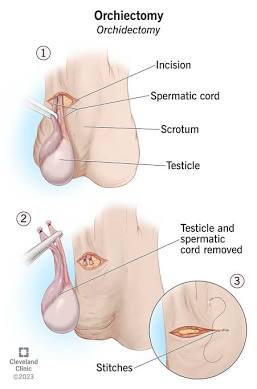
Orchiectomy, also called orchidectomy, is surgery to remove one or both testicles. It may be performed for testicular cancer, severe testicular injury, infection, torsion with irreversible damage, or as part of treatment for certain hormone-sensitive cancers.

Need help understanding this treatment?

Discuss your questions with
our Mumbai advisory team.

Treatment Information

Understanding Orchiectomy / Orchidectomy

Types may include:

  1. Simple orchiectomy
  2. Radical inguinal orchiectomy
  3. Bilateral orchiectomy in selected conditions

For suspected testicular cancer, radical inguinal orchiectomy is generally performed through an incision in the groin.

BEFORE SURGERY

Pre-Care

Patients may require:

  1. Ultrasound
  2. Tumor marker blood tests
  3. CT imaging
  4. Fertility discussion
  5. Sperm banking when appropriate


AFTER SURGERY

Post-Care

Patients should:

  1. Keep the incision clean.
  2. Avoid heavy lifting.
  3. Use scrotal support if advised.
  4. Attend pathology and oncology follow-up.
  5. Monitor hormone levels when appropriate.


Common Questions

Questions patients
often want clarified.

These answers provide general guidance. Your treating specialist should assess your individual condition and medical requirements.

Can a man live normally with one testicle?
Yes. One healthy testicle can usually produce sufficient testosterone and sperm.
Will fertility be affected?
Removal of one testicle may not significantly affect fertility, but both testicles being removed causes infertility.
Can a testicular prosthesis be placed?
Yes, in selected patients.
Why is cancer surgery performed through the groin?
This approach is used to avoid disrupting normal lymphatic drainage patterns.
What are the risks?
Possible risks include bleeding, infection, pain, hormonal changes, and emotional or body-image concerns.
Doctor discussing surgical treatment with patient
Independent Surgical Guidance

A clearer conversation
can change what comes next.

Understand the questions worth asking before your next consultation.