
Independent guidance for confident surgical decisions
Surgical Advisor
Home About Us
Blog Contact Us Get Surgical Guidance
Surgical Advisor Treatment

Hydrocelectomy

Uro Surgery

Looking for a Hydrocelectomy Specialist in Mumbai?

A medical advisory service can help connect patients with experienced urologists and andrology specialists in Mumbai.

Hydrocelectomy

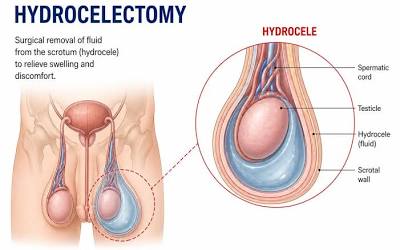
Hydrocelectomy is surgery performed to treat a hydrocele, a collection of fluid around the testicle that causes scrotal swelling. Surgery is generally considered when the hydrocele becomes large, uncomfortable, persistent, or interferes with daily activities.

Need help understanding this treatment?

Discuss your questions with
our Mumbai advisory team.

Treatment Information

Understanding Hydrocelectomy

During surgery, the fluid-filled sac surrounding the testicle is opened, drained, and repaired or removed to reduce recurrence.

The procedure is usually performed under anaesthesia and is often completed as day-care surgery.

BEFORE SURGERY

Pre-Care

Patients may require physical examination, scrotal ultrasound, blood tests, and medication review.

AFTER SURGERY

Post-Care

Patients should:

  1. Wear scrotal support if advised.
  2. Apply cold packs as directed.
  3. Avoid heavy lifting.
  4. Keep the incision clean.
  5. Take prescribed medicines.

Seek medical attention for fever, rapidly increasing swelling, severe pain, or wound discharge.

Common Questions

Questions patients
often want clarified.

These answers provide general guidance. Your treating specialist should assess your individual condition and medical requirements.

Is a hydrocele dangerous?
Most adult hydroceles are benign, but scrotal swelling should be evaluated to confirm the diagnosis.
Does every hydrocele need surgery?
No. Small, painless hydroceles may be observed.
How long does recovery take?
Many patients return to light activities within several days to a couple of weeks.
Will swelling occur after surgery?
Some temporary swelling and bruising are common.
What are the risks?
Possible risks include infection, bleeding, recurrence, swelling, and injury to nearby structures.
Doctor discussing surgical treatment with patient
Independent Surgical Guidance

A clearer conversation
can change what comes next.

Understand the questions worth asking before your next consultation.