
Independent guidance for confident surgical decisions
Surgical Advisor
Home About Us
Blog Contact Us Get Surgical Guidance
Surgical Advisor Treatment

Tummy Tuck Surgery

Plastic Surgery & Hair Transplant

Looking for Tummy Tuck Surgery in Mumbai?

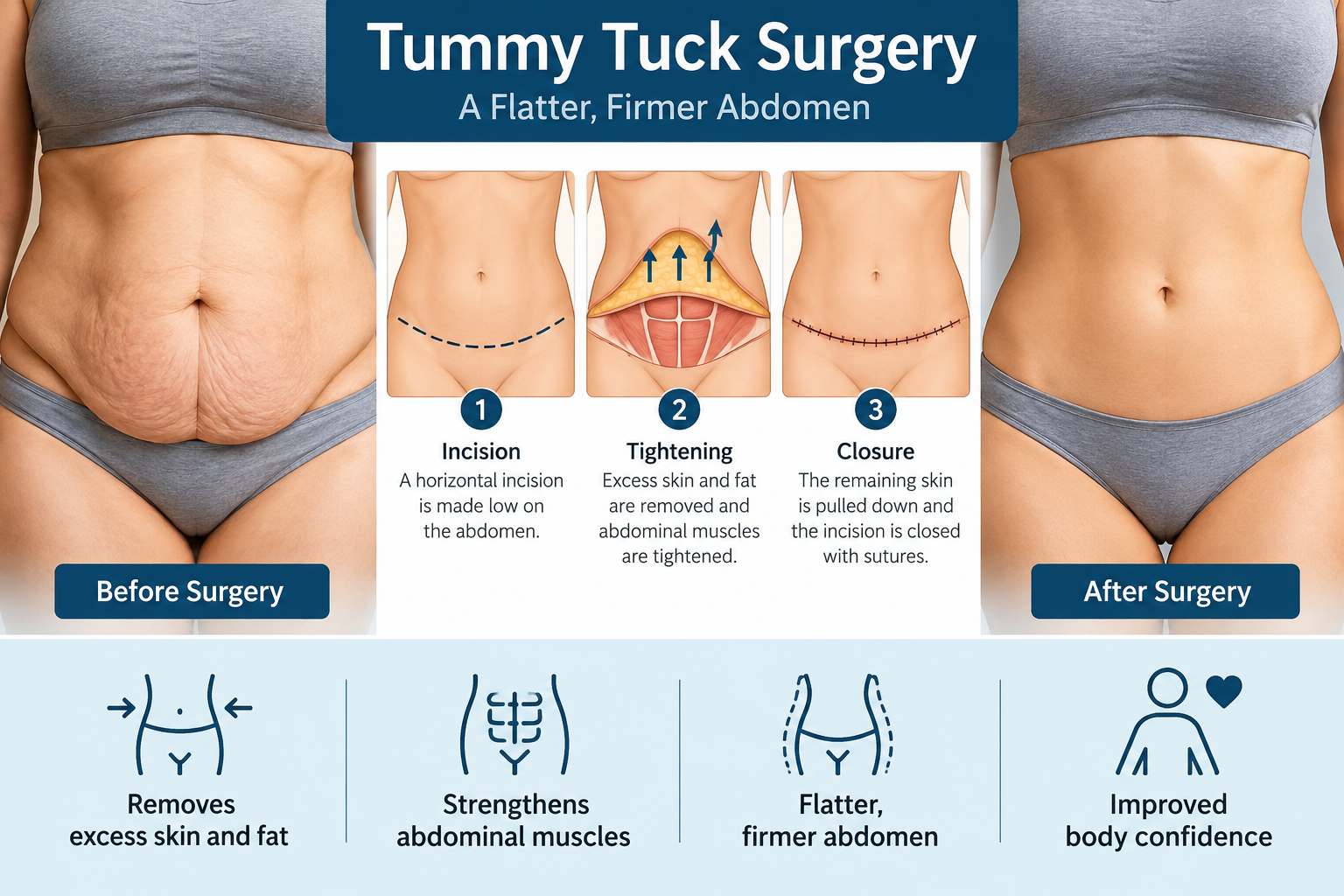
Tummy tuck surgery removes excess abdominal skin and fat and tightens separated abdominal muscles to create a firmer, flatter abdominal contour, particularly after pregnancy or significant weight loss.

Tummy Tuck Surgery

Tummy tuck surgery, also known as abdominoplasty, is a cosmetic surgical procedure designed to remove excess skin and fat from the abdomen and, when needed, tighten weakened or separated abdominal muscles. It is commonly considered after significant weight loss, pregnancy, or age-related changes that leave loose skin or reduced abdominal firmness.

Need help understanding this treatment?

Discuss your questions with
our Mumbai advisory team.

Treatment Information

Understanding Tummy Tuck Surgery

A tummy tuck is performed to improve the shape and contour of the abdomen when excess skin, fat, or weakened abdominal muscles cannot be corrected adequately through diet and exercise alone.

The procedure may be considered for concerns such as:

  1. Loose or hanging abdominal skin
  2. Excess skin after significant weight loss
  3. Abdominal changes following pregnancy
  4. Weakened or separated abdominal muscles
  5. Persistent fat deposits in the lower abdomen
  6. Reduced abdominal firmness
  7. Stretch marks located on skin that is being removed

During surgery, the plastic surgeon makes an incision in the lower abdomen, usually positioned so that it can be concealed beneath underwear or swimwear where possible.

Excess skin and fat are removed, and weakened or separated abdominal muscles may be tightened. The remaining skin is then repositioned to create a smoother and firmer abdominal contour.

Depending on the patient's needs, different types of tummy tuck procedures may be performed.

Full Tummy Tuck

A full abdominoplasty treats the upper and lower abdomen. It may involve removal of excess skin, tightening of the abdominal muscles, and repositioning of the belly button.

Mini Tummy Tuck

A mini tummy tuck focuses mainly on the lower abdomen below the belly button and is generally suitable for patients with a smaller amount of excess skin.

Extended Tummy Tuck

An extended tummy tuck may be considered when excess skin extends around the sides of the waist or flanks, often after significant weight loss.

Liposuction may sometimes be performed along with a tummy tuck to improve contour in selected areas.

Tummy tuck surgery is usually performed under general anaesthesia. Recovery depends on the extent of the procedure and the patient's overall health.

It is important to understand that a tummy tuck is not a weight-loss surgery and does not replace healthy eating, exercise, or long-term weight management.

BEFORE SURGERY

Pre-Care

Before surgery, the plastic surgeon will assess the abdomen, skin quality, muscle condition, medical history, and treatment goals.

Patients may be advised to:

  1. Inform the surgeon about all medical conditions and previous surgeries.
  2. Provide a complete list of medicines, vitamins, and supplements.
  3. Discuss blood-thinning medicines with the doctor.
  4. Do not stop prescribed medicines unless specifically instructed.
  5. Stop smoking and nicotine use before surgery if advised, as they can interfere with healing.
  6. Maintain a stable body weight before the procedure.
  7. Follow fasting instructions before general anaesthesia.
  8. Avoid alcohol for the period recommended by the surgeon.
  9. Arrange for someone to drive you home after surgery.
  10. Arrange help at home during the early recovery period.
  11. Prepare loose, comfortable clothing.
  12. Follow any instructions regarding bathing, skin preparation, or medications before surgery.

Patients planning future pregnancy should discuss this with their surgeon because pregnancy can stretch the abdominal tissues again.

AFTER SURGERY

Post-Care

Proper post-operative care is important for safe healing and recovery.

Patients should:

  1. Wear the prescribed compression garment as instructed.
  2. Take all prescribed pain medicines, antibiotics, and other medications as directed.
  3. Begin gentle walking as advised to support circulation and reduce the risk of blood clots.
  4. Avoid heavy lifting, strenuous exercise, and abdominal strain until cleared by the surgeon.
  5. Keep the incision and dressings clean and dry according to instructions.
  6. Follow specific instructions for drain care if surgical drains are used.
  7. Avoid smoking and nicotine during recovery.
  8. Maintain adequate hydration and a balanced diet.
  9. Sleep or rest in the position recommended by the surgeon to reduce tension on the incision.
  10. Avoid direct sun exposure on the scar.
  11. Attend all scheduled follow-up appointments.
  12. Resume driving only after stopping strong pain medicines and when movement is comfortable and safe.

Swelling, bruising, numbness, tightness, and temporary difficulty standing completely upright can occur during the early recovery period.

Contact the surgeon promptly if you experience severe or increasing pain, excessive bleeding, rapidly increasing swelling, fever, foul-smelling discharge, wound separation, shortness of breath, chest pain, or significant swelling or pain in one leg.

Recovery and final results vary depending on the type of tummy tuck, the patient's overall health, the extent of surgery, and individual healing response. Patients should follow the personalised instructions provided by their plastic surgeon.


Common Questions

Questions patients
often want clarified.

These answers provide general guidance. Your treating specialist should assess your individual condition and medical requirements.

What is the difference between a tummy tuck and liposuction?
Liposuction primarily removes localised fat, while a tummy tuck removes excess skin and may also tighten weakened abdominal muscles. In some cases, both procedures are combined.
Who is a suitable candidate for tummy tuck surgery?
Suitable candidates are generally healthy adults with stable body weight who have loose abdominal skin, weakened muscles, or contour concerns that do not improve sufficiently with diet and exercise.
Can a tummy tuck help after pregnancy?
Yes. Pregnancy can stretch the abdominal skin and muscles. A tummy tuck may help improve loose skin and muscle separation after pregnancy, although future pregnancies may affect the surgical result.
Is tummy tuck surgery painful?
The procedure is performed under anaesthesia. During recovery, patients may experience tightness, soreness, swelling, and discomfort, which can usually be managed with prescribed medication.
How long does tummy tuck surgery take?
The procedure may take approximately two to several hours depending on the type of tummy tuck and whether additional procedures are performed.
How long is the recovery period?
Many patients require around two to four weeks before returning to routine activities, while strenuous exercise and heavy lifting may need to be avoided for several weeks. Recovery varies between patients.
Will there be a scar after tummy tuck surgery?
Yes. A tummy tuck leaves a permanent scar across the lower abdomen. Surgeons generally try to position the incision where it can be concealed beneath clothing. The scar usually fades gradually with time.
Are tummy tuck results permanent?
Results can be long-lasting if the patient maintains a stable weight. Significant weight gain, weight loss, or future pregnancy can alter the result.
What are the possible risks of tummy tuck surgery?
Possible risks include bleeding, infection, fluid collection, poor wound healing, numbness, scarring, asymmetry, skin loss, blood clots, changes in sensation, and anaesthesia-related complications.
Doctor discussing surgical treatment with patient
Independent Surgical Guidance

A clearer conversation
can change what comes next.

Understand the questions worth asking before your next consultation.