
Independent guidance for confident surgical decisions
Surgical Advisor
Home About Us
Blog Contact Us Get Surgical Guidance
Surgical Advisor Treatment

Rhinoplasty Surgery

Plastic Surgery & Hair Transplant

Looking for Rhinoplasty Surgery in Mumbai?

Rhinoplasty reshapes and reconstructs the nose to improve its appearance, proportions, or breathing function, depending on the patient’s needs.

Rhinoplasty Surgery

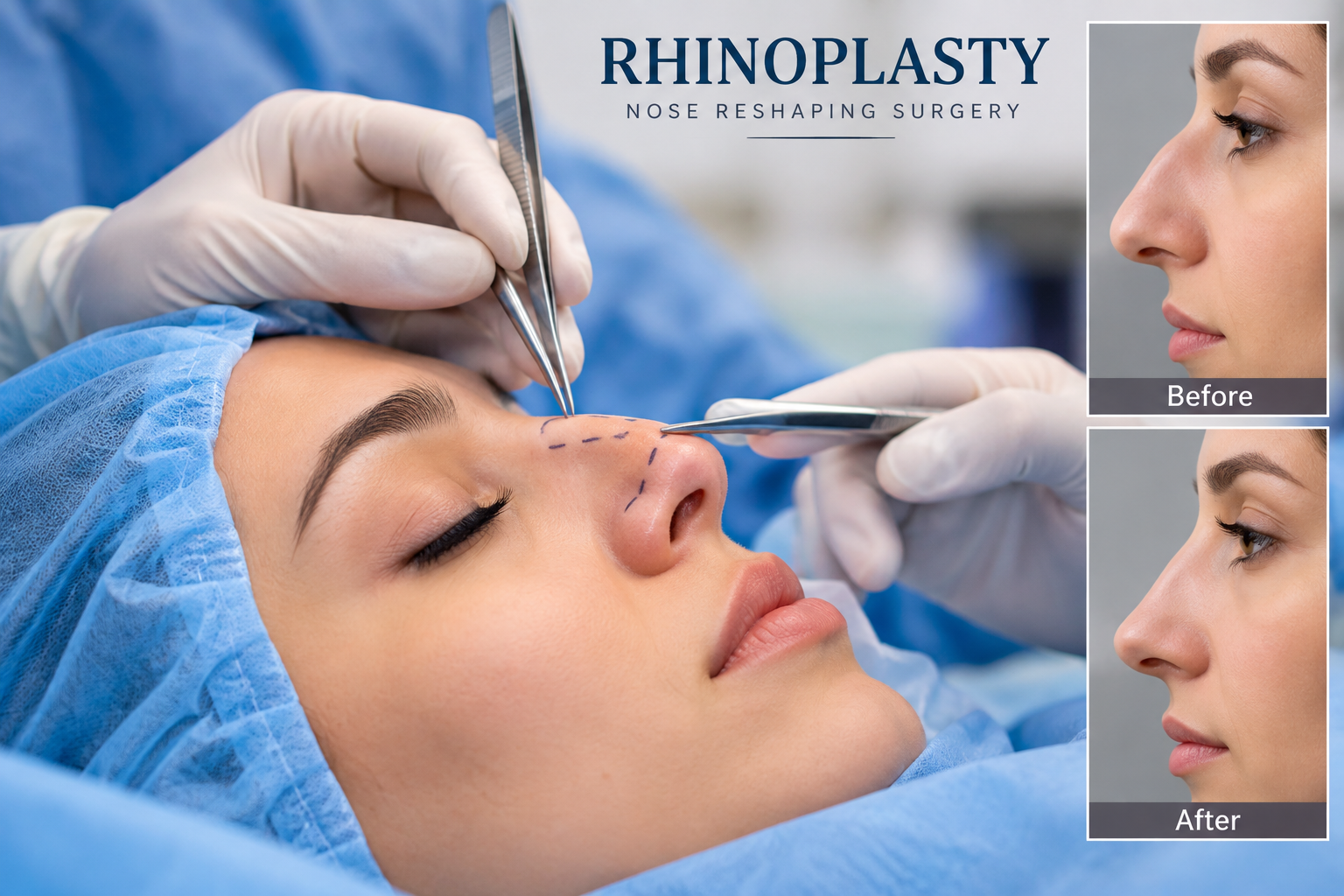
Rhinoplasty, commonly known as nose reshaping surgery, is a surgical procedure performed to change the shape, size, proportion, or structure of the nose. It may be done for cosmetic reasons, to improve breathing, or to correct deformities caused by injury or birth-related conditions. The procedure is carefully planned according to the patient’s facial features, nasal structure, and individual goals.

Need help understanding this treatment?

Discuss your questions with
our Mumbai advisory team.

Treatment Information

Understanding Rhinoplasty Surgery

Rhinoplasty is one of the most commonly performed facial plastic surgery procedures. It can improve the appearance of the nose while also addressing certain structural problems that may affect breathing.

The nose plays an important role in facial balance and proportion. Even small changes in nasal shape can significantly influence overall facial appearance.

Rhinoplasty may be considered for concerns such as:

  1. A prominent or uneven nasal hump
  2. A wide or narrow nasal bridge
  3. A large, drooping, or upturned nasal tip
  4. An asymmetrical or crooked nose
  5. Wide or uneven nostrils
  6. Nasal deformity after an injury
  7. Structural problems affecting breathing
  8. Congenital nasal abnormalities
  9. Previous nasal surgery requiring correction

Cosmetic Rhinoplasty

Cosmetic rhinoplasty focuses primarily on changing the shape or proportion of the nose to achieve a more balanced facial appearance.

Functional Rhinoplasty

Functional rhinoplasty is performed to improve breathing problems caused by structural abnormalities inside or around the nose.

Septorhinoplasty

Septorhinoplasty combines rhinoplasty with correction of the nasal septum. It may be recommended when a deviated septum affects breathing and changes in external nasal shape are also required.

Revision Rhinoplasty

Revision rhinoplasty may be performed when a patient requires further correction after a previous nose surgery. These procedures can be more complex because of existing scar tissue or changes in nasal structure.

Rhinoplasty may be performed using an open or closed surgical approach.

In open rhinoplasty, a small incision is made across the tissue between the nostrils, allowing greater access to the nasal structures.

In closed rhinoplasty, incisions are made inside the nostrils, leaving no external incision across the columella.

The surgeon may reshape nasal bone, cartilage, and soft tissues depending on the desired correction.

Rhinoplasty is usually performed under general anaesthesia or, in selected cases, local anaesthesia with sedation.

Swelling and bruising around the nose and eyes are common during the initial recovery period. Although noticeable improvement occurs within a few weeks, the final nasal shape can take several months to fully settle.

BEFORE SURGERY

Pre-Care

Before surgery, the plastic surgeon will assess the patient’s nasal structure, facial proportions, breathing, medical history, and treatment goals.

Patients may be advised to:

  1. Inform the surgeon about all medical conditions and previous nasal injuries or surgeries.
  2. Provide a complete list of medicines, vitamins, and supplements.
  3. Discuss aspirin, anticoagulants, and other blood-thinning medicines with the doctor.
  4. Do not stop prescribed medications unless specifically instructed.
  5. Stop smoking and nicotine use before surgery if advised.
  6. Avoid alcohol for the period recommended by the surgeon.
  7. Complete any required blood tests or imaging.
  8. Follow fasting instructions before anaesthesia.
  9. Avoid makeup, creams, or skincare products on the face on the day of surgery.


AFTER SURGERY

Post-Care

Proper aftercare can help reduce swelling and support healing.

Patients should:

  1. Keep the head elevated while resting and sleeping during the early recovery period.
  2. Use prescribed pain medicines, antibiotics, or nasal medications as directed.
  3. Avoid blowing the nose until cleared by the surgeon.
  4. Sneeze with the mouth open if necessary to reduce pressure inside the nose.
  5. Do not touch, press, or manipulate the nose.
  6. Keep the nasal splint or dressing dry and in place as instructed.
  7. Avoid wearing glasses directly on the nose if advised.
  8. Avoid strenuous exercise, heavy lifting, and bending for the recommended period.
  9. Avoid contact sports and activities that could injure the nose.
  10. Avoid smoking and nicotine during recovery.
  11. Protect the nose from direct sunlight and use sun protection once approved.
  12. Attend all scheduled follow-up appointments.
  13. Do not remove splints, tapes, or stitches unless instructed.

Temporary swelling, bruising, nasal congestion, numbness, and mild drainage may occur after surgery.

Contact the surgeon promptly if you experience heavy or persistent bleeding, high fever, severe or increasing pain, difficulty breathing, foul-smelling discharge, sudden changes in vision, rapidly worsening swelling, or any other concerning symptoms.

Recovery and final results vary depending on the type of rhinoplasty, the patient’s nasal structure, and individual healing response. Patients should always follow the personalised instructions provided by their plastic surgeon.

Common Questions

Questions patients
often want clarified.

These answers provide general guidance. Your treating specialist should assess your individual condition and medical requirements.

Who is a suitable candidate for rhinoplasty?
Suitable candidates are generally healthy individuals who have concerns about the shape or function of their nose and have realistic expectations regarding the outcome.
Can rhinoplasty improve breathing?
Yes. If breathing problems are caused by structural abnormalities such as a deviated septum or nasal obstruction, functional rhinoplasty or septorhinoplasty may help improve airflow.
Is rhinoplasty painful?
The procedure is performed under anaesthesia. After surgery, patients may experience pressure, congestion, swelling, or mild to moderate discomfort rather than severe pain.
How long does rhinoplasty surgery take?
The procedure may take approximately one to several hours depending on the complexity of the surgery and whether functional corrections are also required.
How long does recovery take?
Many patients can return to light daily activities within one to two weeks. Swelling continues to decrease gradually, and complete healing may take several months.
When will I see the final result?
Initial changes are visible after swelling decreases, but the nose continues to refine gradually. Final results may take six to twelve months or longer, particularly at the nasal tip.
Will there be visible scars?
Closed rhinoplasty uses incisions inside the nose. Open rhinoplasty involves a small external incision between the nostrils, which usually becomes less noticeable as it heals.
Can rhinoplasty change the entire appearance of the face?
Rhinoplasty can influence facial balance because the nose is centrally located. The goal is usually to create better proportion while maintaining a natural appearance.
What are the possible risks of rhinoplasty?
Possible risks include bleeding, infection, nasal obstruction, asymmetry, numbness, scarring, changes in smell, septal problems, prolonged swelling, and the possibility of requiring revision surgery.
Doctor discussing surgical treatment with patient
Independent Surgical Guidance

A clearer conversation
can change what comes next.

Understand the questions worth asking before your next consultation.