
Independent guidance for confident surgical decisions
Surgical Advisor
Home About Us
Blog Contact Us Get Surgical Guidance
Surgical Advisor Treatment

Liposuction Surgery

Plastic Surgery & Hair Transplant

Looking for Liposuction Surgery in Mumbai?

Remove stubborn, localized fat deposits and improve your body contours with liposuction, a surgical procedure designed for targeted body sculpting rather than overall weight loss.

Liposuction Surgery

Liposuction is a cosmetic surgical procedure used to remove stubborn deposits of fat from specific areas of the body. It is commonly performed on areas such as the abdomen, thighs, hips, arms, back, chin, and waist. Liposuction is intended for body contouring rather than weight-loss treatment and is generally most suitable for people who are close to a healthy and stable body weight.

Need help understanding this treatment?

Discuss your questions with
our Mumbai advisory team.

Treatment Information

Understanding Liposuction Surgery

Liposuction, also known as lipoplasty or body contouring surgery, removes excess fat cells from selected areas of the body to improve shape and proportion.

The procedure may be considered when certain fat deposits do not respond adequately to diet and exercise.

Common treatment areas include:

  1. Abdomen
  2. Waist and flanks
  3. Hips
  4. Thighs
  5. Upper arms
  6. Back
  7. Chest area in selected patients
  8. Chin and neck
  9. Knees
  10. Calves or ankles in selected cases

Liposuction is not a treatment for obesity and does not replace a healthy diet, exercise, or long-term weight management.

How Liposuction Is Performed

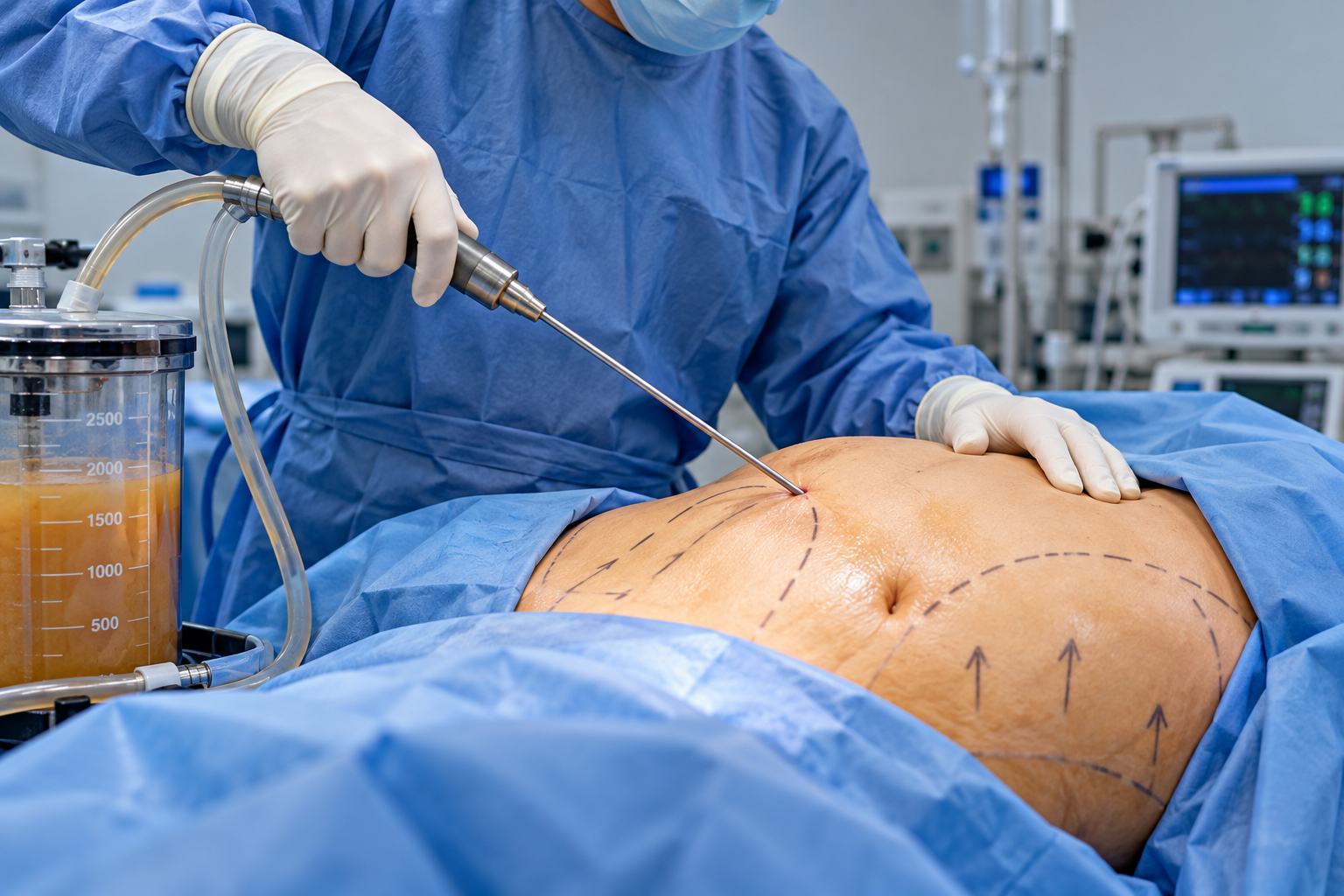
During the procedure, the surgeon makes small incisions near the treatment area. A thin hollow tube called a cannula is inserted beneath the skin and used to loosen and remove unwanted fat.

The fat is then removed using controlled suction.

Different liposuction techniques may be used depending on the treatment area, the amount of fat being removed, and the surgeon's recommendation. These may include:

  1. Traditional suction-assisted liposuction
  2. Power-assisted liposuction
  3. Ultrasound-assisted techniques
  4. Laser-assisted techniques in selected cases

Liposuction may be performed under local anaesthesia, sedation, or general anaesthesia depending on the size and number of areas being treated.

After surgery, swelling and bruising are common. A compression garment is often recommended to help control swelling and support the treated areas while they heal.

The initial improvement in body contour may be noticeable after swelling begins to reduce, but final results can take several weeks or months to become fully visible.

BEFORE SURGERY

Pre-Care

Before liposuction, the surgeon will assess the patient's health, body contour, skin quality, and treatment goals.

Patients may be advised to:

  1. Inform the surgeon about all medical conditions, previous surgeries, and allergies.
  2. Provide a complete list of medicines, vitamins, and supplements being taken.
  3. Discuss blood-thinning medicines such as aspirin or anticoagulants with the doctor.
  4. Do not stop prescribed medications unless specifically advised.
  5. Stop smoking or nicotine use before surgery if recommended, as it may interfere with healing.
  6. Maintain a stable weight before the procedure.
  7. Follow fasting instructions if general anaesthesia or sedation is planned.
  8. Avoid alcohol for the period advised by the surgeon.
  9. Arrange for someone to drive you home and assist you during the early recovery period.
  10. Prepare loose, comfortable clothing for after surgery.
  11. Follow any instructions regarding bathing, skin preparation, or medications before the procedure.


AFTER SURGERY

Post-Care

Proper post-operative care can help support healing and improve recovery.

Patients should:

  1. Wear the prescribed compression garment as instructed.
  2. Take prescribed pain medicines, antibiotics, or other medications exactly as directed.
  3. Keep the surgical areas and incision sites clean and dry according to the surgeon's instructions.
  4. Avoid strenuous exercise, heavy lifting, and vigorous physical activity until cleared by the surgeon.
  5. Begin gentle walking as advised to support circulation and reduce the risk of blood clots.
  6. Drink adequate fluids unless otherwise instructed.
  7. Maintain a healthy and balanced diet.
  8. Avoid smoking and nicotine during recovery.
  9. Attend all scheduled follow-up appointments.
  10. Avoid direct sun exposure on healing scars where possible.
  11. Do not massage the treated area unless specifically recommended by the surgeon.

Swelling, bruising, temporary numbness, tenderness, and mild fluid drainage from the incision sites may occur during the early recovery period.

Final body contour may not be visible immediately because swelling can take several weeks or months to resolve.

Contact the surgeon promptly if you experience severe or worsening pain, excessive bleeding, increasing redness, fever, foul-smelling discharge, significant swelling in one leg, chest pain, shortness of breath, or other sudden concerning symptoms.

Results and recovery vary depending on the amount of fat removed, the treatment area, skin elasticity, overall health, and individual healing response. Patients should follow the personalised instructions provided by their plastic surgeon.

Common Questions

Questions patients
often want clarified.

These answers provide general guidance. Your treating specialist should assess your individual condition and medical requirements.

Is liposuction a weight-loss surgery?
No. Liposuction is primarily a body contouring procedure. It removes localised deposits of fat but is not intended to treat obesity or replace healthy weight-management methods.
Who is a suitable candidate for liposuction?
Suitable candidates are generally adults who are close to a stable body weight, have localised fat deposits, have reasonable skin elasticity, and are in good overall health. A consultation with a qualified surgeon is necessary to assess suitability.
Which areas of the body can be treated with liposuction?
Liposuction can be performed on areas such as the abdomen, thighs, hips, waist, back, arms, chin, neck, and other selected areas depending on the patient's anatomy.
Is liposuction painful?
Anaesthesia is used during the procedure, so significant pain is usually avoided during surgery. Afterward, patients may experience soreness, swelling, bruising, or a tight sensation for several days.
How long does liposuction surgery take?
The duration depends on the number of areas treated and the amount of fat removed. Smaller procedures may take around one hour, while more extensive procedures may take several hours.
How long does recovery take?
Many patients can return to light activities within a few days, although swelling and bruising may persist for several weeks. Strenuous activity should be resumed only after approval from the surgeon.
Are liposuction results permanent?
The fat cells removed during liposuction do not grow back. However, remaining fat cells can enlarge if the patient gains weight. Maintaining a stable weight and healthy lifestyle helps preserve the results.
Will liposuction tighten loose skin?
Liposuction primarily removes fat and does not necessarily correct significant loose or sagging skin. Patients with poor skin elasticity may require an additional skin-tightening or body-contouring procedure.
What are the possible risks of liposuction?
Possible risks can include bleeding, infection, fluid accumulation, contour irregularities, numbness, changes in skin sensation, asymmetry, blood clots, or complications related to anaesthesia. Rare but serious complications can also occur, particularly with extensive procedures.
Doctor discussing surgical treatment with patient
Independent Surgical Guidance

A clearer conversation
can change what comes next.

Understand the questions worth asking before your next consultation.