
Independent guidance for confident surgical decisions
Surgical Advisor
Home About Us
Blog Contact Us Get Surgical Guidance
Surgical Advisor Treatment

Facelift Surgery

Plastic Surgery & Hair Transplant

Looking for Facelift Surgery in Mumbai?

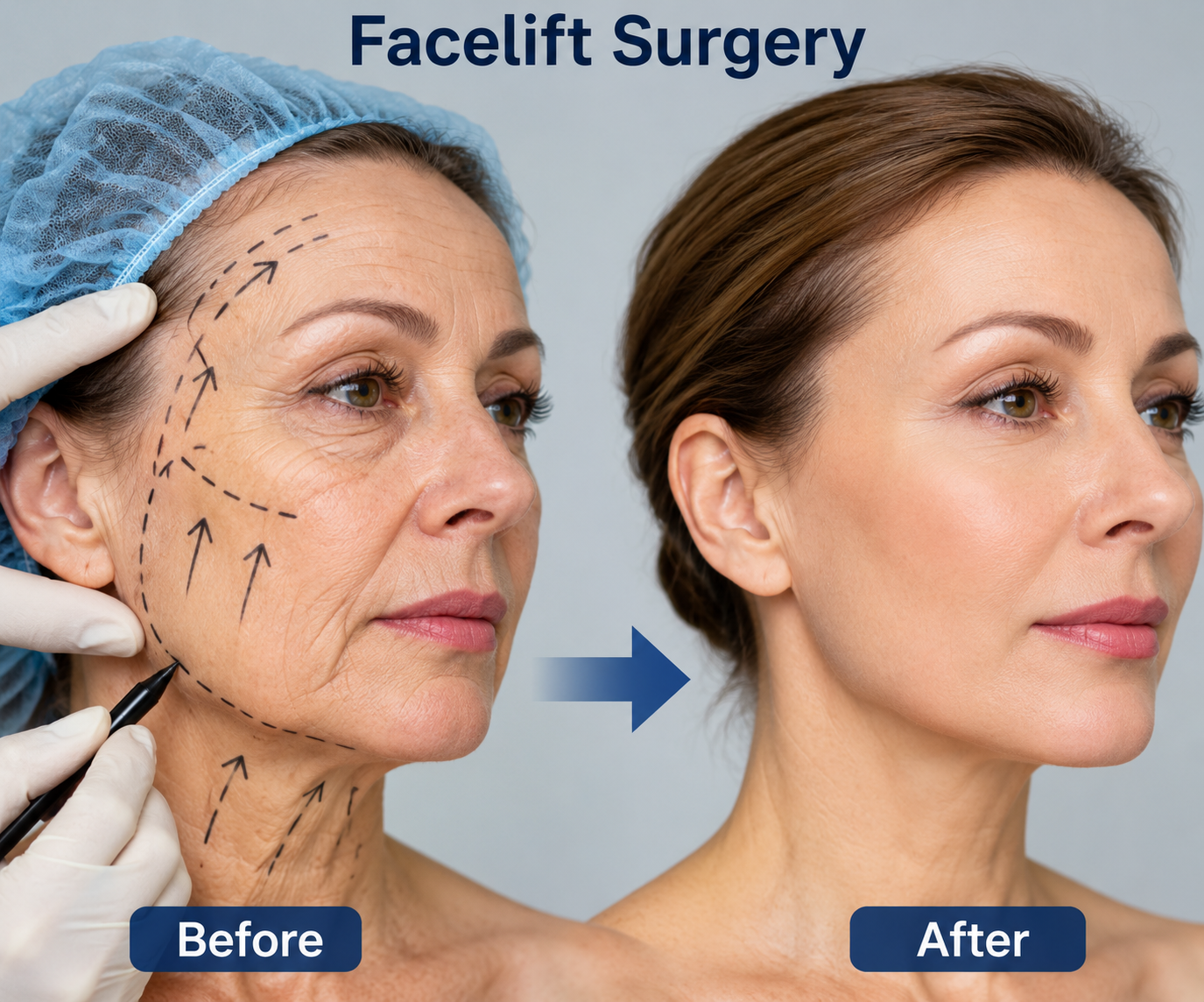
Facelift surgery helps reduce visible signs of facial aging by lifting and tightening loose facial skin and underlying tissues for a more youthful facial contour.

Facelift Surgery

Facelift surgery, also known as rhytidectomy, is a cosmetic surgical procedure designed to improve visible signs of ageing in the face and neck. It may help reduce sagging skin, soften deep folds, improve jawline definition, and address loose skin around the lower face and neck. The procedure is customised according to the patient's facial structure, skin condition, and aesthetic goals.

Need help understanding this treatment?

Discuss your questions with
our Mumbai advisory team.

Treatment Information

Understanding Facelift Surgery

A facelift is performed to improve age-related changes that affect the lower and middle areas of the face. As people age, the skin gradually loses elasticity, facial tissues may shift downward, and lines or folds can become more noticeable.

Facelift surgery may be considered for concerns such as:

  1. Sagging skin around the cheeks
  2. Deep folds around the nose and mouth
  3. Loss of definition along the jawline
  4. Jowls
  5. Loose skin around the lower face
  6. Excess or sagging skin in the neck
  7. General facial ageing that is not sufficiently improved with non-surgical treatments

During a facelift, the surgeon carefully repositions deeper facial tissues and removes or redrapes excess skin. The aim is to create a smoother and more defined facial contour while maintaining a natural appearance.

Depending on the patient's needs, facelift surgery may involve:

  1. Lower facelift
  2. Mid-face lift
  3. Neck lift
  4. Mini facelift
  5. Full facelift

The procedure may also be combined with other treatments such as eyelid surgery, brow lift, fat grafting, or skin resurfacing where appropriate.

Facelift surgery is usually performed under general anaesthesia or local anaesthesia with sedation. The duration depends on the extent of surgery and whether additional procedures are performed at the same time.

Swelling, bruising, tightness, and temporary numbness are common after surgery. Most visible swelling gradually improves over the first few weeks, while the final result continues to settle over several months.

A facelift does not stop the ageing process, but the improvement can be long-lasting. Maintaining a healthy lifestyle and protecting the skin from excessive sun exposure may help preserve the result.

BEFORE SURGERY

Pre-Care

Before surgery, the plastic surgeon will evaluate the patient's facial anatomy, skin quality, medical history, and treatment goals.

Patients may be advised to:

  1. Inform the surgeon about all medical conditions and previous surgeries.
  2. Provide a full list of medicines, vitamins, and supplements.
  3. Discuss blood-thinning medicines with the surgeon.
  4. Do not stop prescribed medicines unless specifically advised.
  5. Stop smoking and nicotine use before surgery if recommended.
  6. Avoid alcohol for the period advised before surgery.
  7. Follow instructions regarding fasting if general anaesthesia or sedation is planned.
  8. Avoid facial creams, makeup, and cosmetic products on the day of surgery.
  9. Wash the face and hair as instructed before surgery.
  10. Arrange for someone to drive you home after the procedure.
  11. Arrange assistance at home during the early recovery period.
  12. Prepare loose, front-opening clothing to avoid pulling garments over the face.


AFTER SURGERY

Post-Care

Proper aftercare is important for healing and reducing the risk of complications.

Patients should:

  1. Keep the head elevated while resting or sleeping during the early recovery period.
  2. Take prescribed pain medicines, antibiotics, and other medications as directed.
  3. Keep dressings and incision sites clean and dry according to the surgeon's instructions.
  4. Avoid rubbing, pressing, or massaging the face unless advised.
  5. Use cold compresses if recommended to help manage swelling.
  6. Avoid strenuous exercise, heavy lifting, and bending until cleared by the surgeon.
  7. Avoid smoking and nicotine during recovery.
  8. Avoid direct sun exposure and use sun protection after the surgeon confirms it is safe.
  9. Avoid hair colouring, facial treatments, and makeup near the incisions until healing is sufficient.
  10. Attend all scheduled follow-up appointments.
  11. Follow instructions regarding drain care if surgical drains have been placed.

Temporary swelling, bruising, tightness, numbness, and mild facial asymmetry can occur during the early recovery period.

Contact the surgeon promptly if you experience severe or increasing pain, excessive bleeding, rapidly increasing swelling, fever, foul-smelling discharge, difficulty breathing, chest pain, facial weakness, or sudden changes in skin colour around the surgical area.

Recovery and final results vary from patient to patient. Patients should always follow the personalised instructions provided by their plastic surgeon.

Common Questions

Questions patients
often want clarified.

These answers provide general guidance. Your treating specialist should assess your individual condition and medical requirements.

Who is a suitable candidate for facelift surgery?
Suitable candidates are generally healthy adults with facial sagging, loose skin, jowls, or age-related changes who have realistic expectations about the outcome.
At what age should someone consider a facelift?
There is no specific age for facelift surgery. The decision depends more on facial ageing, skin elasticity, overall health, and the patient's concerns than on age alone.
Is facelift surgery painful?
The procedure is performed under anaesthesia. After surgery, patients may experience tightness, swelling, bruising, or mild to moderate discomfort, which is usually managed with prescribed medication.
How long does facelift surgery take?
Facelift surgery may take several hours depending on the technique used, the extent of correction, and whether additional procedures are performed.
How long does recovery take?
Many patients can return to light daily activities within approximately one to two weeks, although visible swelling and bruising may take longer to settle. Strenuous activity is usually restricted for several weeks.
Will a facelift look natural?
The goal of modern facelift techniques is to reposition tissues and improve facial contours without creating an overly tight appearance. Results depend on the surgical technique, facial anatomy, and healing response.
Are facelift results permanent?
Facelift results are long-lasting, but they are not permanent because natural ageing continues. Skin and facial tissues will gradually change over time.
Will there be visible scars?
Incisions are usually placed around the hairline, ears, and other natural creases where they can be less noticeable. Scars generally fade over time, although they do not disappear completely.
What are the possible risks of facelift surgery?
Possible risks may include bleeding, infection, scarring, facial nerve injury, numbness, asymmetry, skin healing problems, hairline changes, fluid collection, blood clots, and anaesthesia-related complications.
Doctor discussing surgical treatment with patient
Independent Surgical Guidance

A clearer conversation
can change what comes next.

Understand the questions worth asking before your next consultation.