
Independent guidance for confident surgical decisions
Surgical Advisor
Home About Us
Blog Contact Us Get Surgical Guidance
Surgical Advisor Treatment

Breast Reduction

Plastic Surgery & Hair Transplant

Looking for a Breast Reduction Specialist in Mumbai?

If you are considering breast reduction surgery, choosing an experienced plastic surgeon is an important part of treatment planning. A medical advisory service can help you connect with suitable plastic surgeons in Mumbai based on your symptoms, preferred location, consultation requirements, and individual treatment goals. A consultation with a qualified plastic surgeon is necessary to assess whether breast reduction is appropriate and to discuss the expected benefits, possible risks, surgical approach, recovery, and likely results.

Breast Reduction

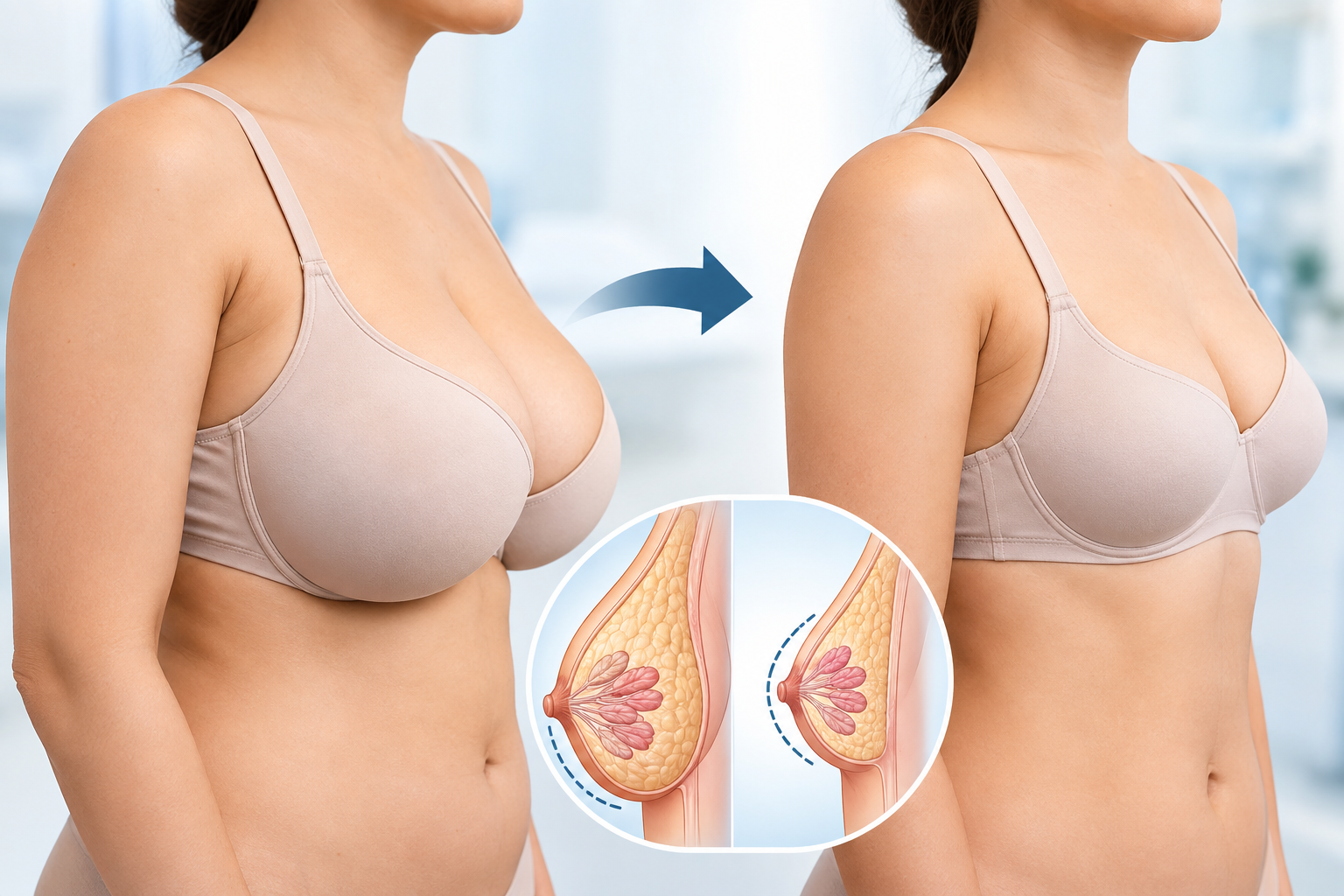
Breast reduction, also known as reduction mammoplasty, is a surgical procedure performed to reduce the size and weight of overly large breasts. It involves removing excess breast tissue, fat, and skin while reshaping and repositioning the breasts. The procedure may be considered for cosmetic reasons as well as to relieve physical symptoms such as back pain, neck pain, shoulder discomfort, skin irritation, or difficulty with physical activity.

Need help understanding this treatment?

Discuss your questions with
our Mumbai advisory team.

Treatment Information

Understanding Breast Reduction

Breast reduction surgery is designed for individuals whose breasts are disproportionately large for their body frame or who experience physical or emotional discomfort because of breast size.

Large and heavy breasts can sometimes contribute to:

  1. Chronic neck, shoulder, or back pain
  2. Shoulder grooves caused by bra straps
  3. Skin irritation beneath the breasts
  4. Difficulty exercising or participating in sports
  5. Posture-related discomfort
  6. Difficulty finding properly fitting clothing
  7. Breast asymmetry
  8. Self-consciousness or dissatisfaction with body proportion

During breast reduction surgery, the surgeon removes a planned amount of excess breast tissue, fat, and skin. The remaining tissue is reshaped, and the nipple and areola are repositioned to create a smaller, more balanced breast contour.

Surgical Techniques

The surgical approach depends on breast size, skin quality, the amount of reduction required, and the patient’s anatomy.

Common incision patterns may include:

  1. Around the areola
  2. Around the areola with a vertical incision downward
  3. An anchor-shaped incision extending around the areola, vertically downward, and along the breast crease

In selected cases, liposuction may also be used to reduce fat around the breast or surrounding area.

Breast reduction is generally performed under general anaesthesia.

Swelling, bruising, soreness, tightness, and temporary changes in nipple or breast sensation are common during the early recovery period.

Many patients notice improvement in physical comfort after healing, although final breast shape may take several weeks or months to fully settle.

BEFORE SURGERY

Pre-Care

Before surgery, the plastic surgeon will evaluate the patient’s breast size, shape, skin quality, medical history, and treatment goals.

Patients may be advised to:

  1. Inform the surgeon about all medical conditions and previous surgeries.
  2. Provide a complete list of medicines, vitamins, and supplements.
  3. Discuss aspirin, anticoagulants, and other blood-thinning medicines with the doctor.
  4. Do not stop prescribed medicines unless specifically instructed.
  5. Stop smoking and nicotine use before surgery if advised.
  6. Maintain a stable body weight.
  7. Complete any recommended breast imaging or blood tests.
  8. Follow fasting instructions before general anaesthesia.
  9. Avoid alcohol for the period recommended by the surgeon.
  10. Arrange for someone to drive you home after surgery.
  11. Arrange support at home during the early recovery period.
  12. Prepare loose, front-opening clothing.
  13. Follow any instructions regarding bathing, skin preparation, or medication use before surgery.

Patients should also discuss future pregnancy, breastfeeding plans, and expectations about scarring and breast size with the surgeon.

AFTER SURGERY

Post-Care

Careful aftercare helps support healing and reduce the risk of complications.

Patients should:

  1. Wear the recommended surgical or support bra.
  2. Take prescribed pain medicines, antibiotics, and other medications exactly as directed.
  3. Keep the incision sites clean and dry according to the surgeon’s instructions.
  4. Avoid heavy lifting, strenuous exercise, and upper-body strain until medically cleared.
  5. Begin gentle walking as advised to support circulation.
  6. Avoid sleeping directly on the breasts during early recovery if advised.
  7. Avoid smoking and nicotine during the healing period.
  8. Avoid swimming until the incisions are fully healed.
  9. Attend all scheduled follow-up appointments.
  10. Follow instructions regarding scar care.
  11. Resume driving only when movement is comfortable and strong pain medication is no longer required.

Swelling, bruising, soreness, tightness, numbness, and temporary changes in nipple sensation can occur during the early recovery period.

Contact the surgeon promptly if you experience severe or worsening pain, rapidly increasing swelling, excessive bleeding, fever, persistent redness, foul-smelling discharge, wound separation, shortness of breath, chest pain, or significant swelling or pain in one leg.

Breast shape and position continue to settle as swelling decreases. Final results may take several weeks or months to become fully apparent.

Common Questions

Questions patients
often want clarified.

These answers provide general guidance. Your treating specialist should assess your individual condition and medical requirements.

Who may be suitable for breast reduction surgery?
Suitable candidates are generally healthy adults with overly large breasts who experience physical discomfort, difficulty with activity, asymmetry, or dissatisfaction with breast size and proportion.
Can breast reduction help with back and neck pain?
In patients whose symptoms are related to the weight of large breasts, breast reduction may help reduce strain on the neck, shoulders, and back. Individual results vary.
Is breast reduction only a cosmetic procedure?
No. Breast reduction can also be performed for functional reasons when large breasts cause physical symptoms such as pain, skin irritation, or limitations in daily activity.
Is breast reduction surgery painful?
The procedure is performed under anaesthesia. During recovery, patients may experience soreness, tightness, swelling, or tenderness, which can usually be managed with prescribed medication.
How long does the surgery take?
Breast reduction surgery often takes several hours, depending on the amount of tissue removed and the surgical technique used.
How long does recovery take?
Many patients can return to light activities within one to two weeks, while strenuous exercise and heavy lifting may need to be avoided for several weeks.
Will there be scars?
Yes. Breast reduction requires surgical incisions and therefore leaves permanent scars. These usually fade gradually over time, although they do not disappear completely.
Can I breastfeed after breast reduction?
Breastfeeding may still be possible after some breast reduction techniques, but milk production can be affected. Patients who may wish to breastfeed in the future should discuss this with their surgeon before surgery.
Can sensation change after breast reduction?
Temporary changes in nipple or breast sensation are common. In some cases, altered sensation may persist permanently.
What are the possible risks of breast reduction?
Possible risks include bleeding, infection, scarring, asymmetry, delayed wound healing, changes in sensation, loss of nipple or skin tissue in rare cases, fat necrosis, blood clots, and anaesthesia-related complications.
Doctor discussing surgical treatment with patient
Independent Surgical Guidance

A clearer conversation
can change what comes next.

Understand the questions worth asking before your next consultation.