
Independent guidance for confident surgical decisions
Surgical Advisor
Home About Us
Blog Contact Us Get Surgical Guidance
Surgical Advisor Treatment

Breast Augmentation

Plastic Surgery & Hair Transplant

Looking for a Breast Augmentation Specialist in Mumbai?

Choosing the right plastic surgeon is an important part of planning breast augmentation. A medical advisory service can help you connect with experienced plastic surgeons in Mumbai based on your treatment requirements, preferred location, consultation needs, and individual concerns. A consultation with a qualified plastic surgeon is necessary to determine the most suitable technique, implant option, expected outcome, and recovery plan for you.

Breast Augmentation

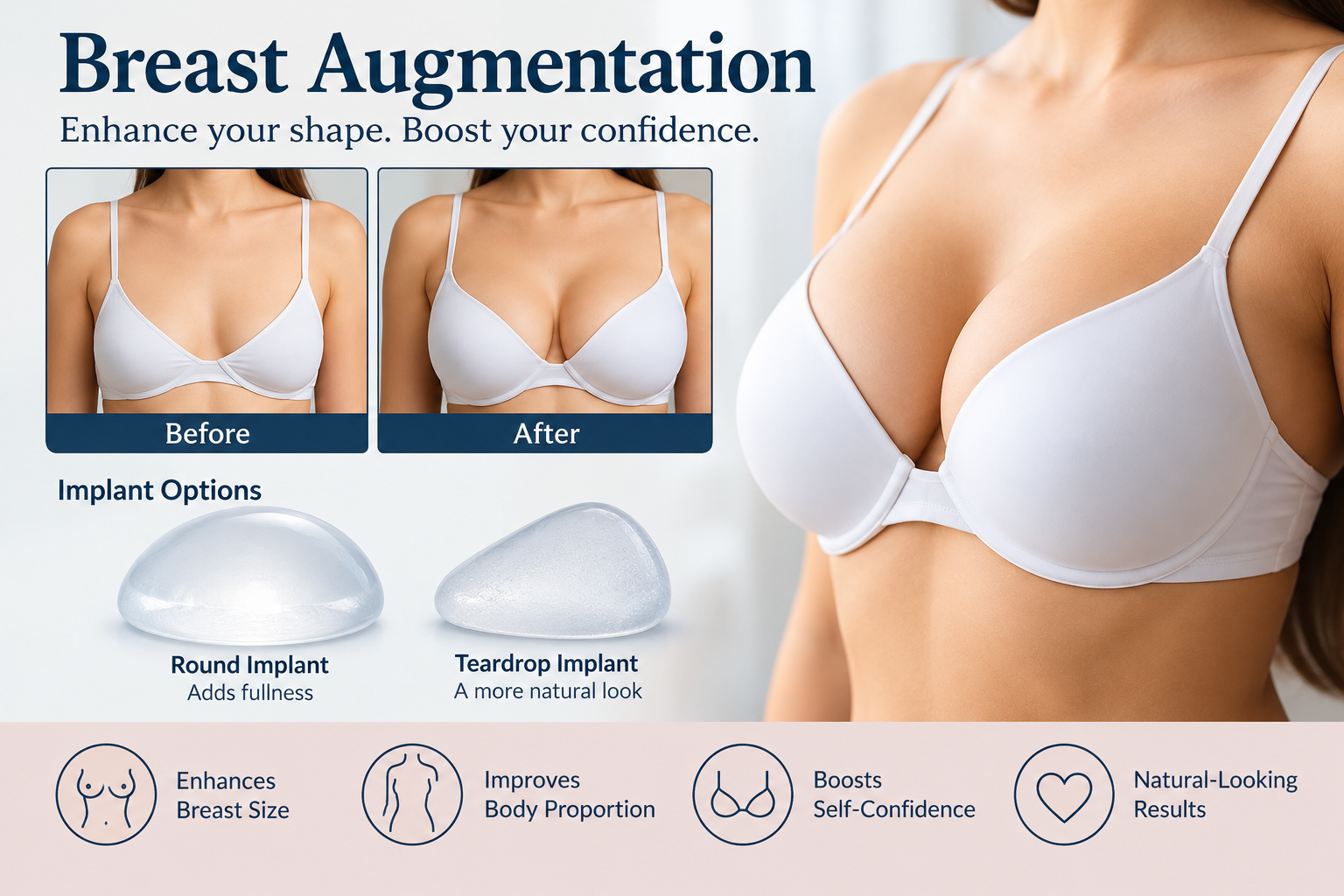
Breast augmentation is a cosmetic surgical procedure performed to increase breast volume, improve breast shape, or restore fullness that may have reduced after pregnancy, weight loss, ageing, or other changes. The procedure is usually performed using breast implants or, in selected cases, fat transfer. The treatment plan is customised according to the patient’s body proportions, existing breast tissue, preferences, and medical suitability.

Need help understanding this treatment?

Discuss your questions with
our Mumbai advisory team.

Treatment Information

Understanding Breast Augmentation

Breast augmentation, also known as augmentation mammoplasty, is a surgical procedure designed to enhance breast size and shape.

It may be considered by individuals who wish to:

  1. Increase breast volume
  2. Improve breast symmetry
  3. Restore fullness after pregnancy or breastfeeding
  4. Restore volume after significant weight loss
  5. Improve body proportion
  6. Correct naturally small or uneven breasts
  7. Reconstruct or restore breast volume in selected cases

The appropriate technique depends on the patient’s anatomy, skin quality, breast tissue, lifestyle, expectations, and the surgeon’s assessment.

Breast Augmentation with Implants

Breast implants are placed either beneath the breast tissue or beneath the chest muscle depending on the patient’s anatomy and surgical plan.

Implants are available in different:

  1. Sizes
  2. Shapes
  3. Profiles
  4. Surface characteristics
  5. Fill materials

The surgeon helps the patient choose an implant based on body proportions, desired outcome, and medical considerations.

Fat Transfer Breast Augmentation

In selected patients, breast volume can be increased using the patient’s own fat.

Fat is removed from another area of the body through liposuction, processed, and carefully injected into the breasts.

Fat transfer is usually more suitable for patients seeking a modest increase in breast volume and who have sufficient donor fat.

Implant Placement and Incisions

Incisions may be placed:

  1. In the crease beneath the breast
  2. Around the edge of the areola
  3. In another suitable location depending on the surgical technique

The aim is to position the scar in a less noticeable area while allowing safe placement of the implant.

Breast augmentation is usually performed under general anaesthesia and may take approximately one to two hours, depending on the procedure.

Swelling, tightness, soreness, and temporary changes in sensation are common during the early recovery period.

Final breast shape may take several weeks or months to settle as swelling decreases and the tissues adjust.

BEFORE SURGERY

Pre-Care

Before surgery, the plastic surgeon will assess the patient’s breast anatomy, skin quality, medical history, and treatment goals.

Patients may be advised to:

  1. Inform the surgeon about all medical conditions and previous surgeries.
  2. Provide a complete list of medicines, vitamins, and supplements.
  3. Discuss aspirin, anticoagulants, and other blood-thinning medicines with the doctor.
  4. Do not stop prescribed medications unless specifically instructed.
  5. Stop smoking and nicotine use before surgery if advised.
  6. Maintain a stable body weight.
  7. Complete any recommended breast imaging or medical tests.
  8. Follow fasting instructions before general anaesthesia.
  9. Avoid alcohol for the period recommended before surgery.
  10. Arrange for someone to drive you home after the procedure.
  11. Arrange help at home during the early recovery period.
  12. Wear loose, front-opening clothing on the day of surgery.
  13. Follow any instructions regarding bathing or skin preparation.

Patients should also discuss future pregnancy, breastfeeding plans, and long-term implant monitoring with the surgeon.

AFTER SURGERY

Post-Care

Proper aftercare supports healing and helps reduce the risk of complications.

Patients should:

  1. Wear the recommended surgical or support bra.
  2. Take prescribed pain medicines, antibiotics, and other medications as directed.
  3. Keep the incision sites clean and dry.
  4. Avoid heavy lifting and strenuous upper-body activity until cleared by the surgeon.
  5. Avoid sleeping directly on the breasts during the early recovery period if advised.
  6. Avoid raising the arms excessively if restricted by the surgeon.
  7. Begin gentle walking as advised to support circulation.
  8. Avoid smoking and nicotine during recovery.
  9. Avoid swimming until the incisions have healed.
  10. Attend all scheduled follow-up appointments.
  11. Follow instructions regarding scar care and implant massage if specifically recommended.
  12. Resume driving only when movement is comfortable and strong pain medication is no longer required.

Swelling, bruising, tightness, numbness, and temporary changes in breast or nipple sensation may occur during the early recovery period.

Contact the surgeon promptly if you experience severe or worsening pain, rapidly increasing swelling, significant breast asymmetry, fever, persistent redness, foul-smelling discharge, shortness of breath, chest pain, or other sudden concerning symptoms.

Breast augmentation results and recovery vary depending on the surgical technique, implant type, patient anatomy, and individual healing response.

Common Questions

Questions patients
often want clarified.

These answers provide general guidance. Your treating specialist should assess your individual condition and medical requirements.

Who is a suitable candidate for breast augmentation?
Suitable candidates are generally healthy adults who wish to increase breast volume, improve symmetry, or restore lost fullness and who have realistic expectations about the outcome.
What is the difference between breast implants and fat transfer?
Breast implants can provide a more predictable increase in volume, while fat transfer uses the patient’s own fat and is usually suitable for a smaller increase.
How do I choose the right implant size?
Implant selection is based on chest width, existing breast tissue, body proportions, skin quality, lifestyle, and desired appearance. The surgeon will recommend suitable options after examination.
Is breast augmentation painful?
The procedure is performed under anaesthesia. After surgery, patients may experience soreness, tightness, pressure, or discomfort for several days.
How long does breast augmentation surgery take?
The procedure usually takes around one to two hours, although the duration may vary depending on the technique used.
How long does recovery take?
Many patients can return to light activities within several days to one or two weeks. Strenuous exercise and heavy lifting are generally restricted for several weeks.
Can breast implants last for life?
Breast implants are not considered lifetime devices. Some patients may require implant replacement or additional surgery in the future due to ageing, implant changes, complications, or personal preference.
Can I breastfeed after breast augmentation?
Many women are able to breastfeed after breast augmentation, but the ability to breastfeed can depend on the surgical technique and individual anatomy. Patients planning future pregnancy or breastfeeding should discuss this with their surgeon.
Will breast augmentation affect breast screening?
Breast implants can affect how mammograms are performed. Patients should inform the imaging centre that they have implants so appropriate imaging techniques can be used.
What are the possible risks of breast augmentation?
Possible risks include bleeding, infection, scarring, changes in nipple or breast sensation, implant rupture or leakage, capsular contracture, asymmetry, implant displacement, fluid collection, and the possible need for revision surgery.
Doctor discussing surgical treatment with patient
Independent Surgical Guidance

A clearer conversation
can change what comes next.

Understand the questions worth asking before your next consultation.