
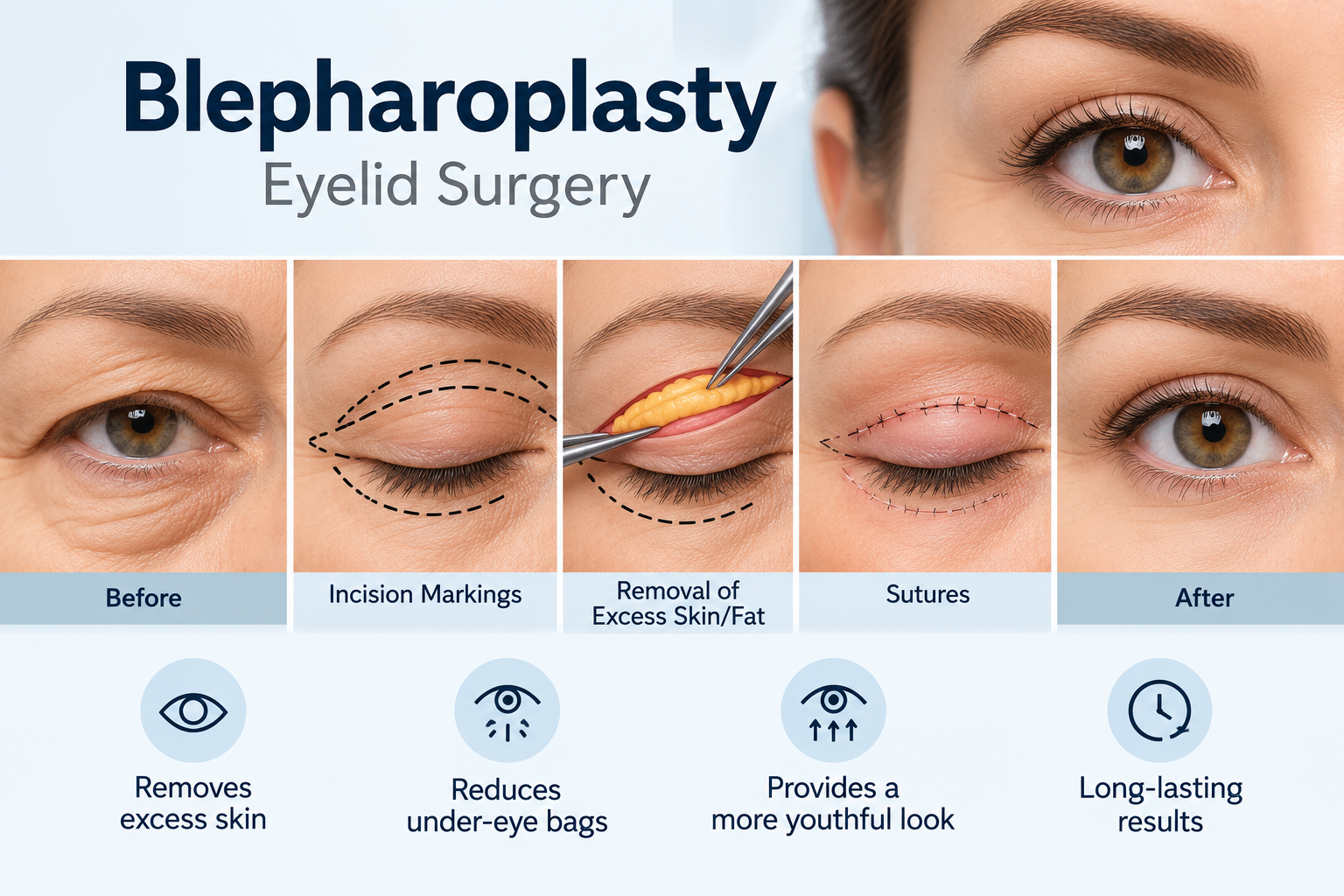
Blepharoplasty, commonly known as eyelid surgery, is a cosmetic or functional surgical procedure that removes or repositions excess skin, fat, and sometimes muscle from the upper or lower eyelids. It is performed to improve concerns such as drooping upper eyelids, puffiness, under-eye bags, and loose skin around the eyes, helping create a fresher and more youthful appearance.
The skin around the eyes is delicate and often shows signs of ageing earlier than other areas of the face. Over time, loss of skin elasticity, weakening of supporting tissues, and changes in fat distribution can make the eyelids appear heavy, puffy, or tired.
Blepharoplasty is designed to improve these age-related changes while maintaining the natural shape and expression of the eyes.
The procedure may be considered for:
- Loose or sagging upper eyelid skin
- Heavy-looking upper eyelids
- Puffy upper eyelids
- Under-eye bags
- Excess lower eyelid skin
- Fat deposits around the eyes
- An aged or tired-looking eye area
- Upper eyelid skin that interferes with vision in selected cases
Upper Eyelid Blepharoplasty
During upper eyelid surgery, an incision is generally made within the natural crease of the upper eyelid. Excess skin and, where necessary, fat or muscle may be removed or repositioned.
Lower Eyelid Blepharoplasty
Lower eyelid surgery may be performed through an incision just below the eyelashes or from inside the lower eyelid. Excess fat may be removed or repositioned to improve under-eye bags and contour irregularities.
Combined Eyelid Surgery
In some patients, both upper and lower eyelids are treated during the same procedure to achieve more balanced rejuvenation around the eyes.
Blepharoplasty is usually performed under local anaesthesia with sedation or general anaesthesia depending on the extent of surgery and the patient's needs.
Swelling and bruising are common after the procedure and gradually improve. The final appearance becomes more noticeable as the tissues settle and healing progresses over several weeks.
