
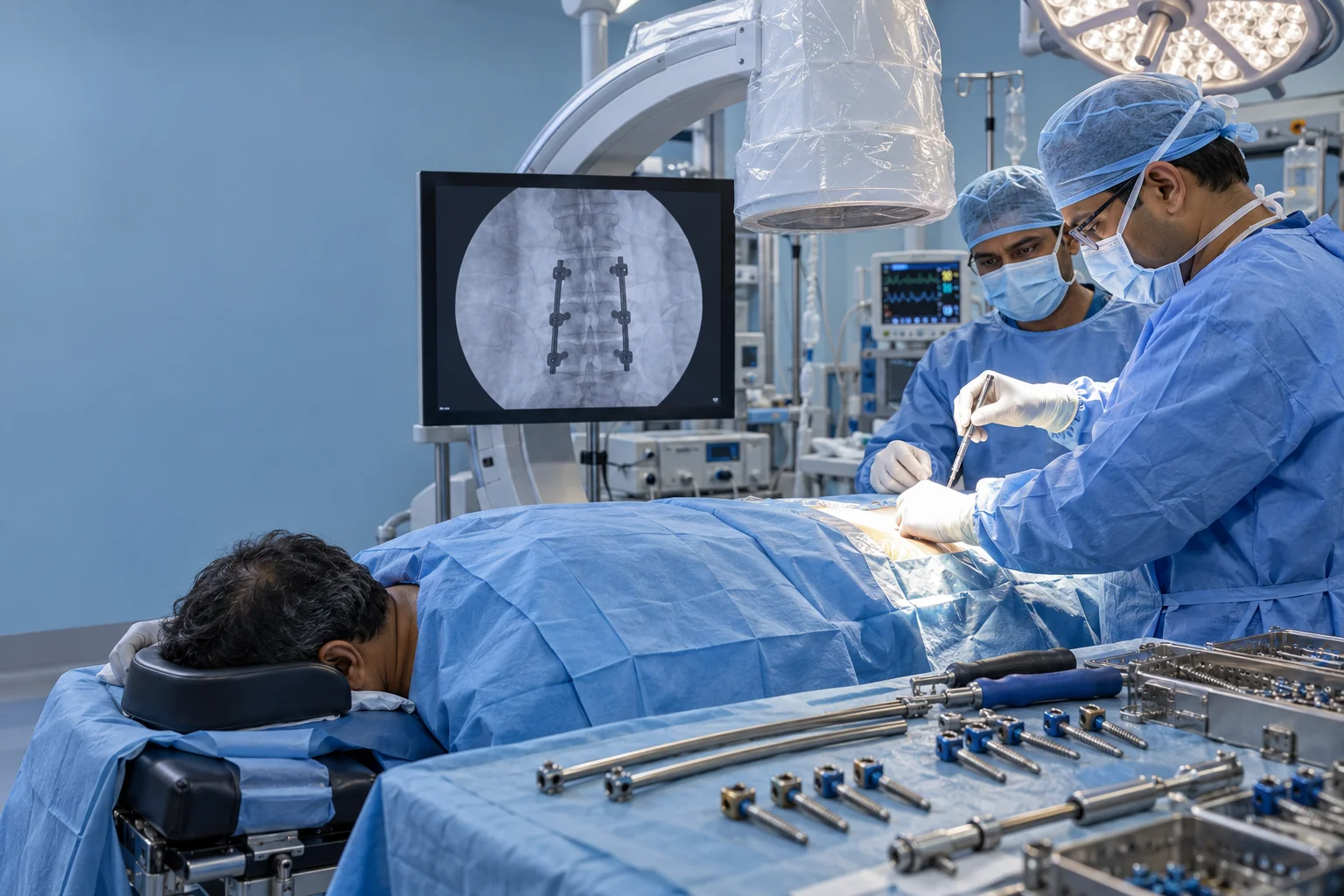
Spinal fusion is a surgical procedure used to permanently join two or more vertebrae in the spine so that movement between them is reduced or eliminated. It may be recommended for conditions such as spinal instability, degenerative disc disease, spondylolisthesis, spinal deformity, certain fractures, or persistent pain associated with structural problems in the spine.
The spine is made up of individual bones called vertebrae, separated by discs and connected by joints and ligaments. These structures allow movement while also protecting the spinal cord and nerves.
In some conditions, excessive or abnormal movement between vertebrae can cause pain, instability, nerve compression, or progressive deformity.
Spinal fusion aims to stabilise the affected part of the spine by encouraging two or more vertebrae to heal together into one solid bone.
Spinal fusion may be considered for conditions such as:
- Degenerative disc disease
- Spondylolisthesis
- Spinal instability
- Severe spinal arthritis
- Certain spinal fractures
- Spinal deformities such as scoliosis
- Recurrent disc problems in selected patients
- Spinal infections or tumours in selected cases
- Instability after spinal decompression surgery
How Spinal Fusion Is Performed
During surgery, the surgeon removes or prepares damaged tissue and places bone graft material between the vertebrae that need to be joined.
The bone graft may come from:
- The patient's own bone
- Donor bone
- Specially prepared bone-graft substitutes
Metal implants may also be used to provide stability while the bones heal.
These may include:
- Screws
- Rods
- Plates
- Cages
- Other fixation devices
Over time, new bone grows across the treated area, creating a solid fusion.
Different Approaches to Spinal Fusion
Spinal fusion can be performed through different surgical approaches depending on the condition being treated.
These may include:
- Posterior approach through the back
- Anterior approach through the front
- Lateral approach through the side
- Minimally invasive techniques in selected patients
Lumbar Spinal Fusion
Lumbar fusion is performed in the lower back and may be used for conditions such as spondylolisthesis, instability, or severe degenerative changes.
Cervical Spinal Fusion
Cervical fusion involves the neck and may be performed for disc disease, nerve or spinal cord compression, instability, or injury.
Fusion with Decompression
In some patients, spinal fusion is performed together with procedures such as laminectomy, discectomy, or other decompression surgery to relieve pressure on nerves while also stabilising the spine.
Spinal fusion is usually performed under general anaesthesia. Recovery varies according to the number of spinal levels treated, the surgical approach, the patient's overall health, and the underlying condition.
