
Independent guidance for confident surgical decisions
Surgical Advisor
Home About Us
Blog Contact Us Get Surgical Guidance
Surgical Advisor Treatment

Scoliosis and Limb-Length Discrepancies

Orthopedic Surgery

Looking for a Scoliosis or Limb-Length Specialist in Mumbai?

Children with scoliosis or limb-length discrepancy may benefit from evaluation by a paediatric orthopaedic specialist with experience in spinal deformity, growth disorders, and limb reconstruction. A medical advisory service can help families connect with experienced paediatric orthopaedic, scoliosis, and limb-reconstruction specialists in Mumbai based on the child’s age, diagnosis, remaining growth, severity of the condition, preferred location, and consultation requirements. A specialist assessment is necessary to determine whether observation, bracing, shoe lifts, growth modulation, spinal correction, limb lengthening, or another treatment approach may be appropriate.

Scoliosis and Limb-Length Discrepancies

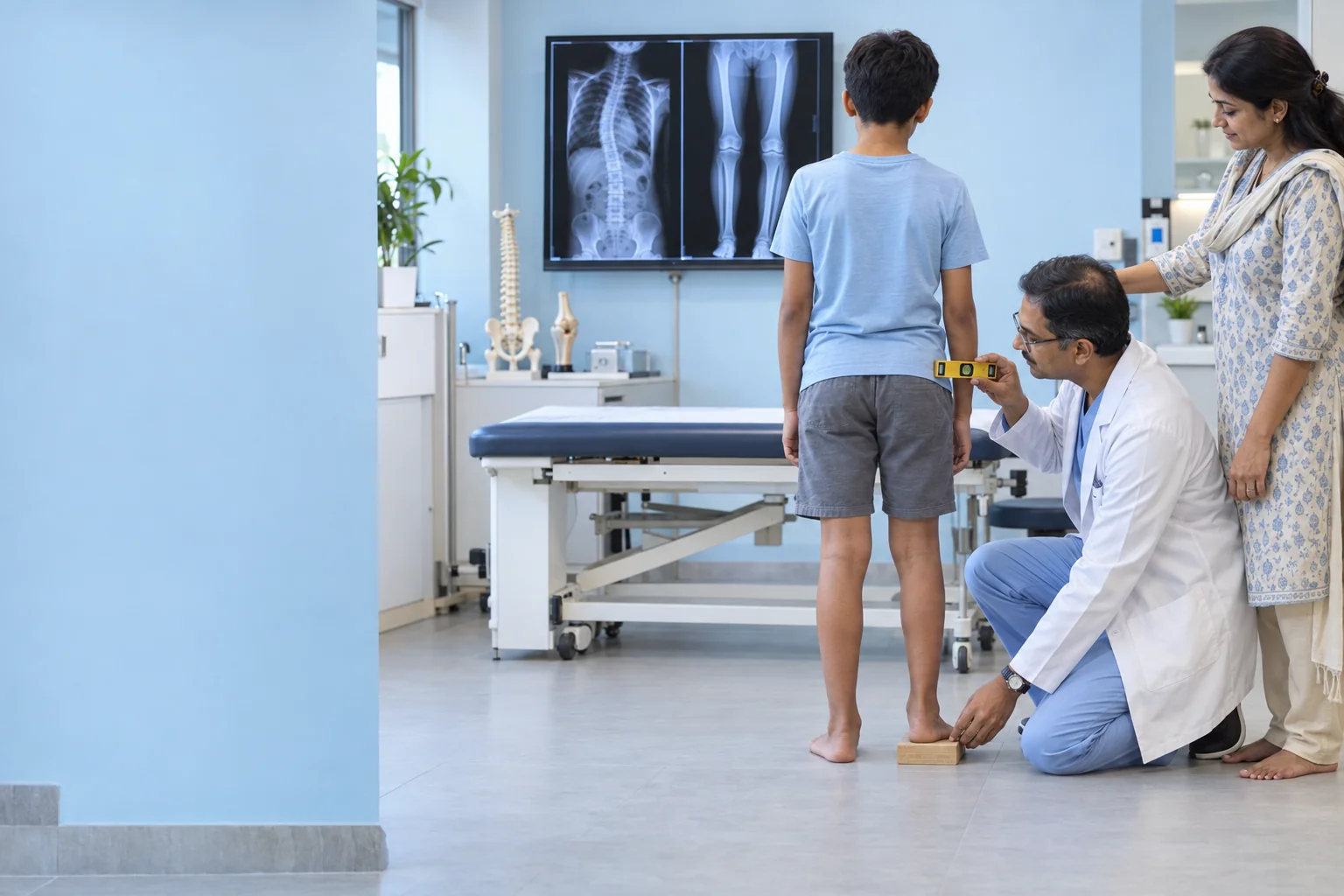
Scoliosis and limb-length discrepancy are orthopaedic conditions that can affect posture, balance, walking pattern, and overall musculoskeletal development in children and adolescents. Scoliosis refers to an abnormal sideways curvature of the spine, while limb-length discrepancy means that one leg is shorter than the other. Treatment depends on the severity of the condition, the child’s age, remaining growth, symptoms, and whether the condition is progressing.

Need help understanding this treatment?

Discuss your questions with
our Mumbai advisory team.

Treatment Information

Understanding Scoliosis and Limb-Length Discrepancies

Both scoliosis and differences in leg length can affect body alignment and movement. Some children have mild differences that require only observation, while others may need bracing, physiotherapy, growth-guided treatment, limb-length correction, or surgery.

Early assessment is useful because treatment options can depend greatly on how much growth the child has remaining.

Scoliosis

Scoliosis is a sideways curvature of the spine that may also involve rotation of the vertebrae.

It may develop because of:

  1. Adolescent idiopathic scoliosis
  2. Congenital spinal abnormalities
  3. Neuromuscular disorders
  4. Early-onset scoliosis
  5. Other underlying medical conditions

Signs may include:

  1. Uneven shoulders
  2. One shoulder blade appearing more prominent
  3. Uneven waist
  4. One hip appearing higher
  5. Leaning to one side
  6. Rib prominence
  7. Visible curvature of the back

Many children with mild scoliosis do not experience pain.

Treatment for Scoliosis

Treatment depends on the degree of curvature, age, skeletal maturity, and progression.

Options may include:

  1. Regular observation and X-rays
  2. Physiotherapy in selected cases
  3. Bracing during growth
  4. Growth-friendly procedures in selected young children
  5. Spinal fusion or deformity correction for severe or progressive curves

The aim is generally to prevent significant progression, maintain balance, and preserve function.


Limb-Length Discrepancy

Limb-length discrepancy occurs when one leg is shorter than the other.

The difference may involve the femur, tibia, or both.

Possible causes include:

  1. Congenital differences in bone development
  2. Previous fractures
  3. Growth plate injuries
  4. Bone infections
  5. Neurological or muscular conditions
  6. Developmental conditions
  7. Previous surgery
  8. Certain bone disorders

Small differences may not cause noticeable symptoms.

Larger discrepancies may result in:

  1. Limping
  2. Uneven hips
  3. Difficulty walking or running
  4. Fatigue during activity
  5. Back, hip, or knee discomfort
  6. Walking on the toes of the shorter leg
  7. Abnormal posture

Treatment for Limb-Length Discrepancy

Treatment depends on the current difference and the predicted discrepancy when growth is complete.

Options may include:

  1. Observation
  2. Shoe lifts
  3. Physiotherapy
  4. Growth-modulation procedures
  5. Shortening of the longer leg in selected cases
  6. Limb-lengthening procedures

Growth Modulation

In children who are still growing, surgery may sometimes be used to slow growth in the longer leg so that the shorter leg can gradually catch up.

Limb Lengthening

For larger discrepancies, limb-lengthening surgery may be considered.

The bone is carefully divided and gradually lengthened using an internal lengthening device or external fixation system.

New bone forms in the gap as the limb is slowly lengthened.

The process requires careful monitoring, physiotherapy, and a prolonged rehabilitation period.

BEFORE SURGERY

Pre-Care

Before treatment, the paediatric orthopaedic specialist will assess the child’s growth, posture, spine, leg lengths, walking pattern, and overall health.

Parents may be advised to:

  1. Attend all scheduled growth-monitoring appointments.
  2. Complete standing X-rays or other imaging as recommended.
  3. Provide details about previous fractures, infections, or surgeries.
  4. Inform the doctor about neurological or developmental conditions.
  5. Provide a complete list of medicines and supplements.
  6. Discuss any history of growth plate injury.
  7. Follow physiotherapy recommendations before surgery if prescribed.
  8. Maintain good nutrition and general health.
  9. Follow fasting instructions if anaesthesia is planned.
  10. Arrange support at home after surgery.
  11. Prepare mobility aids if recommended.

For limb-length discrepancy, repeated measurements may be necessary over time to predict the difference expected at the end of growth.

AFTER SURGERY

Post-Care

Post-treatment care depends on whether the child has undergone bracing, growth modulation, spinal surgery, or limb-length correction.

General recommendations may include:

  1. Take prescribed medicines as directed.
  2. Keep surgical wounds clean and dry.
  3. Use braces, splints, or mobility aids as instructed.
  4. Follow weight-bearing restrictions carefully.
  5. Attend physiotherapy regularly.
  6. Perform prescribed stretching and strengthening exercises.
  7. Attend all follow-up appointments and imaging visits.
  8. Avoid high-impact activities until medically cleared.
  9. Maintain adequate nutrition and protein intake.
  10. Follow instructions regarding school, sports, and physical activity.

After limb-lengthening procedures, close follow-up is especially important to monitor:

  1. Bone formation
  2. Joint movement
  3. Muscle flexibility
  4. Nerve function
  5. Device position

Seek medical attention promptly if there is severe or increasing pain, fever, wound discharge, new weakness or numbness, significant swelling, difficulty moving the limb, or problems with a brace, cast, or lengthening device.

Common Questions

Questions patients
often want clarified.

These answers provide general guidance. Your treating specialist should assess your individual condition and medical requirements.

Are scoliosis and limb-length discrepancy related?
They can sometimes be related. A significant difference in leg length can cause pelvic tilt and an apparent spinal curve. However, true structural scoliosis is a separate condition and requires its own assessment.
Does every child with scoliosis need treatment?
No. Mild scoliosis may only require regular monitoring. Treatment is generally considered when the curve progresses or reaches a level where bracing or surgery may be beneficial.
How much leg-length difference requires treatment?
Small differences may not need treatment. The decision depends on the amount of discrepancy, symptoms, remaining growth, and predicted difference at skeletal maturity.
How is limb-length discrepancy measured?
Doctors may use a physical examination, standing measurements, X-rays, scanograms, or other imaging to accurately compare leg lengths.
Can a shoe lift correct a leg-length discrepancy?
A shoe lift can help compensate for certain mild discrepancies and may improve comfort and walking balance, but it does not physically lengthen the shorter bone.
Can scoliosis be caused by one leg being shorter?
A leg-length difference can cause a functional spinal curve due to pelvic tilt. This is different from structural scoliosis, although both conditions should be assessed carefully.
When is scoliosis surgery considered?
Surgery may be considered for severe or progressive curves, significant spinal imbalance, or cases where non-surgical treatment is no longer sufficient.
Limb lengthening may be considered for significant discrepancies that are expected to cause functional problems and cannot be adequately managed with simpler treatments.
How long does limb-lengthening treatment take?
Treatment can take several months because the bone is lengthened gradually and then requires time to strengthen. The exact duration depends on the amount of correction and the technique used.
Can children return to normal activities after treatment?
Many children return to normal daily activities and sports after appropriate treatment and rehabilitation. Recovery depends on the severity of the condition and the procedure performed.
Doctor discussing surgical treatment with patient
Independent Surgical Guidance

A clearer conversation
can change what comes next.

Understand the questions worth asking before your next consultation.