
Independent guidance for confident surgical decisions
Surgical Advisor
Home About Us
Blog Contact Us Get Surgical Guidance
Surgical Advisor Treatment

Scaphoid Fracture Fixation

Orthopedic Surgery

Looking for a Scaphoid Fracture Specialist in Mumbai?

Scaphoid fractures can sometimes be difficult to diagnose and heal, so assessment by an experienced wrist or hand specialist may be important. A medical advisory service can help you connect with experienced orthopaedic hand and wrist surgeons in Mumbai based on the fracture type, previous treatment, preferred location, and consultation requirements. A specialist can determine whether casting, surgical fixation, bone grafting, or another treatment approach is appropriate.

Scaphoid Fracture Fixation

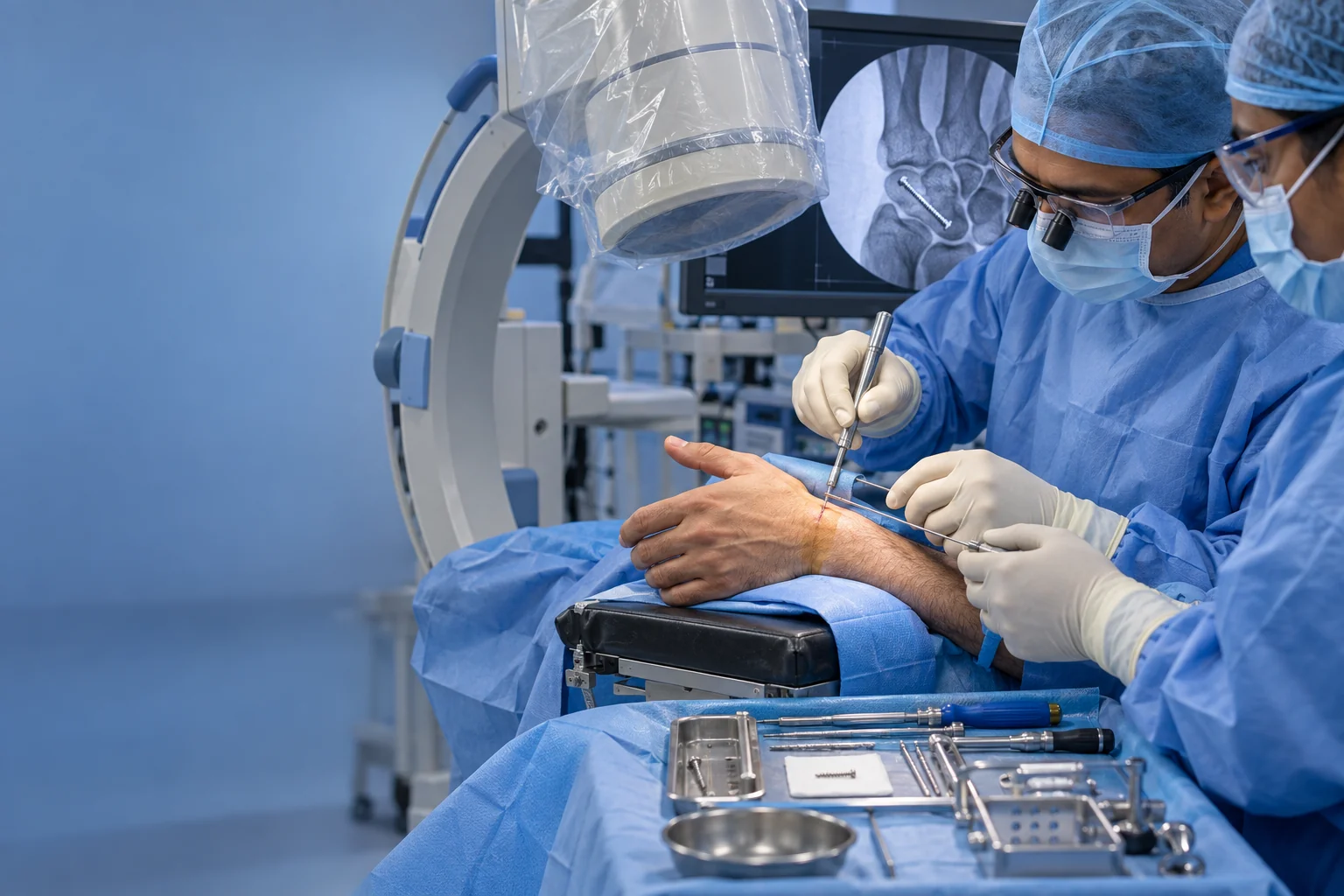
Scaphoid fracture fixation is a surgical procedure used to stabilise a broken scaphoid bone in the wrist. The scaphoid is a small bone located near the base of the thumb and plays an important role in wrist movement and stability. Surgery may be recommended when the fracture is displaced, unstable, does not heal properly, or has a high risk of non-union.

Need help understanding this treatment?

Discuss your questions with
our Mumbai advisory team.

Treatment Information

Understanding Scaphoid Fracture Fixation

The scaphoid is one of the small carpal bones in the wrist. It connects the two rows of wrist bones and contributes significantly to normal wrist movement.

Scaphoid fractures commonly occur after:

  1. Falling onto an outstretched hand
  2. Sports injuries
  3. Road traffic accidents
  4. Workplace injuries
  5. Direct trauma to the wrist

Symptoms may include:

  1. Pain on the thumb side of the wrist
  2. Tenderness near the base of the thumb
  3. Swelling
  4. Pain while gripping or lifting
  5. Reduced wrist movement

Scaphoid fractures sometimes cause only mild symptoms and may initially be mistaken for a wrist sprain.

Why Can Scaphoid Fractures Be Difficult to Heal?

The scaphoid has a relatively limited blood supply, particularly in certain parts of the bone.

Because of this, some fractures may heal slowly or fail to unite completely.

Possible complications include:

  1. Delayed union
  2. Non-union
  3. Avascular necrosis
  4. Wrist stiffness
  5. Arthritis in the future

When Is Surgery Considered?

Stable, non-displaced fractures may sometimes be treated with a cast or splint.

Surgical fixation may be considered when:

  1. The fracture is displaced
  2. The bone fragments are unstable
  3. The fracture occurs in an area with poor blood supply
  4. The fracture has failed to heal
  5. Early return to function is an important consideration
  6. There is an associated wrist injury

How Is Scaphoid Fixation Performed?

The surgeon realigns the broken bone and stabilises it, commonly using a specialised compression screw.

The procedure may be performed through a small incision or using a more open surgical approach depending on the fracture pattern.

In cases of non-union, bone grafting may also be required to encourage healing.

BEFORE SURGERY

Pre-Care

Patients may be advised to:

  1. Keep the wrist immobilised as instructed.
  2. Avoid lifting or putting weight through the injured hand.
  3. Inform the doctor about all medicines and allergies.
  4. Discuss blood-thinning medications with the medical team.
  5. Do not stop prescribed medicines unless specifically instructed.
  6. Complete X-rays, CT scans, or MRI if recommended.
  7. Stop smoking and nicotine if advised, as they can interfere with bone healing.
  8. Follow fasting instructions before anaesthesia.
  9. Arrange transportation home after surgery.
  10. Prepare for temporary restrictions on work and hand use.
AFTER SURGERY

Post-Care

Patients should:

  1. Keep the cast, splint, or dressing clean and dry.
  2. Take prescribed medicines as directed.
  3. Keep the hand elevated during the early recovery period if advised.
  4. Move the fingers regularly unless restricted.
  5. Avoid heavy gripping, lifting, or wrist loading.
  6. Attend follow-up X-rays or scans.
  7. Begin hand or wrist therapy when recommended.
  8. Avoid smoking and nicotine during healing.
  9. Follow instructions regarding scar care.
  10. Return to sports or strenuous work only after medical clearance.

Contact the surgeon if there is increasing pain, severe swelling, fever, wound discharge, worsening numbness, or fingers becoming cold, pale, or blue.

Common Questions

Questions patients
often want clarified.

These answers provide general guidance. Your treating specialist should assess your individual condition and medical requirements.

What is a scaphoid fracture?
A scaphoid fracture is a break in one of the small bones on the thumb side of the wrist.
Does every scaphoid fracture require surgery?
No. Stable and non-displaced fractures may heal with immobilisation in a cast or splint.
Why might surgery be required?
Surgery may be recommended when the fracture is displaced, unstable, has a poor blood supply, or fails to heal with conservative treatment.
Is scaphoid fixation painful?
The procedure is performed under anaesthesia. Mild to moderate pain, swelling, or stiffness may occur during recovery.
How long does surgery take?
The procedure often takes around one hour, although complex fractures or bone grafting may require more time.
How long does the fracture take to heal?
Healing varies according to the location and severity of the fracture. Bone healing may take several weeks to several months.
Will I need a cast after surgery?
Some patients require a cast, splint, or brace after fixation. The duration depends on fracture stability and healing.
When can I return to sports or heavy work?
Return to strenuous activity depends on confirmed bone healing, wrist strength, and movement. The surgeon will usually assess healing with imaging before allowing high-impact activity.
What are the possible risks?
Possible risks include infection, stiffness, delayed healing, non-union, avascular necrosis, implant irritation, nerve injury, and future wrist arthritis.
Doctor discussing surgical treatment with patient
Independent Surgical Guidance

A clearer conversation
can change what comes next.

Understand the questions worth asking before your next consultation.