
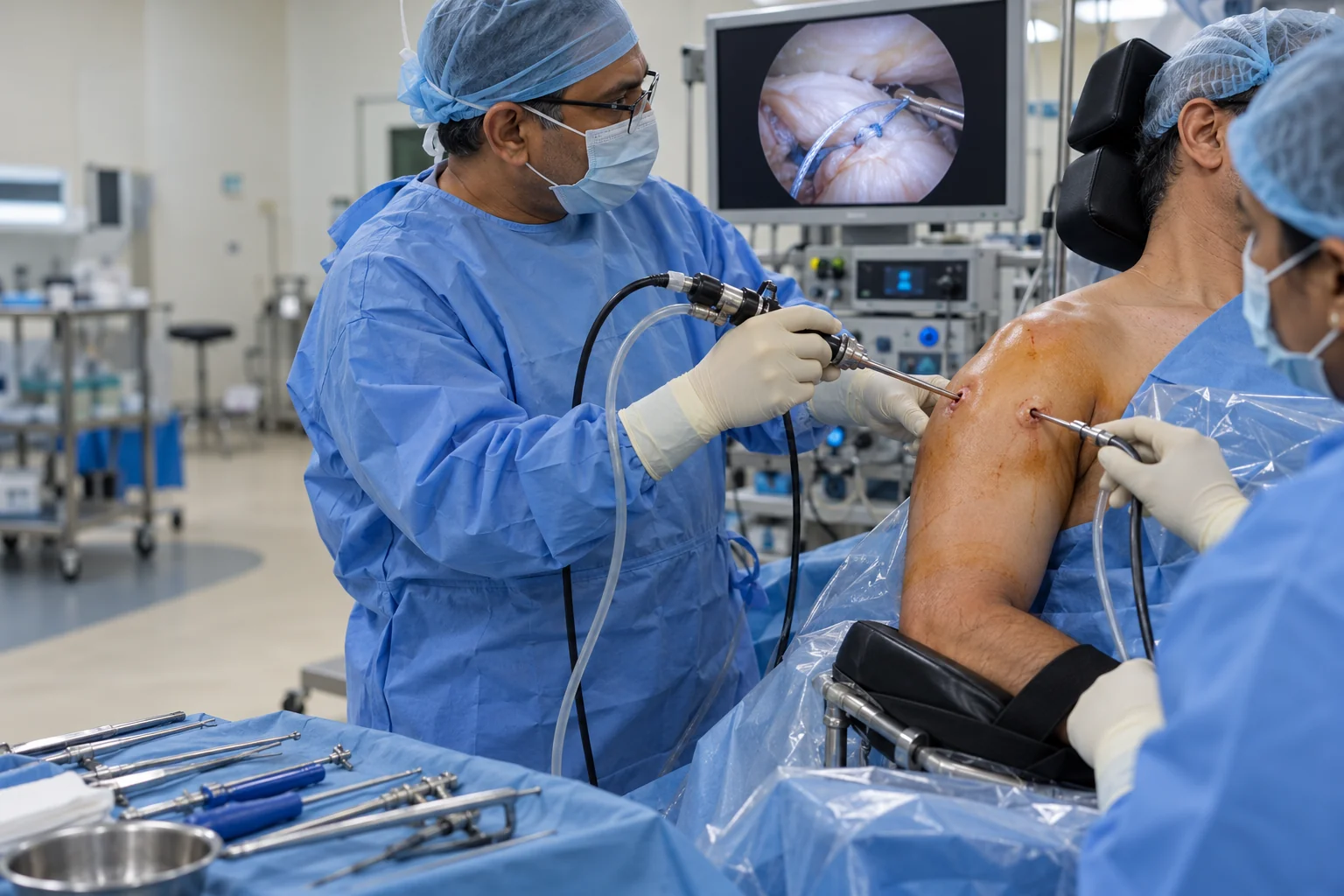
Rotator cuff repair is an orthopaedic surgical procedure used to repair torn tendons around the shoulder. The rotator cuff is a group of muscles and tendons that help stabilise the shoulder and allow smooth arm movement. Surgery may be recommended when a rotator cuff tear causes persistent pain, weakness, reduced shoulder function, or does not improve sufficiently with physiotherapy and other non-surgical treatments.
The rotator cuff is made up of four muscles and their tendons that surround the shoulder joint. These tendons help keep the upper arm bone stable within the shoulder socket and are important for lifting, rotating, and controlling the arm.
Rotator cuff tears may develop gradually due to wear and ageing or occur suddenly after an injury.
Common causes include:
- Repetitive overhead activity
- Age-related tendon degeneration
- Sports injuries
- Falls
- Lifting a heavy object
- Shoulder dislocation
- Workplace injuries
- Direct trauma to the shoulder
Symptoms may include:
- Shoulder pain
- Pain when lifting or lowering the arm
- Night pain, especially when lying on the affected shoulder
- Weakness
- Difficulty reaching overhead
- Difficulty reaching behind the back
- Reduced range of motion
- Clicking or catching sensations
When Is Rotator Cuff Repair Considered?
Not every rotator cuff tear requires surgery.
Initial treatment may include:
- Rest
- Activity modification
- Pain-relieving medication
- Physiotherapy
- Strengthening exercises
- Steroid injections in selected patients
Surgery may be considered when:
- Pain persists despite adequate conservative treatment
- There is significant shoulder weakness
- The tear is large or complete
- The injury occurred suddenly in an active patient
- The patient needs good shoulder strength for work or sports
- The tear continues to affect daily activities
Arthroscopic Rotator Cuff Repair
Many rotator cuff repairs are performed using arthroscopic surgery.
Small incisions are made around the shoulder, and a small camera called an arthroscope is inserted into the joint.
The surgeon identifies the torn tendon and reattaches it to the upper arm bone using specialised anchors and sutures.
Open or Mini-Open Repair
In some complex or larger tears, an open or mini-open surgical approach may be required.
The choice of technique depends on:
- Size of the tear
- Location of the injury
- Tendon quality
- Muscle condition
- Previous shoulder surgery
- Associated shoulder problems
Additional procedures may sometimes be performed during the same surgery, such as removing inflamed tissue, treating bone spurs, or repairing other damaged structures.
