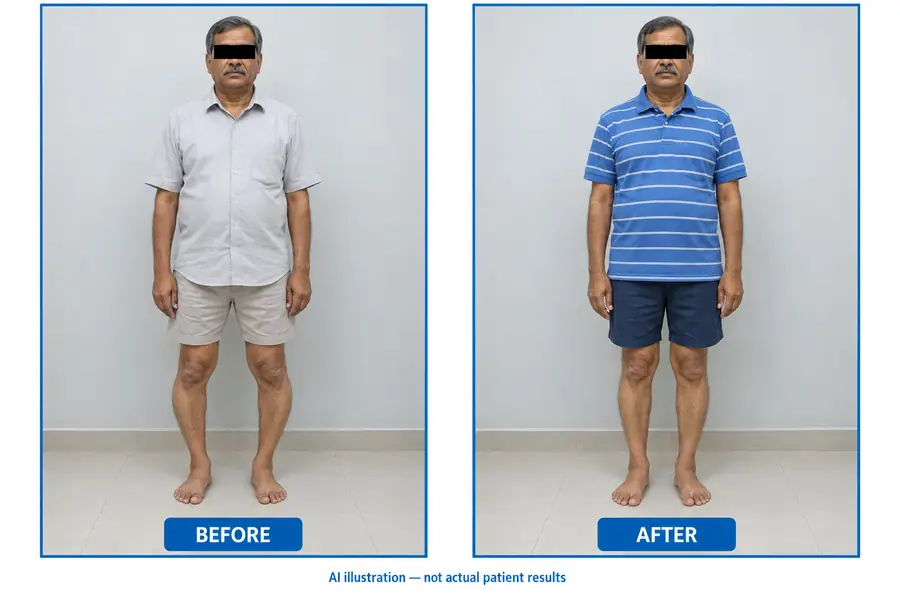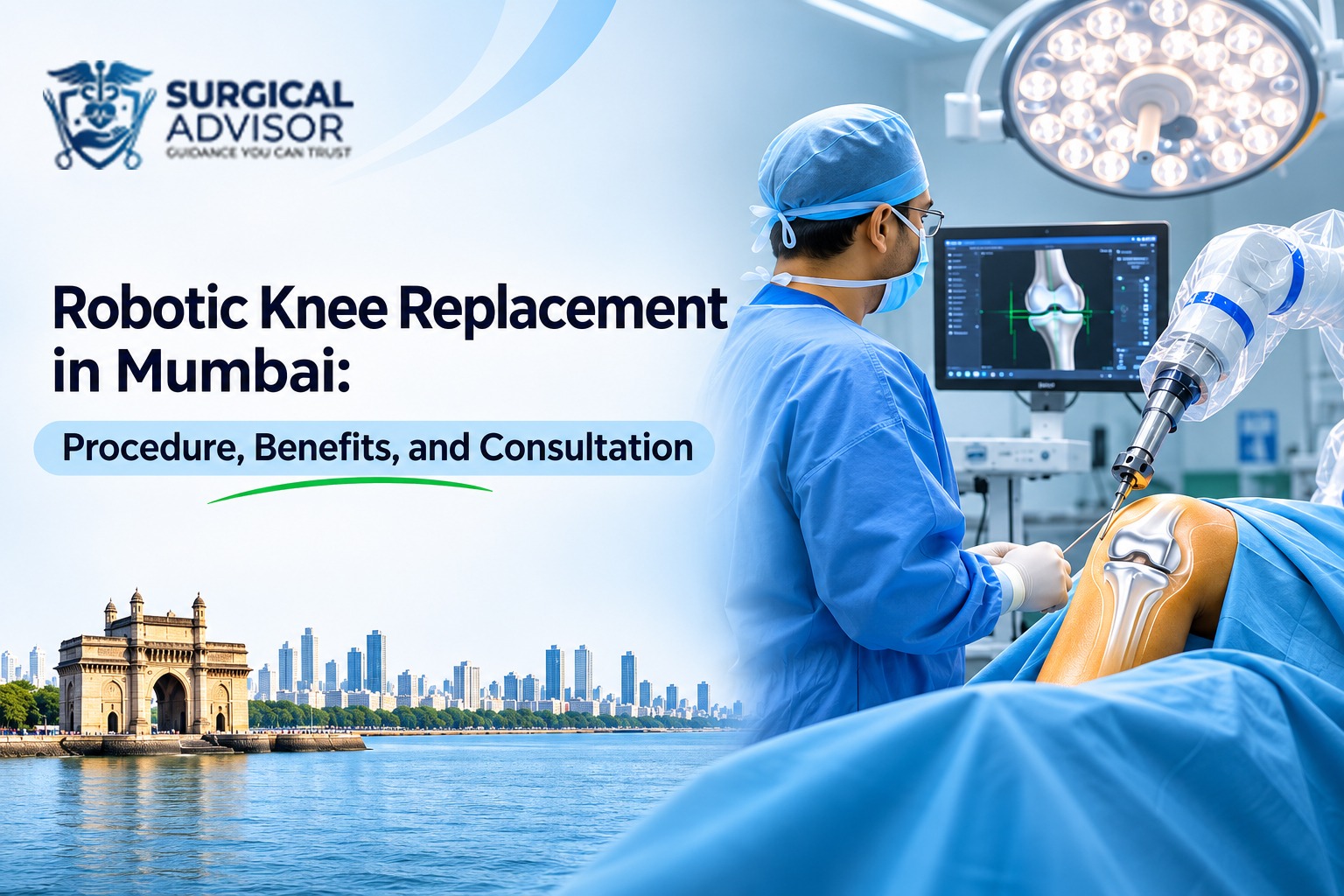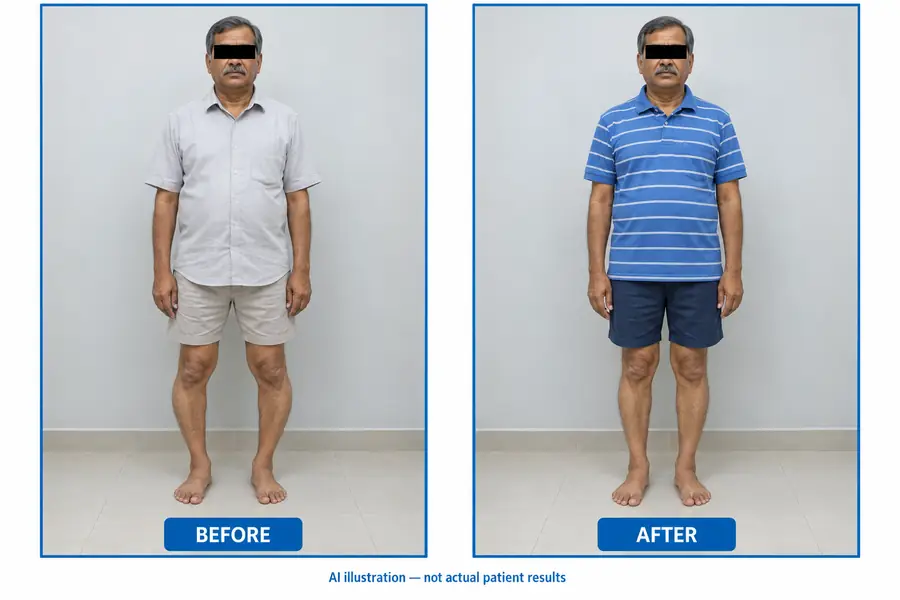
Robotic knee replacement surgery, also known as knee arthroplasty, is a procedure performed to replace damaged parts of the knee joint with artificial components. It is commonly recommended for patients with severe knee arthritis, joint damage, persistent pain, stiffness, or reduced mobility that does not improve sufficiently with medicines, physiotherapy, injections, or other non-surgical treatments.
The knee is one of the largest weight-bearing joints in the body. Over time, conditions such as osteoarthritis, rheumatoid arthritis, previous injuries, or joint degeneration can damage the cartilage and underlying bone.
When the knee joint becomes severely damaged, patients may experience:
- Persistent knee pain
- Difficulty walking
- Stiffness and reduced range of motion
- Swelling around the knee
- Difficulty climbing stairs
- Pain while standing from a chair
- Night pain
- Reduced ability to perform daily activities
- Knee deformity or instability
Knee replacement surgery aims to reduce pain, improve joint function, and restore mobility.
During the procedure, damaged bone and cartilage are removed from the affected surfaces of the knee joint and replaced with specially designed metal and plastic components.
Depending on the extent of joint damage, different types of knee replacement may be considered.
Total Knee Replacement
In total knee replacement, damaged surfaces of the femur, tibia, and sometimes the underside of the kneecap are resurfaced or replaced with artificial components.
This is commonly recommended when arthritis affects multiple parts of the knee joint.
Partial Knee Replacement
Partial or unicompartmental knee replacement may be suitable when damage is limited to only one part of the knee.
Compared with total knee replacement, selected patients may experience a smaller incision and potentially faster recovery.
Revision Knee Replacement
Revision knee replacement may be required when a previous knee implant becomes worn, loose, infected, unstable, or damaged.
Revision surgery is generally more complex than the first knee replacement.
The procedure is usually performed under spinal or general anaesthesia.
After surgery, physiotherapy and gradual mobilisation are important parts of recovery. Patients are encouraged to begin movement and walking with support as advised by their medical team.
The final outcome depends on factors such as age, overall health, muscle strength, severity of joint damage, rehabilitation, and individual healing response.