
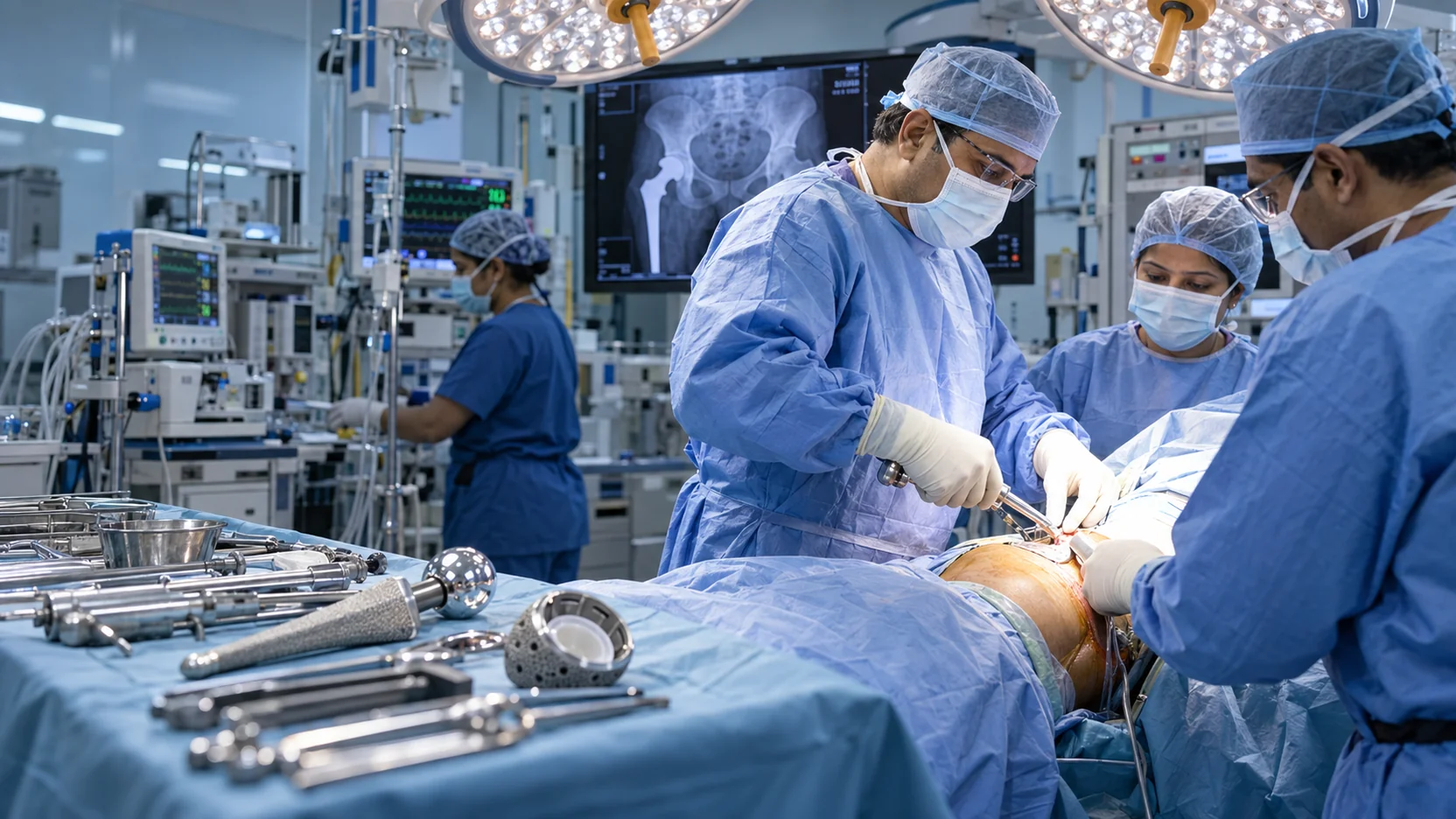
Hip replacement surgery, also known as hip arthroplasty, is a procedure used to replace damaged parts of the hip joint with artificial components. It is commonly recommended for patients with severe arthritis, fractures, avascular necrosis, or other joint conditions that cause persistent pain, stiffness, and difficulty with mobility despite non-surgical treatment.
The hip is a ball-and-socket joint made up of the head of the femur and the socket of the pelvis. Damage to the cartilage, bone, or surrounding joint structures can lead to pain, stiffness, and reduced movement.
Common conditions that may lead to hip replacement include:
- Osteoarthritis
- Rheumatoid arthritis
- Avascular necrosis
- Hip fractures
- Post-traumatic arthritis
- Congenital or developmental hip disorders
- Severe joint degeneration
Patients with advanced hip damage may experience:
- Persistent groin, hip, or thigh pain
- Difficulty walking
- Pain while standing or climbing stairs
- Reduced hip movement
- Difficulty getting in and out of chairs
- Pain that interferes with sleep
- Reduced ability to perform daily activities
Hip replacement surgery aims to reduce pain, improve movement, and restore function.
Total Hip Replacement
In total hip replacement, the damaged femoral head is removed and replaced with a metal or ceramic ball attached to a stem placed inside the thigh bone.
The damaged hip socket is also resurfaced and replaced with an artificial cup, usually containing a plastic, ceramic, or metal liner.
Partial Hip Replacement
In partial hip replacement, only the femoral head is replaced. This procedure is more commonly used in selected patients with certain types of hip fractures.
Revision Hip Replacement
Revision surgery may be required if a previous hip replacement becomes loose, infected, worn, unstable, or damaged.
Revision procedures are generally more complex than the initial operation.
Hip replacement surgery may be performed through different surgical approaches, including posterior, lateral, or anterior approaches. The most appropriate approach depends on the surgeon’s assessment and the patient’s condition.
The surgery is generally performed under spinal or general anaesthesia.
After surgery, patients are encouraged to begin movement and walking with assistance as advised by the orthopaedic and physiotherapy team.
