
Independent guidance for confident surgical decisions
Surgical Advisor
Home About Us
Blog Contact Us Get Surgical Guidance
Surgical Advisor Treatment

Flexor / Extensor Tendon Repair

Orthopedic Surgery

Looking for a Flexor / Extensor Tendon Repair Specialist in Mumbai?

Hand tendon injuries are best assessed by a specialist experienced in hand, wrist, and microsurgical trauma. A medical advisory service can help you connect with experienced hand surgeons, orthopaedic hand specialists, and reconstructive surgeons in Mumbai based on the injury, preferred location, consultation needs, and treatment requirements. A specialist assessment is important to determine whether splinting, surgical tendon repair, nerve or vessel repair, or another treatment approach is required.

Flexor / Extensor Tendon Repair

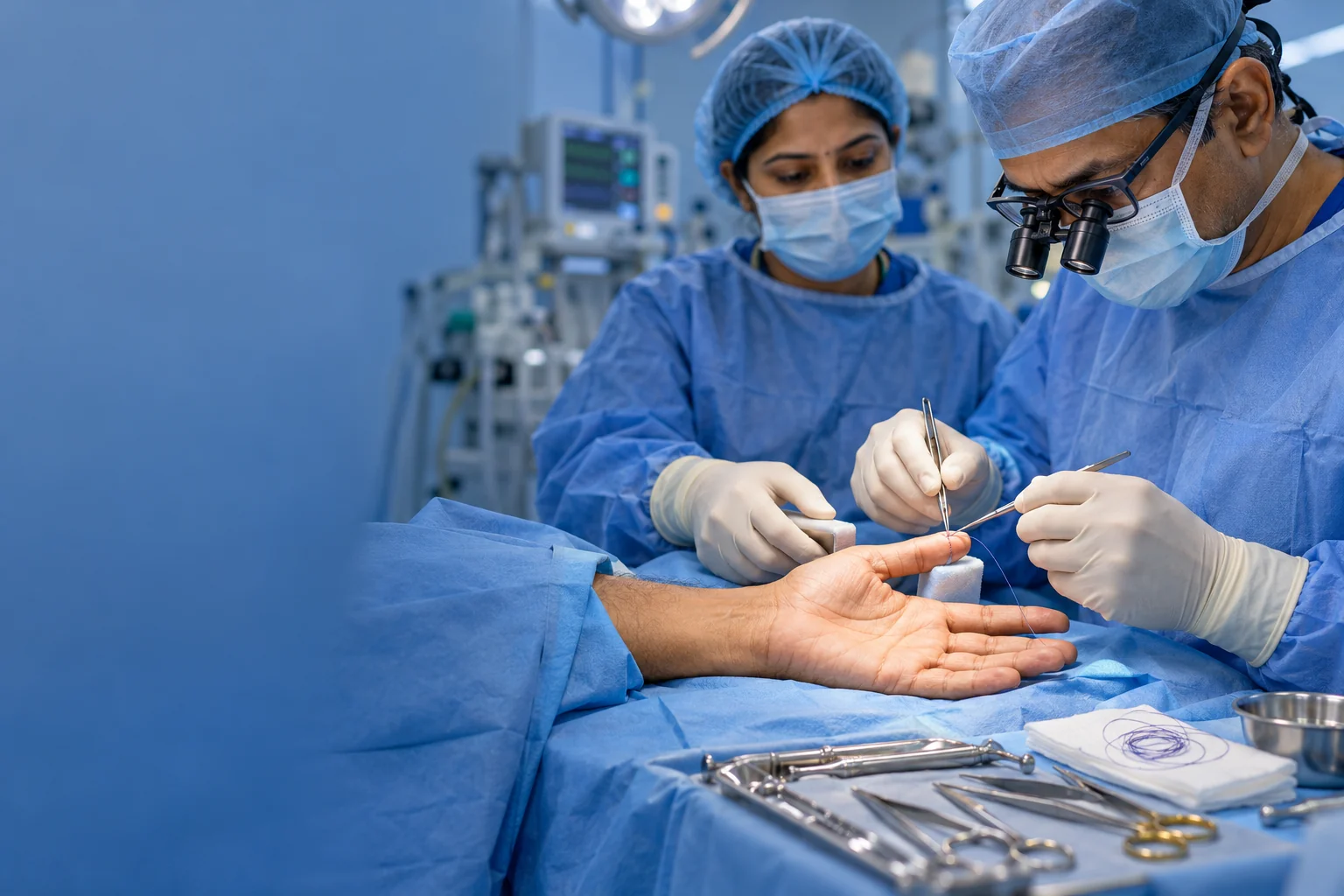
Flexor and extensor tendon repair are surgical procedures used to restore damaged tendons in the hand, wrist, or fingers. Flexor tendons help bend the fingers and thumb, while extensor tendons help straighten them. These tendons may be cut or torn because of accidents, sharp injuries, crush injuries, sports trauma, or other hand injuries. Surgery aims to restore tendon continuity and improve movement and hand function.

Need help understanding this treatment?

Discuss your questions with
our Mumbai advisory team.

Treatment Information

Understanding Flexor / Extensor Tendon Repair

Tendons are strong bands of tissue that connect muscles to bones and allow movement of the fingers and wrist.

In the hand:

  1. Flexor tendons run along the palm side and help bend the fingers and thumb.
  2. Extensor tendons run along the back of the hand and help straighten the fingers and thumb.

Tendon injuries may occur due to:

  1. Cuts from glass, metal, or sharp objects
  2. Workplace accidents
  3. Road traffic accidents
  4. Sports injuries
  5. Crush injuries
  6. Falls
  7. Deep lacerations
  8. Associated fractures or dislocations

Symptoms may include:

  1. Inability to bend or straighten a finger
  2. Weak finger movement
  3. Pain
  4. Swelling
  5. Open wounds
  6. Numbness if nearby nerves are also injured
  7. Abnormal finger position
  8. Difficulty gripping or releasing objects

Flexor Tendon Repair

Flexor tendon injuries can be complex because these tendons pass through narrow protective tunnels in the fingers.

During repair, the surgeon identifies the damaged tendon ends and carefully sutures them together.

Associated injuries to nerves, blood vessels, or bone may also need treatment.

Extensor Tendon Repair

Extensor tendons are located closer to the skin and may be damaged by relatively superficial cuts.

Repair involves reconnecting the torn tendon and protecting it while healing occurs.

Some extensor injuries may be treated with splinting alone, while others require surgery.

Timing of Surgery

Tendon injuries should be assessed promptly.

The ideal timing of surgery depends on:

  1. Type of tendon injured
  2. Location of injury
  3. Condition of the wound
  4. Presence of infection
  5. Associated nerve, vessel, or bone injury
  6. Time since injury

Importance of Hand Therapy

Surgery is only one part of tendon treatment.

After repair, carefully planned hand therapy is essential because the tendon needs to heal while also avoiding excessive scar formation and stiffness.

Too little movement can lead to adhesions and stiffness, while too much movement too early can cause the repair to fail.

BEFORE SURGERY

Pre-Care

Before surgery, the hand specialist will examine the injury and assess tendon movement, sensation, circulation, and associated injuries.

Patients may be advised to:

  1. Keep the injured hand protected and elevated.
  2. Avoid repeatedly testing finger movement after a suspected tendon injury.
  3. Keep wounds covered with a clean dressing.
  4. Inform the doctor about all medicines and allergies.
  5. Discuss blood-thinning medicines with the medical team.
  6. Do not stop prescribed medicines unless specifically instructed.
  7. Inform the surgeon about numbness, severe bleeding, or colour changes in the fingers.
  8. Complete X-rays or other imaging if fracture or foreign material is suspected.
  9. Follow fasting instructions if anaesthesia or sedation is planned.
  10. Stop smoking and nicotine use if advised.
  11. Arrange transportation home after surgery.
  12. Prepare for regular hand therapy and splint use after the procedure.

Deep cuts associated with uncontrolled bleeding, loss of sensation, poor circulation, or loss of finger movement require prompt medical assessment.

AFTER SURGERY

Post-Care

Care after tendon surgery is highly structured because both protection and controlled movement are important.

Patients should:

  1. Wear the prescribed splint continuously or as instructed.
  2. Do not remove or modify the splint without medical advice.
  3. Keep the hand elevated during the early recovery period.
  4. Keep dressings and wounds clean and dry.
  5. Take prescribed pain medicines and antibiotics as directed.
  6. Attend hand therapy appointments exactly as scheduled.
  7. Perform only the exercises prescribed by the hand therapist.
  8. Avoid gripping, lifting, pushing, pulling, or forceful finger movement until medically cleared.
  9. Do not test the repaired tendon by forcefully bending or straightening the finger.
  10. Attend all follow-up appointments.
  11. Follow scar-care instructions after the wound has healed.
  12. Return to work gradually depending on hand demands.

Swelling, stiffness, soreness, and reduced movement are common during early recovery.

Contact the surgeon promptly if you experience increasing pain, wound discharge, fever, severe swelling, sudden loss of finger movement, new numbness, excessive bleeding, or fingers becoming cold, pale, or blue.

Common Questions

Questions patients
often want clarified.

These answers provide general guidance. Your treating specialist should assess your individual condition and medical requirements.

What is the difference between flexor and extensor tendons?
Flexor tendons bend the fingers and thumb, while extensor tendons straighten them.
Does every tendon injury require surgery?
No. Some partial injuries or certain extensor tendon injuries can be managed with splinting. Complete tendon cuts or injuries causing loss of movement often require surgical repair.
How can I tell if a tendon is cut?
A person may be unable to fully bend or straighten a finger after an injury. However, a specialist examination is needed because partial tendon injuries can be less obvious.
Is tendon repair surgery painful?
The procedure is performed under local, regional, or general anaesthesia. Soreness, swelling, and stiffness can occur during recovery.
How long does tendon repair surgery take?
The duration depends on the number and location of tendons involved and whether nerves, blood vessels, or bones also need repair.
Will I need a splint after surgery?
Yes. A protective splint is commonly used after tendon repair to prevent excessive movement while allowing controlled rehabilitation.
How long does tendon healing take?
Initial tendon healing usually takes several weeks, but full strength and function can take several months to recover.
Why is hand therapy important?
Hand therapy helps restore controlled movement, reduce stiffness, prevent adhesions, and gradually rebuild strength without damaging the repair.
Can the repaired tendon tear again?
Yes. Re-rupture can occur if excessive force is applied before the tendon has healed sufficiently.
What are the possible risks of tendon repair?
Possible risks include infection, stiffness, scar formation, tendon adhesions, re-rupture, reduced range of motion, weakness, nerve injury, and the need for additional surgery.
Doctor discussing surgical treatment with patient
Independent Surgical Guidance

A clearer conversation
can change what comes next.

Understand the questions worth asking before your next consultation.