
Independent guidance for confident surgical decisions
Surgical Advisor
Home About Us
Blog Contact Us Get Surgical Guidance
Surgical Advisor Treatment

Dupuytren's Contracture Release

Orthopedic Surgery

Looking for a Dupuytren's Contracture Specialist in Mumbai?

Dupuytren's contracture is usually managed by a hand surgeon or orthopaedic specialist experienced in disorders of the hand and fingers. A medical advisory service can help you connect with experienced hand and upper-limb specialists in Mumbai based on the severity of the contracture, previous treatment, preferred location, and consultation requirements. A specialist assessment can help determine whether observation, needle release, surgical fasciectomy, or another treatment approach may be appropriate.

Dupuytren's Contracture Release

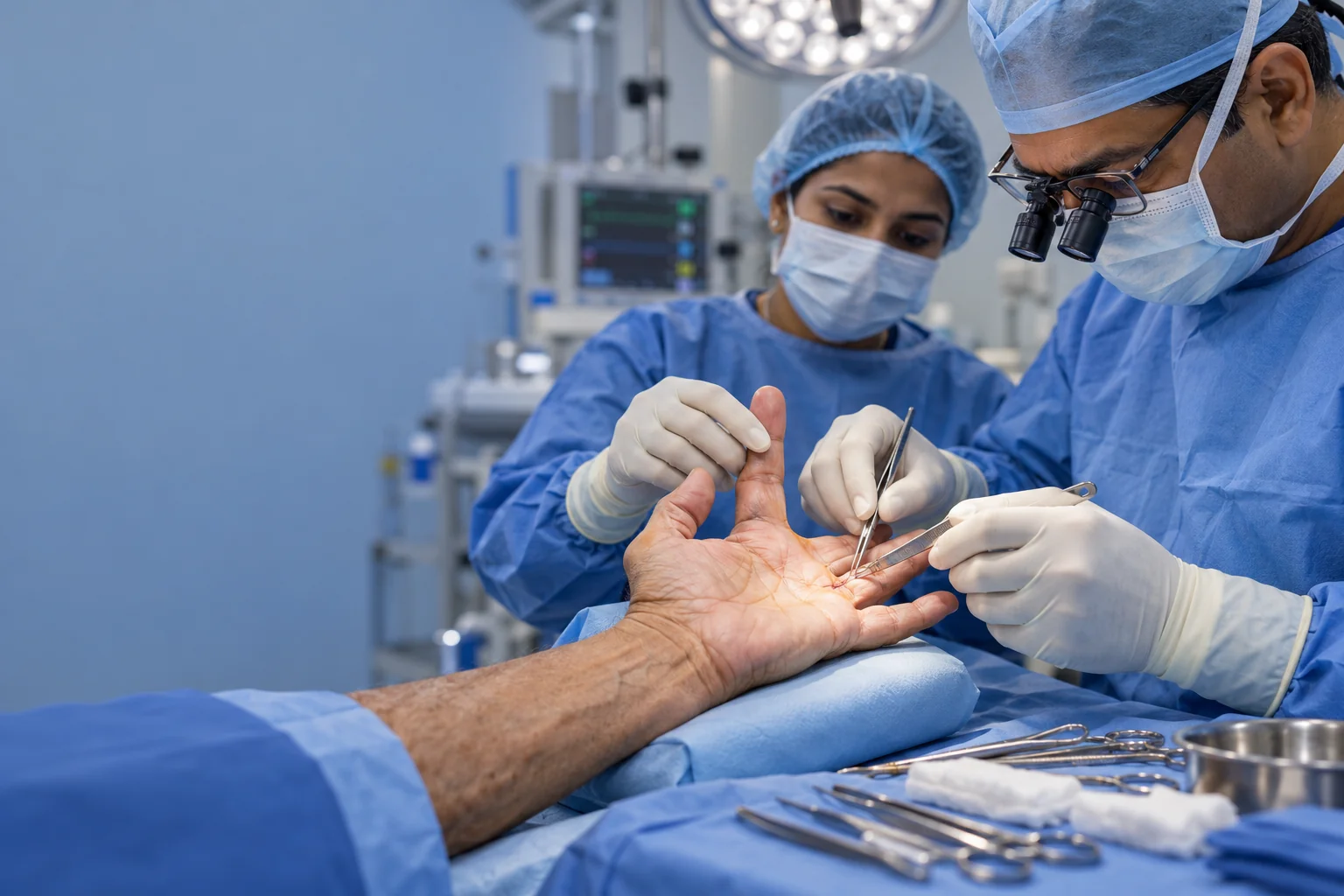
Dupuytren's contracture release is a procedure used to improve finger movement when thickened tissue in the palm causes one or more fingers to bend toward the palm. Treatment aims to release or remove the abnormal tissue so that the affected fingers can straighten more effectively and hand function can improve.

Need help understanding this treatment?

Discuss your questions with
our Mumbai advisory team.

Treatment Information

Understanding Dupuytren's Contracture Release

Dupuytren's contracture is a condition that affects the layer of tissue beneath the skin of the palm, known as the palmar fascia.

Over time, this tissue can become thickened and form nodules and cord-like bands.

As the cords tighten, they may gradually pull one or more fingers into a bent position.

The ring and little fingers are commonly affected.

Symptoms may include:

  1. Small lumps in the palm
  2. Thickened cords under the skin
  3. Gradual bending of one or more fingers
  4. Difficulty placing the hand flat on a surface
  5. Difficulty shaking hands
  6. Difficulty putting the hand into a pocket or glove
  7. Problems gripping or handling larger objects

The condition usually progresses slowly and may not require treatment in its early stages.

When Is Treatment Considered?

Treatment may be considered when the contracture begins to interfere with hand function or when the finger can no longer be straightened adequately.

The appropriate treatment depends on the severity and location of the contracture.

Needle Fasciotomy

A needle may be used to divide the tightened cord through small punctures in the skin.

Recovery can be relatively quick, although recurrence may occur.

Fasciectomy

During fasciectomy, the surgeon removes part or most of the abnormal thickened fascia causing the contracture.

This is a commonly performed surgical treatment for more significant disease.

Dermofasciectomy

In recurrent or severe cases, both abnormal fascia and some overlying skin may be removed.

A skin graft may then be required.

Hand Therapy

After treatment, hand therapy and splinting may be recommended to improve movement and maintain finger extension.

BEFORE SURGERY

Pre-Care

Patients may be advised to:

  1. Inform the surgeon about all medical conditions.
  2. Provide a complete list of medicines and supplements.
  3. Discuss blood-thinning medicines with the medical team.
  4. Do not stop prescribed medication unless specifically instructed.
  5. Inform the surgeon about previous hand operations.
  6. Stop smoking and nicotine before surgery if advised.
  7. Follow fasting instructions if sedation or anaesthesia is planned.
  8. Arrange transportation home after surgery.
  9. Prepare for temporary limitations in hand use.
  10. Discuss expected hand therapy and splint requirements.
AFTER SURGERY

Post-Care

Patients should:

  1. Keep the dressing clean and dry.
  2. Keep the hand elevated initially if advised.
  3. Take prescribed pain medication as directed.
  4. Move the fingers according to the surgeon or therapist's instructions.
  5. Attend hand therapy appointments.
  6. Wear a night splint if prescribed.
  7. Avoid heavy gripping and lifting until cleared.
  8. Follow instructions regarding dressing changes and stitch removal.
  9. Perform prescribed stretching and movement exercises.
  10. Attend scheduled follow-up visits.
  11. Follow scar-care instructions once the wound has healed.

Swelling, stiffness, bruising, tenderness, and temporary changes in sensation may occur during recovery.

Contact the surgeon promptly if there is severe or increasing pain, excessive swelling, wound discharge, fever, loss of finger movement, worsening numbness, or changes in finger colour or temperature.

Common Questions

Questions patients
often want clarified.

These answers provide general guidance. Your treating specialist should assess your individual condition and medical requirements.

What causes Dupuytren's contracture?
The exact cause is not fully understood. Genetics appear to play an important role, and the condition is more common in certain families.
Does Dupuytren's contracture always require surgery?
No. Mild disease that does not interfere with hand function may only require monitoring.
When should treatment be considered?
Treatment may be considered when finger contracture begins to interfere with daily activities or when the patient can no longer place the hand flat.
Is Dupuytren's contracture painful?
The condition is often painless, although some patients experience tenderness or discomfort in the palm.
How long does surgery take?
The duration depends on the number of fingers involved and the severity of the contracture. Surgery may take approximately one to several hours.
How long does recovery take?
Wound healing may take several weeks, while improvement in movement and strength may continue for several months.
Will I need hand therapy?
Hand therapy is commonly recommended after surgery to improve finger movement, control swelling, and reduce stiffness.
Can Dupuytren's contracture return?
Yes. Dupuytren's disease can recur after treatment, although the timing and likelihood vary between patients and treatment methods.
Will my fingers become completely straight after surgery?
Many patients achieve substantial improvement, but complete correction is not always possible, particularly in long-standing or severe contractures.
What are the possible risks?
Possible risks include infection, bleeding, stiffness, swelling, scar sensitivity, nerve or blood vessel injury, delayed wound healing, reduced sensation, recurrence, and incomplete correction.
Doctor discussing surgical treatment with patient
Independent Surgical Guidance

A clearer conversation
can change what comes next.

Understand the questions worth asking before your next consultation.