
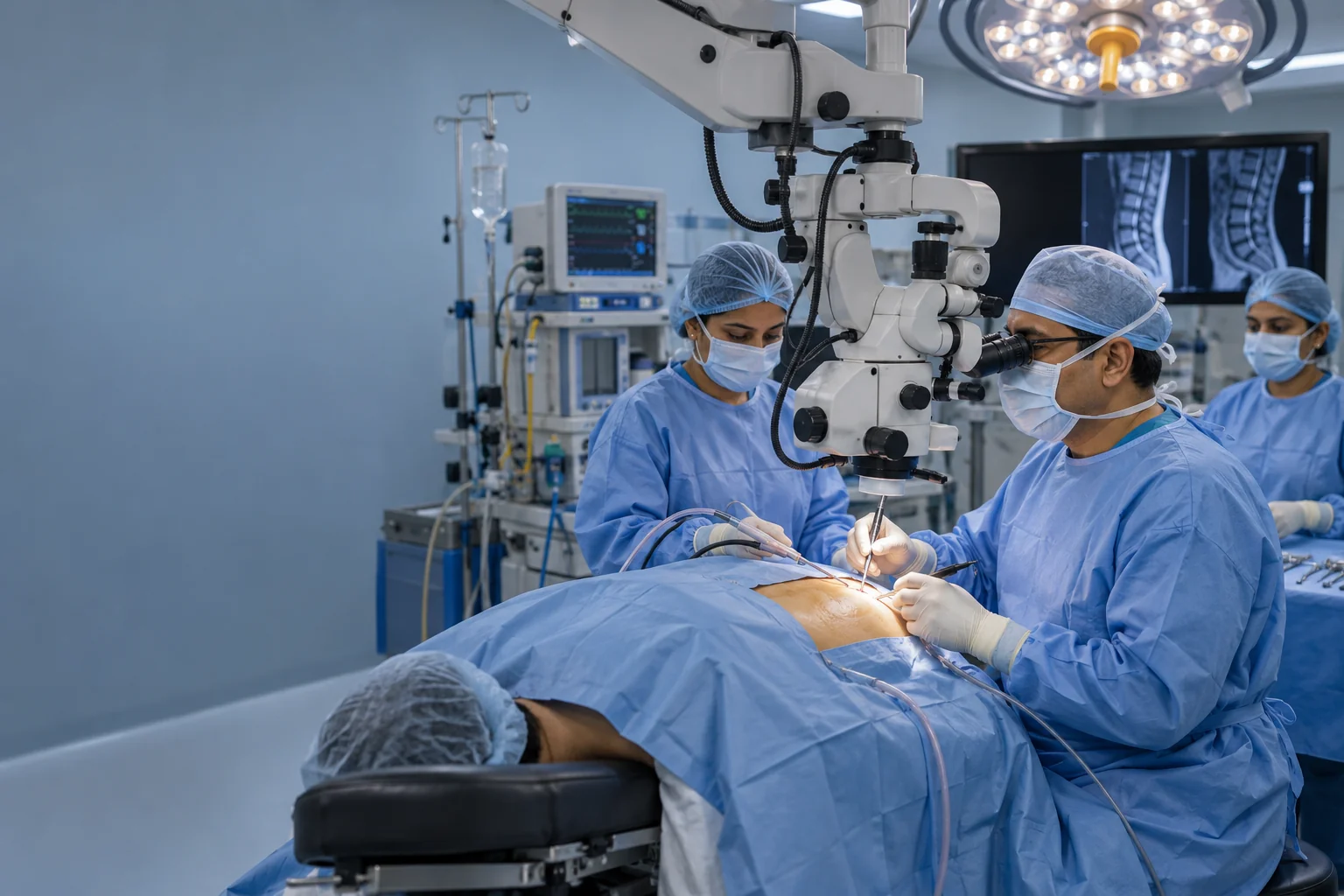
Discectomy is a spine surgery performed to remove part of a damaged or herniated spinal disc that is pressing on a nearby nerve. Microdiscectomy is a less invasive form of discectomy performed through a smaller incision using magnification and specialised instruments. These procedures are commonly considered for persistent nerve-related pain, numbness, weakness, or sciatica that does not improve sufficiently with medicines, physiotherapy, injections, or other non-surgical treatments.
The spine is made up of bones called vertebrae, with soft discs positioned between them. These discs act as cushions and allow movement of the spine.
A disc may become damaged or herniated when part of its inner material pushes through the outer layer. If this material presses on a nearby spinal nerve, it can cause pain and other neurological symptoms.
A herniated disc may occur due to:
- Age-related disc degeneration
- Heavy lifting
- Repetitive bending or twisting
- Sudden injury
- Poor lifting technique
- Excess strain on the spine
- Previous spinal injury
Symptoms may include:
- Lower back pain
- Pain radiating into the buttock or leg
- Sciatica
- Numbness or tingling
- Muscle weakness
- Difficulty walking
- Pain made worse by sitting, bending, coughing, or sneezing
What Is a Discectomy?
A discectomy involves removing the portion of a spinal disc that is compressing a nerve.
The goal is to relieve nerve pressure while preserving as much healthy disc tissue as possible.
What Is a Microdiscectomy?
Microdiscectomy is a minimally invasive variation of discectomy.
The surgeon makes a smaller incision and uses magnification, such as an operating microscope or specialised visualisation system, to access the affected nerve and remove the herniated disc material.
Microdiscectomy is most commonly used to treat lumbar disc herniation causing sciatica.
When Is Surgery Considered?
Many disc problems improve without surgery.
Initial treatment may include:
- Rest for a limited period
- Pain-relieving medicines
- Anti-inflammatory medicines
- Physiotherapy
- Activity modification
- Epidural or nerve-root injections in selected patients
Surgery may be considered when:
- Severe leg or nerve pain persists despite non-surgical treatment
- Weakness is developing or worsening
- Numbness is significant or persistent
- Daily activities are severely affected
- Imaging confirms nerve compression that matches the symptoms
Urgent surgery may be required in rare situations involving severe nerve compression, such as loss of bladder or bowel control or numbness around the groin area.
