
Independent guidance for confident surgical decisions
Surgical Advisor
Home About Us
Blog Contact Us Get Surgical Guidance
Surgical Advisor Treatment

Bunionectomy (Hallux Valgus Correction)

Orthopedic Surgery

Looking for a Bunion / Hallux Valgus Specialist in Mumbai?

Bunion surgery is best planned after a detailed assessment by a foot and ankle orthopaedic specialist. A medical advisory service can help you connect with experienced foot and ankle surgeons in Mumbai based on the severity of the deformity, symptoms, preferred location, consultation needs, and treatment requirements. A specialist assessment is necessary to determine whether footwear modification, orthotics, observation, osteotomy, fusion, minimally invasive correction, or another treatment approach may be appropriate.

Bunionectomy (Hallux Valgus Correction)

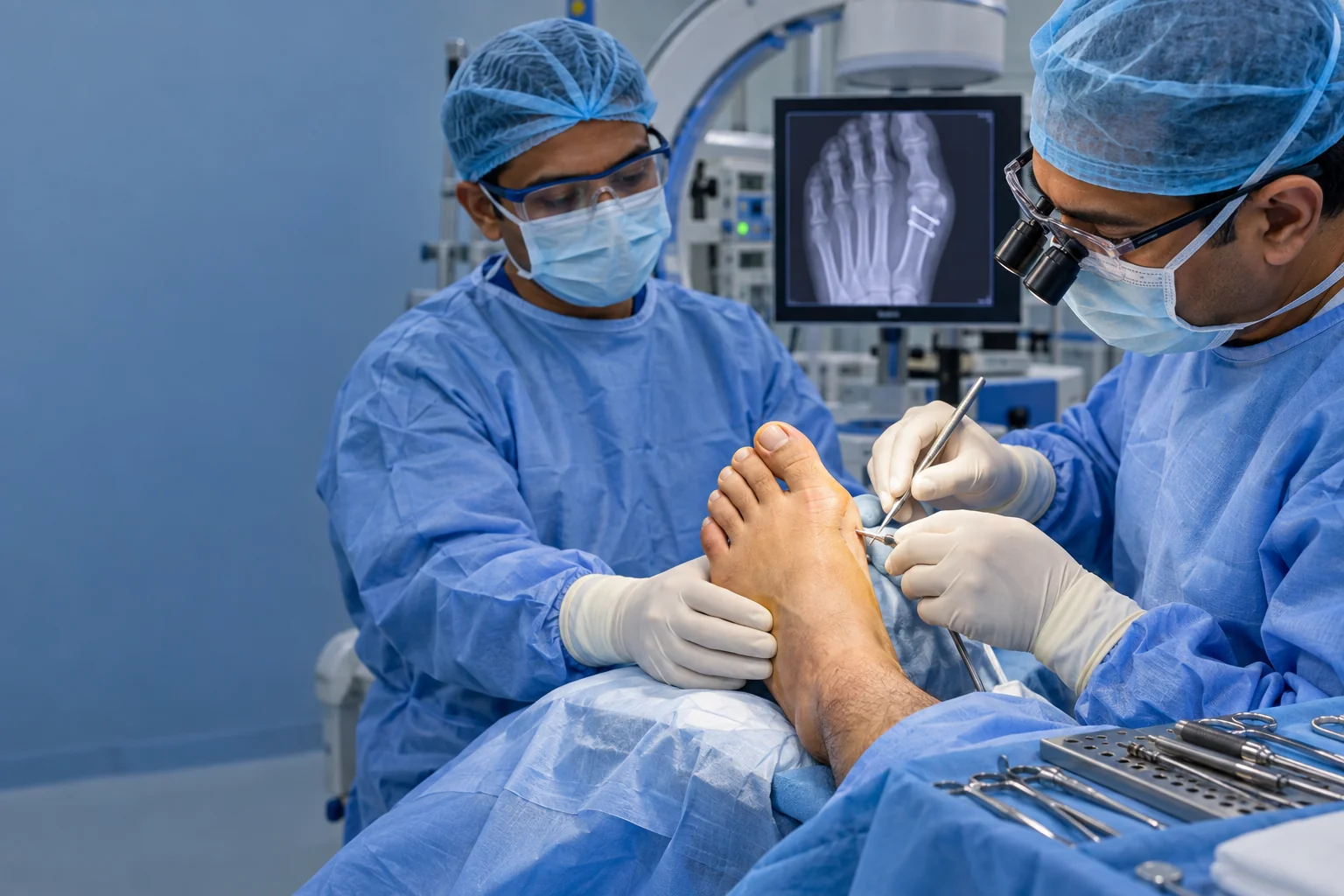
Bunionectomy, also known as hallux valgus correction, is a surgical procedure used to correct a bunion at the base of the big toe. A bunion develops when the big toe gradually shifts toward the smaller toes and the joint at its base becomes prominent. Surgery may be considered when pain, deformity, footwear problems, or difficulty walking continue despite non-surgical treatment.

Need help understanding this treatment?

Discuss your questions with
our Mumbai advisory team.

Treatment Information

Understanding Bunionectomy (Hallux Valgus Correction)

A bunion is a bony prominence that develops on the inner side of the foot at the joint where the big toe meets the first metatarsal bone.

As the deformity progresses, the big toe may angle toward the second toe, causing changes in foot alignment and pressure distribution.

Common symptoms may include:

  1. Pain around the big toe joint
  2. Redness or swelling
  3. Difficulty wearing shoes
  4. Calluses or pressure areas
  5. Reduced movement of the big toe
  6. Pain while walking
  7. Overlapping or crowding of the toes
  8. Progressive deformity

Bunions can develop due to a combination of factors such as:

  1. Inherited foot shape
  2. Joint instability
  3. Flat feet or other foot mechanics
  4. Certain inflammatory joint conditions
  5. Long-term pressure from unsuitable footwear

Tight or narrow shoes may worsen symptoms, although footwear alone is not usually the sole cause.

When Is Surgery Considered?

Many bunions can initially be managed without surgery.

Non-surgical treatment may include:

  1. Wider footwear
  2. Shoe inserts or orthotics
  3. Padding
  4. Pain-relieving medicines
  5. Activity modification
  6. Physiotherapy in selected cases

Surgery may be considered when:

  1. Pain interferes with walking or daily activities
  2. The deformity is progressing
  3. Footwear becomes difficult
  4. The big toe significantly crowds the other toes
  5. Non-surgical treatment does not provide adequate relief

How Is Bunion Surgery Performed?

There is no single operation suitable for every bunion.

The surgeon selects the procedure according to the severity of deformity, joint condition, foot shape, and age of the patient.

Surgery may involve:

  1. Removing the prominent bone
  2. Cutting and realigning the metatarsal or toe bones
  3. Rebalancing tendons and ligaments
  4. Fixing corrected bones with screws, plates, or other implants
  5. Fusing a joint in selected severe or arthritic cases

Osteotomy

An osteotomy involves making a controlled cut in the bone so that it can be repositioned into better alignment.

The bone is then stabilised with screws or other fixation devices while it heals.

Minimally Invasive Bunion Surgery

Selected bunions may be corrected through smaller incisions using specialised instruments.

Whether this approach is appropriate depends on the type and severity of the deformity and the surgeon's experience.

BEFORE SURGERY

Pre-Care

Before surgery, the foot and ankle specialist will assess foot alignment, symptoms, footwear difficulties, and imaging such as standing X-rays.

Patients may be advised to:

  1. Inform the doctor about all medical conditions.
  2. Provide a complete list of medicines, vitamins, and supplements.
  3. Discuss blood-thinning medicines with the medical team.
  4. Do not stop prescribed medicines unless specifically instructed.
  5. Complete standing foot X-rays or other imaging if recommended.
  6. Stop smoking and nicotine before surgery if advised, as they can interfere with bone healing.
  7. Follow fasting instructions before anaesthesia.
  8. Arrange transportation home after the procedure.
  9. Prepare crutches, a walker, or a special surgical shoe if recommended.
  10. Arrange help at home during the early recovery period.
  11. Follow instructions regarding skin preparation before surgery.
AFTER SURGERY

Post-Care

Recovery after bunion surgery depends on the type of correction performed.

Patients should:

  1. Keep the surgical dressing clean and dry.
  2. Take prescribed pain medicines and other medications as directed.
  3. Keep the foot elevated during the early recovery period to reduce swelling.
  4. Use a surgical shoe, boot, crutches, or other support as instructed.
  5. Follow weight-bearing restrictions carefully.
  6. Avoid unnecessary walking during early recovery.
  7. Move the ankle and toes only as advised.
  8. Attend all scheduled follow-up appointments.
  9. Follow instructions regarding stitch removal.
  10. Begin physiotherapy or toe-mobility exercises when recommended.
  11. Avoid tight shoes until swelling has reduced sufficiently.
  12. Resume exercise and sports only after medical clearance.

Swelling around the foot and big toe is common and may persist for several months.

Contact the surgeon promptly if you experience severe or increasing pain, excessive swelling, wound discharge, fever, worsening numbness, or toes becoming cold, pale, or blue.

Recovery varies depending on the type of bunion, surgical technique, bone healing, and individual response.

Common Questions

Questions patients
often want clarified.

These answers provide general guidance. Your treating specialist should assess your individual condition and medical requirements.

What is a bunion?
A bunion is a deformity at the base of the big toe where the joint becomes prominent and the big toe shifts toward the smaller toes.
Does every bunion require surgery?
No. Mild bunions or bunions that do not cause significant symptoms can often be managed with footwear changes, padding, orthotics, and activity modification.
When is bunion surgery recommended?
Surgery may be considered when pain, deformity, difficulty walking, or footwear problems continue despite appropriate non-surgical treatment.
Is bunion surgery painful?
The procedure is performed under anaesthesia. Pain, swelling, and soreness are expected during early recovery and are usually managed with medication and elevation.
How long does bunion surgery take?
The procedure often takes around one to two hours, although the duration varies depending on the correction required.
Can I walk after bunion surgery?
Some patients are allowed limited weight-bearing in a special surgical shoe soon after surgery, while others may need to avoid weight-bearing for a period. This depends on the procedure performed.
How long does recovery take?
Initial recovery generally takes several weeks, while swelling and bone healing may continue for several months.
Will the bunion come back?
Recurrence can occur, especially if the underlying deformity is severe or alignment changes again over time.
Will I be able to wear normal shoes again?
Many patients return to regular footwear after healing, although swelling may make wider shoes more comfortable for several months.
What are the possible risks of bunion surgery?
Possible risks include infection, delayed bone healing, stiffness, numbness, persistent pain, recurrence, over-correction, under-correction, implant irritation, and blood clots.
Doctor discussing surgical treatment with patient
Independent Surgical Guidance

A clearer conversation
can change what comes next.

Understand the questions worth asking before your next consultation.