
Independent guidance for confident surgical decisions
Surgical Advisor
Home About Us
Blog Contact Us Get Surgical Guidance
Surgical Advisor Treatment

Achilles Tendon Repair

Orthopedic Surgery

Looking for an Achilles Tendon Repair Specialist in Mumbai?

Achilles tendon injuries are commonly managed by orthopaedic foot and ankle or sports-injury specialists. A medical advisory service can help you connect with experienced orthopaedic, foot-and-ankle, and sports-injury surgeons in Mumbai based on the type of rupture, activity level, previous treatment, preferred location, and consultation requirements. A specialist assessment is necessary to determine whether functional rehabilitation, surgical repair, or reconstruction is the most appropriate treatment approach.

Achilles Tendon Repair

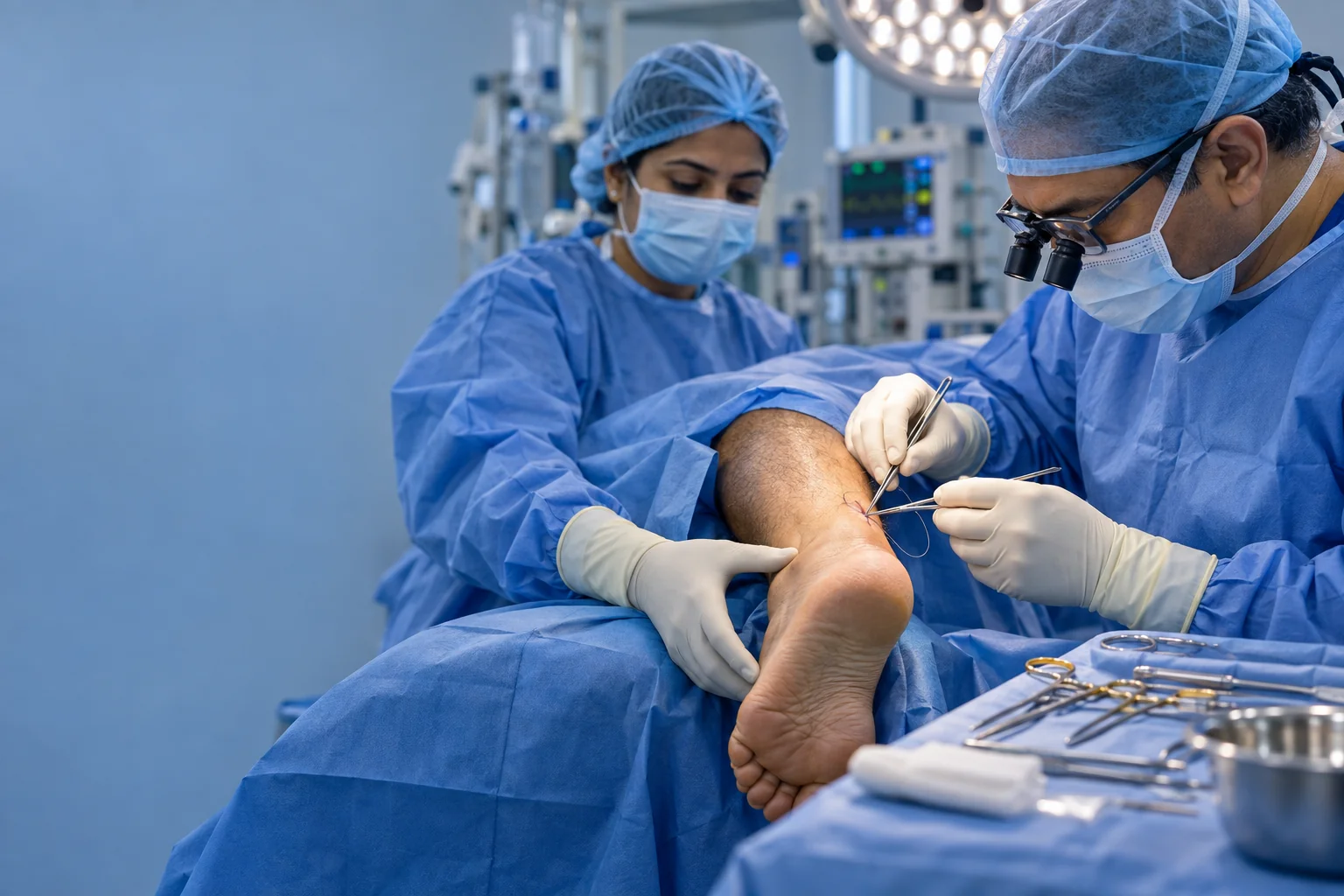
Achilles tendon repair is a surgical procedure used to reconnect a torn Achilles tendon, the strong tendon that joins the calf muscles to the heel bone. Surgery may be considered for complete ruptures, significant tendon separation, certain active patients, or injuries that are unlikely to heal well with non-surgical treatment. The aim is to restore tendon continuity, strength, and lower-leg function.

Need help understanding this treatment?

Discuss your questions with
our Mumbai advisory team.

Treatment Information

Understanding Achilles Tendon Repair

The Achilles tendon is the largest tendon in the body and plays an important role in walking, running, jumping, and pushing the foot downward.

An Achilles tendon rupture usually occurs when the tendon is suddenly overstretched.

Common causes include:

  1. Sudden acceleration while running
  2. Jumping or landing
  3. Sports involving quick changes of direction
  4. Falls
  5. Direct trauma
  6. Sudden forceful push-off
  7. Age-related tendon degeneration

Patients may describe:

  1. A sudden sharp pain in the back of the ankle
  2. A snapping or popping sensation
  3. Feeling as though someone kicked the back of the leg
  4. Difficulty walking
  5. Weakness when pushing off the foot
  6. Difficulty standing on tiptoe
  7. Swelling and bruising around the ankle

When Is Surgery Considered?

Not every Achilles tendon rupture requires surgery.

Some ruptures can be treated with:

  1. Functional bracing
  2. Immobilisation
  3. Controlled weight-bearing
  4. Physiotherapy
  5. Structured rehabilitation

Surgery may be considered when:

  1. The tendon is completely ruptured
  2. The tendon ends are significantly separated
  3. The patient has high physical or sporting demands
  4. There is a recurrent rupture
  5. Non-surgical treatment is unlikely to provide sufficient stability
  6. The injury is associated with additional damage

The final decision depends on age, activity level, overall health, injury pattern, and individual treatment goals.

How Is Achilles Tendon Repair Performed?

During surgery, the torn ends of the tendon are identified and stitched back together using strong sutures.

The repair may be performed using:

  1. Open surgery
  2. Mini-open surgery
  3. Percutaneous or minimally invasive techniques in selected cases

The choice of technique depends on the location of the rupture, condition of the tendon, time since injury, and surgeon's assessment.

Chronic Achilles Tendon Injuries

If treatment is delayed and the tendon has shortened or developed a large gap, direct repair may not be possible.

More complex reconstruction may involve:

  1. Tendon advancement
  2. Tendon transfer
  3. Tendon grafting
  4. Lengthening procedures

These operations are more extensive and may require a longer recovery period.

BEFORE SURGERY

Pre-Care

Before surgery, the orthopaedic specialist will assess the injury and may request imaging.

Patients may be advised to:

  1. Keep the ankle immobilised in the recommended position.
  2. Avoid unnecessary weight-bearing.
  3. Use crutches if advised.
  4. Inform the doctor about all medicines, supplements, and allergies.
  5. Discuss blood-thinning medication with the medical team.
  6. Do not stop prescribed medicines unless specifically instructed.
  7. Stop smoking and nicotine before surgery if advised, as they can interfere with tendon and wound healing.
  8. Follow fasting instructions before anaesthesia.
  9. Arrange transportation home after surgery.
  10. Prepare a walker, crutches, boot, or brace if recommended.
  11. Arrange help at home during the early recovery period.
  12. Follow instructions regarding skin preparation.
AFTER SURGERY

Post-Care

Recovery requires protection of the repaired tendon followed by gradual rehabilitation.

Patients should:

  1. Keep the cast, splint, or boot in place as instructed.
  2. Follow weight-bearing restrictions carefully.
  3. Use crutches or other walking aids if prescribed.
  4. Keep the leg elevated during the early recovery period to reduce swelling.
  5. Keep surgical dressings clean and dry.
  6. Take prescribed medicines as directed.
  7. Begin physiotherapy at the recommended stage.
  8. Perform only approved ankle and calf exercises.
  9. Avoid forceful stretching of the Achilles tendon too early.
  10. Avoid running, jumping, and sports until medically cleared.
  11. Attend all scheduled follow-up appointments.
  12. Follow instructions regarding scar care and footwear progression.

Swelling, stiffness, calf weakness, and soreness are common during early recovery.

Contact the surgeon promptly if you experience severe or worsening pain, fever, wound discharge, increasing redness, sudden calf swelling, chest pain, shortness of breath, or sudden loss of ankle function.

Recovery varies according to the type of rupture, surgical technique, rehabilitation, and individual healing response.

Common Questions

Questions patients
often want clarified.

These answers provide general guidance. Your treating specialist should assess your individual condition and medical requirements.

What is an Achilles tendon rupture?
It is a partial or complete tear of the tendon that connects the calf muscles to the heel bone.
Does every Achilles tendon rupture need surgery?
No. Some patients can be treated successfully with functional bracing and rehabilitation. Surgery may be considered based on the tear and the patient's activity level.
How is an Achilles rupture diagnosed?
Diagnosis usually involves a physical examination and may include ultrasound or MRI if the diagnosis or extent of injury is unclear.
Is Achilles tendon repair painful?
The procedure is performed under anaesthesia. Pain, swelling, and soreness are expected during early recovery and are usually managed with medication.
How long does the surgery take?
Achilles tendon repair often takes around one hour, although complex or chronic injuries may take longer.
When can I walk after surgery?
Weight-bearing usually progresses gradually according to the surgeon's rehabilitation plan. A boot or brace is commonly used during early recovery.
How long does recovery take?
Recovery usually takes several months. Strength, balance, and confidence may continue improving for six months to a year or longer.
When can I return to sports?
Return to running and sports depends on tendon healing, calf strength, balance, and rehabilitation progress. It often takes many months.
Can the Achilles tendon rupture again?
Yes. Re-rupture is possible, especially if excessive force is placed on the tendon before it has healed sufficiently.
What are the possible risks of Achilles tendon repair?
Possible risks include infection, wound-healing problems, re-rupture, stiffness, nerve injury, blood clots, weakness, scar sensitivity, and anaesthesia-related complications.
Doctor discussing surgical treatment with patient
Independent Surgical Guidance

A clearer conversation
can change what comes next.

Understand the questions worth asking before your next consultation.