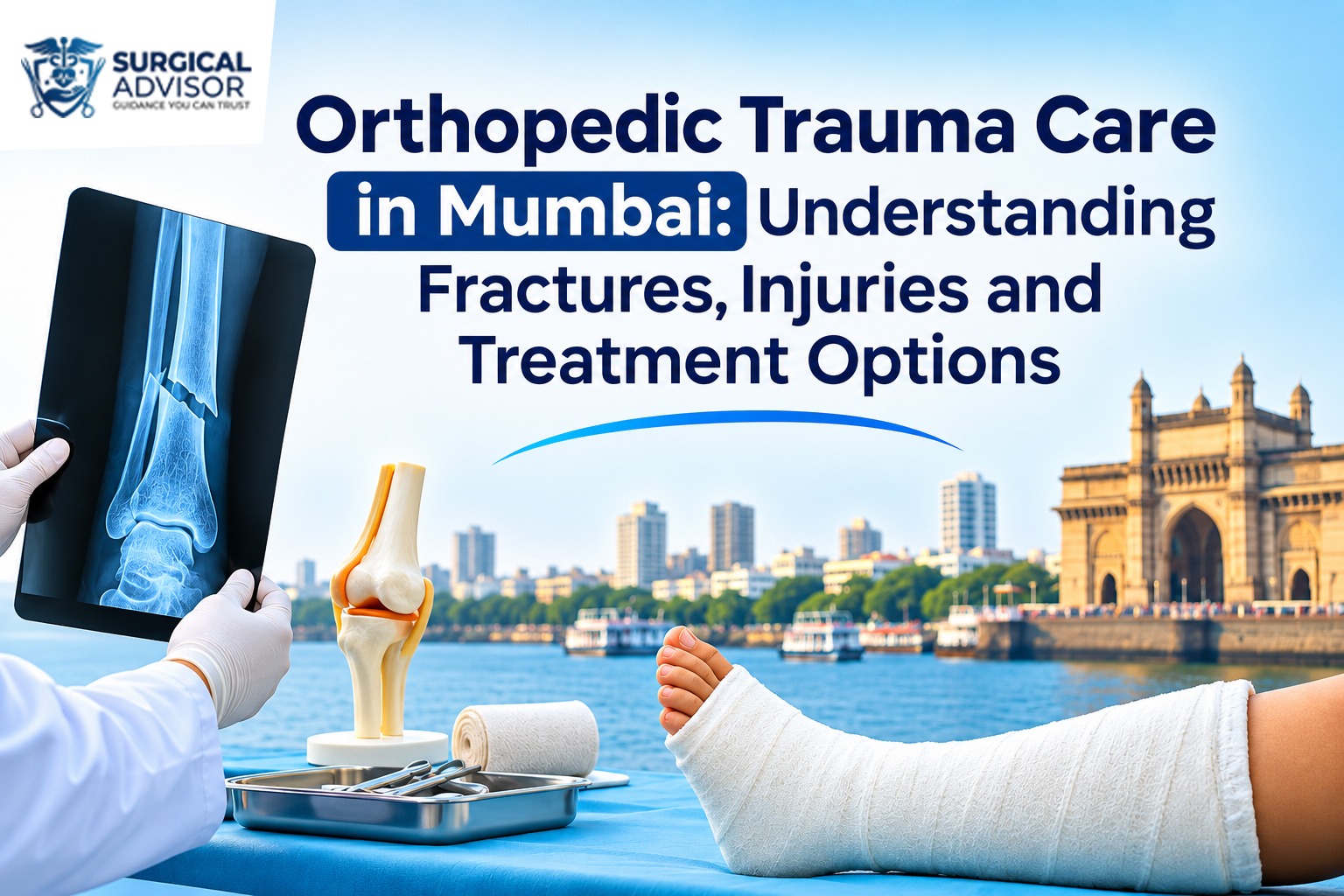
Accident and trauma surgery focuses on the diagnosis and treatment of injuries caused by road accidents, falls, sports injuries, workplace incidents, and other forms of physical trauma. It may involve treatment for fractures, joint dislocations, ligament and tendon injuries, muscle damage, or complex injuries involving bones and soft tissues. Treatment may range from immobilisation and rehabilitation to surgical repair, depending on the severity of the injury.
Accidents can cause injuries ranging from simple fractures and sprains to complex damage involving bones, joints, muscles, ligaments, tendons, nerves, or blood vessels.
Trauma treatment aims to:
- Stabilise the injured area
- Reduce pain
- Restore normal alignment
- Repair damaged bones or soft tissues
- Protect nerves and blood vessels
- Restore movement and function
- Reduce the risk of long-term disability
Accident and trauma care may be required for injuries such as:
- Bone fractures
- Joint dislocations
- Ligament tears
- Tendon injuries
- Muscle injuries
- Crush injuries
- Multiple fractures
- Open fractures
- Sports-related trauma
- Road traffic accident injuries
- Workplace injuries
- Complex joint injuries
Fracture Treatment
A fracture is a break or crack in a bone.
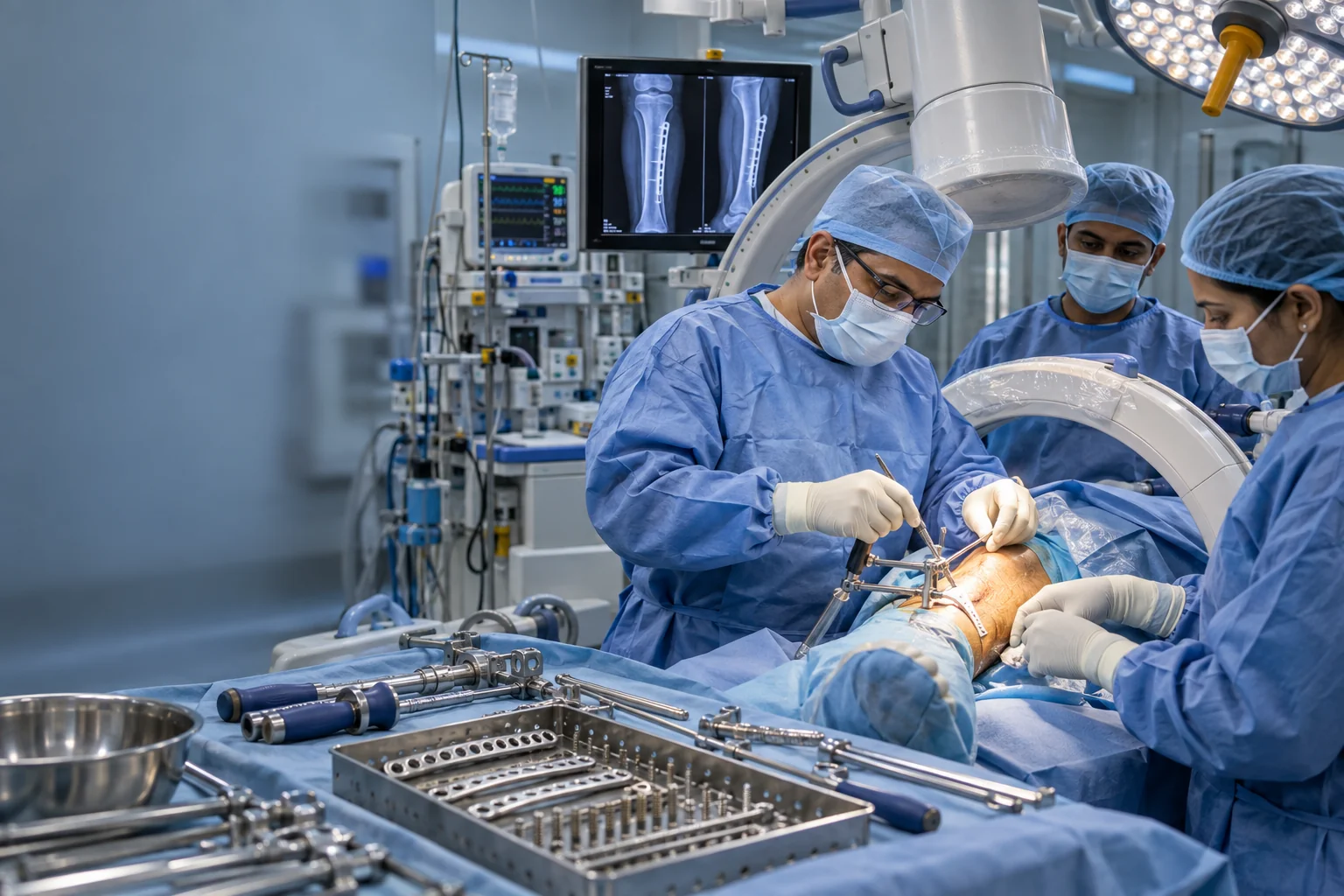
Simple or stable fractures may sometimes be treated with a cast, splint, or brace. More complex fractures may require surgery to reposition and stabilise the bone.
Surgical fixation may involve:
- Plates
- Screws
- Rods
- Nails
- Wires
- External fixation devices
The exact method depends on the location, type, and severity of the fracture.
Dislocation Treatment
A dislocation occurs when the bones forming a joint are forced out of their normal position.
Treatment usually involves carefully returning the joint to its normal position, known as reduction.
If the joint is unstable or associated with fractures, ligament damage, or repeated dislocation, surgery may be required.
Soft-Tissue Injuries
Soft-tissue injuries can affect:
- Muscles
- Ligaments
- Tendons
- Cartilage
- Fascia and surrounding tissues
Minor injuries may improve with rest, physiotherapy, immobilisation, and medication.
Severe tears or injuries may require surgical repair or reconstruction.
Complex Trauma Surgery
High-impact accidents can result in multiple injuries or fractures involving several bones and joints.
Complex trauma surgery may require a multidisciplinary approach involving orthopaedic surgeons, trauma specialists, anaesthetists, physiotherapists, and other specialists depending on the injuries involved.
The goal is not only to repair the injury but also to help the patient regain mobility, strength, and independence.