
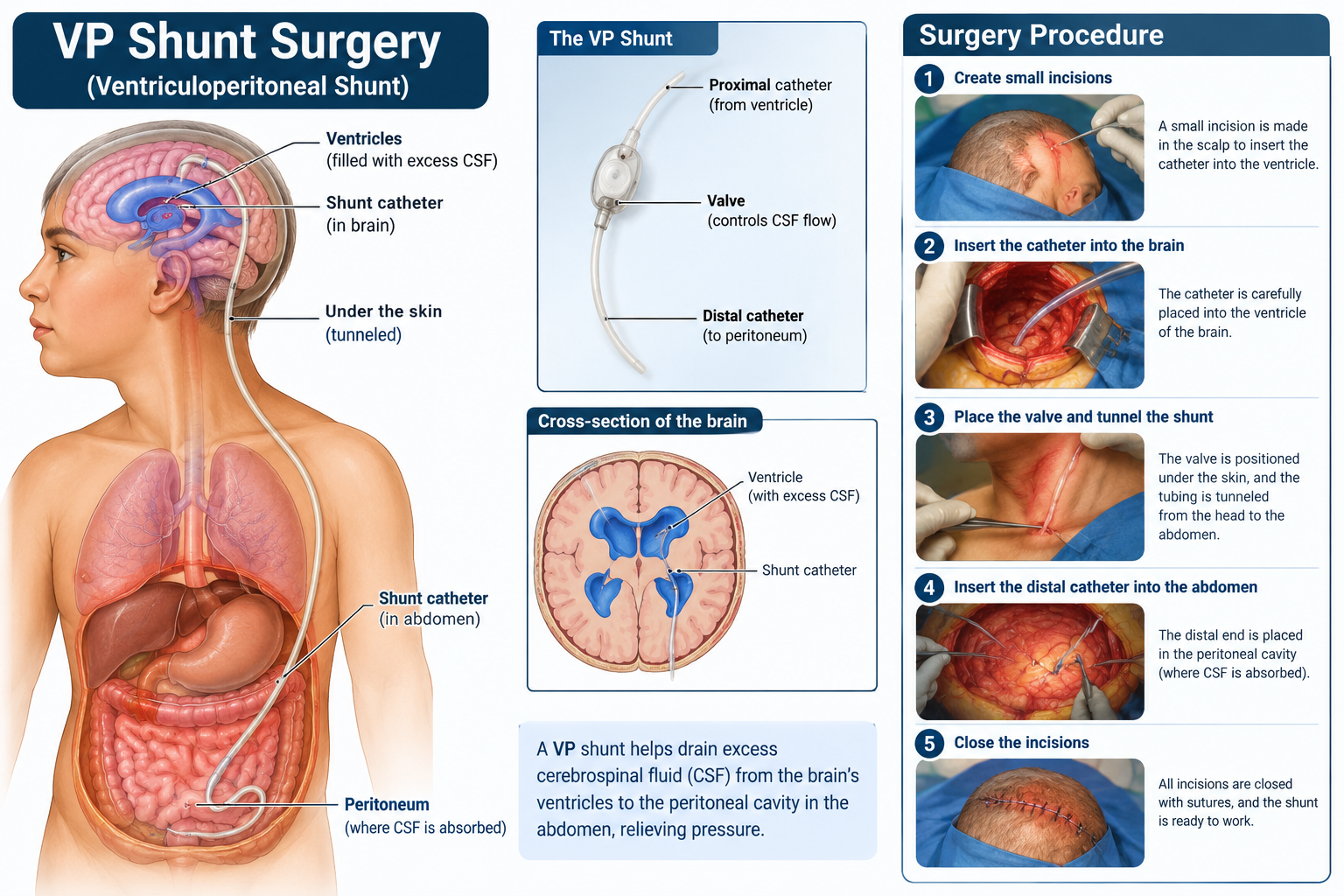
Ventriculoperitoneal, or VP, shunt surgery is performed to treat hydrocephalus, a condition in which excess cerebrospinal fluid builds up inside the brain. A thin tube system is placed to redirect excess fluid from the brain's ventricles to the abdomen, where it can be absorbed.
Cerebrospinal fluid normally circulates around the brain and spinal cord.
Hydrocephalus occurs when fluid accumulates faster than it can drain or be absorbed.
This can increase pressure inside the skull.
Possible symptoms include:
- Headache
- Nausea or vomiting
- Drowsiness
- Balance difficulties
- Vision problems
- Memory or behavioural changes
- Enlarged head size in infants
- Developmental delay in children
During VP shunt surgery, a catheter is placed into a brain ventricle and connected to a valve beneath the skin.
Another catheter runs under the skin to the abdominal cavity.
The valve regulates fluid drainage.
