
Independent guidance for confident surgical decisions
Surgical Advisor
Home About Us
Blog Contact Us Get Surgical Guidance
Surgical Advisor Treatment

Peripheral Nerve Repair Surgery

Neuro Surgery

Looking for a Peripheral Nerve Repair Specialist in Mumbai?

A medical advisory service can help connect patients with experienced peripheral nerve surgeons, hand surgeons, orthopaedic specialists, and reconstructive microsurgeons in Mumbai based on the nerve injured and treatment requirements.

Peripheral Nerve Repair Surgery

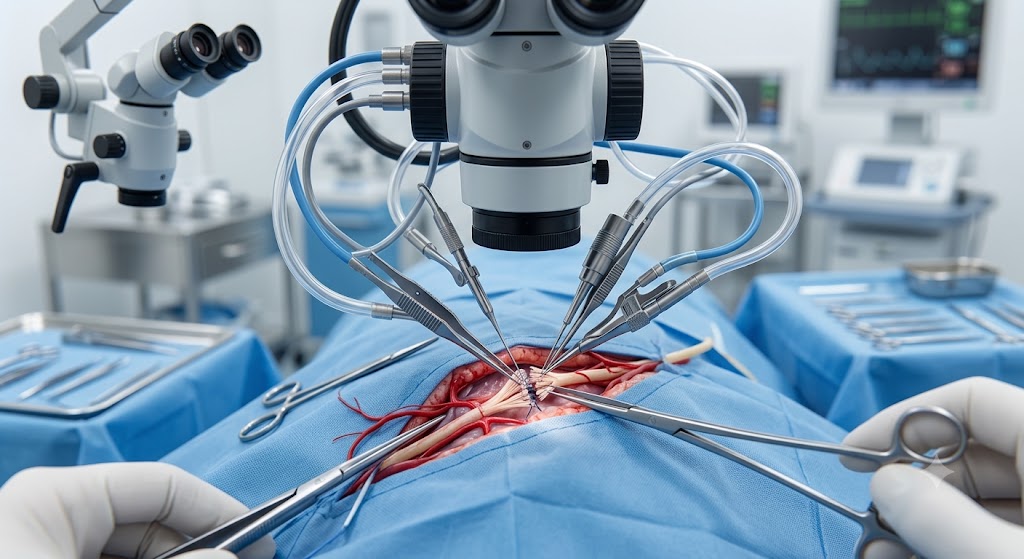
Peripheral nerve repair surgery is performed to restore continuity or function in nerves outside the brain and spinal cord that have been cut, severely damaged, compressed, or injured. These nerves control sensation and movement in the arms, hands, legs, and other parts of the body.

Need help understanding this treatment?

Discuss your questions with
our Mumbai advisory team.

Treatment Information

Understanding Peripheral Nerve Repair Surgery

Peripheral nerve injuries may occur due to:

  1. Deep cuts
  2. Road traffic accidents
  3. Crush injuries
  4. Fractures
  5. Dislocations
  6. Sports injuries
  7. Surgical injury
  8. Severe nerve compression

Symptoms may include:

  1. Numbness
  2. Tingling
  3. Burning pain
  4. Muscle weakness
  5. Loss of movement
  6. Reduced sensation
  7. Muscle wasting

Direct Nerve Repair

If the cut nerve ends can be brought together without excessive tension, the surgeon may directly reconnect them using microsurgical techniques.

Nerve Grafting

If there is a gap between the nerve ends, a segment of another nerve may be used as a graft to bridge the defect.

Nerve Transfer

In selected injuries, a healthy nearby nerve or part of a nerve may be redirected to restore function to an important muscle or area.

Neurolysis

If the nerve is intact but trapped in scar tissue or compressed, surgery may release the nerve from surrounding tissue.

Nerve recovery is slow because regenerating nerve fibres grow gradually over time.

BEFORE SURGERY

Pre-Care

Patients may require:

  1. Neurological examination
  2. Nerve conduction studies
  3. Electromyography
  4. Ultrasound or MRI in selected cases
  5. Medication review
  6. Assessment of associated fractures or tendon injuries


AFTER SURGERY

Post-Care

Patients should:

  1. Protect the repaired limb.
  2. Use splints if prescribed.
  3. Attend hand or physiotherapy.
  4. Perform only approved exercises.
  5. Avoid excessive stretching or loading.
  6. Attend neurological follow-up.

Seek prompt care for increasing pain, wound infection, loss of circulation, or new weakness.

Common Questions

Questions patients
often want clarified.

These answers provide general guidance. Your treating specialist should assess your individual condition and medical requirements.

Can a severed nerve heal without surgery?
Some partial injuries can recover naturally, but completely divided nerves often require surgical repair.
How quickly should nerve injuries be assessed?
Significant nerve injuries should be evaluated early because treatment options can depend on the time since injury.
How long does nerve recovery take?
Recovery may take months because nerve regeneration occurs slowly.
Will sensation and strength return completely?
Recovery varies depending on the nerve, injury severity, age, timing of repair, and distance to the affected muscles or skin.
What are the risks?
Possible risks include infection, scarring, persistent pain, incomplete recovery, neuroma formation, stiffness, and need for additional surgery.
Doctor discussing surgical treatment with patient
Independent Surgical Guidance

A clearer conversation
can change what comes next.

Understand the questions worth asking before your next consultation.