
Independent guidance for confident surgical decisions
Surgical Advisor
Home About Us
Blog Contact Us Get Surgical Guidance
Surgical Advisor Treatment

Laminectomy / Spinal Decompression

Neuro Surgery

Looking for a Spinal Decompression Specialist in Mumbai?

A medical advisory service can help connect patients with experienced spine surgeons and neurosurgeons in Mumbai.

Laminectomy / Spinal Decompression

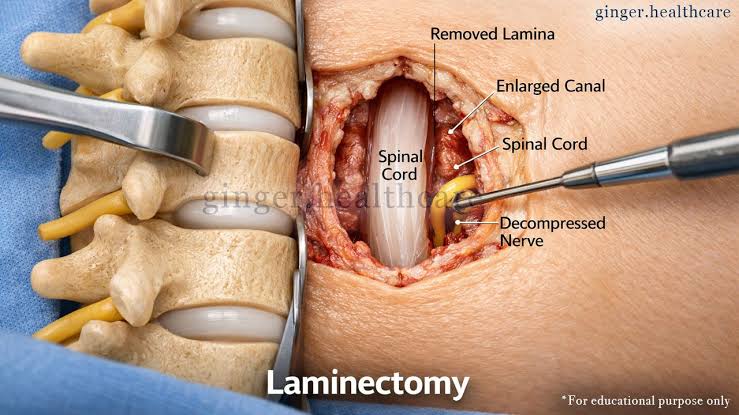
Laminectomy is a spinal decompression procedure used to relieve pressure on the spinal cord or nerves. It involves removing part of the vertebral bone called the lamina and may be performed for spinal stenosis, bone spurs, disc problems, or other causes of nerve compression.

Need help understanding this treatment?

Discuss your questions with
our Mumbai advisory team.

Treatment Information

Understanding Laminectomy / Spinal Decompression

Spinal stenosis can narrow the space available for the spinal cord or nerves.

Symptoms may include:

  1. Back or neck pain
  2. Leg or arm pain
  3. Numbness
  4. Weakness
  5. Difficulty walking
  6. Heaviness in the legs

During laminectomy, the surgeon removes part of the lamina and may also remove thickened ligaments or other structures causing compression.

In some patients, fusion may be added if spinal instability is present.

BEFORE SURGERY

Pre-Care

Patients may require MRI or CT imaging, medication review, blood tests, and anaesthesia assessment.

AFTER SURGERY

Post-Care

Patients should gradually increase walking, avoid heavy lifting and twisting, maintain wound care, and begin rehabilitation when advised.

Seek urgent care for new weakness, bladder or bowel problems, severe pain, fever, or wound discharge.

Common Questions

Questions patients
often want clarified.

These answers provide general guidance. Your treating specialist should assess your individual condition and medical requirements.

What is spinal decompression?
It is surgery designed to create more space for compressed nerves or the spinal cord.
When is laminectomy needed?
It may be considered when severe stenosis causes persistent neurological symptoms despite non-surgical treatment.
Is fusion always required?
No. Fusion is generally added only when instability or another structural issue is present.
How long is recovery?
Initial recovery may take several weeks.
What are the risks?
Risks include infection, bleeding, nerve injury, spinal fluid leakage, instability, and persistent symptoms.
Doctor discussing surgical treatment with patient
Independent Surgical Guidance

A clearer conversation
can change what comes next.

Understand the questions worth asking before your next consultation.