
Independent guidance for confident surgical decisions
Surgical Advisor
Home About Us
Blog Contact Us Get Surgical Guidance
Surgical Advisor Treatment

Carpal Tunnel Release

Neuro Surgery

Looking for a Carpal Tunnel Specialist in Mumbai?

A medical advisory service can help connect patients with experienced hand surgeons, orthopaedic specialists, and peripheral nerve surgeons in Mumbai.

Carpal Tunnel Release

Carpal tunnel release is a surgical procedure used to relieve pressure on the median nerve at the wrist. It may be recommended when carpal tunnel syndrome causes persistent numbness, tingling, pain, weakness, or loss of hand function despite non-surgical treatment.

Need help understanding this treatment?

Discuss your questions with
our Mumbai advisory team.

Treatment Information

Understanding Carpal Tunnel Release

The median nerve passes through a narrow space in the wrist called the carpal tunnel.

Compression of this nerve may cause:

  1. Tingling in the thumb, index, and middle fingers
  2. Night-time numbness
  3. Hand weakness
  4. Difficulty gripping
  5. Dropping objects
  6. Pain extending into the forearm

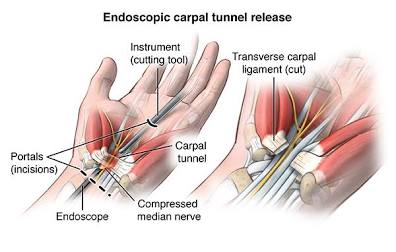
During surgery, the transverse carpal ligament is divided to create more space for the median nerve.

The operation may be performed using:

  1. Open carpal tunnel release
  2. Endoscopic carpal tunnel release


BEFORE SURGERY

Pre-Care

Patients may require nerve conduction studies, medication review, and evaluation of conditions such as diabetes or thyroid disease.

AFTER SURGERY

Post-Care

Patients should:

  1. Keep the dressing clean.
  2. Elevate the hand initially.
  3. Move fingers as advised.
  4. Avoid heavy gripping or lifting.
  5. Attend hand therapy if recommended.

Seek medical attention for worsening numbness, severe swelling, fever, wound discharge, or cold/discoloured fingers.

Common Questions

Questions patients
often want clarified.

These answers provide general guidance. Your treating specialist should assess your individual condition and medical requirements.

Does every patient need surgery?
No. Mild cases may improve with splints, medicines, injections, or activity changes.
When is surgery recommended?
It may be considered when symptoms persist, weakness develops, or nerve tests show significant compression.
How long does surgery take?
It usually takes around 15–30 minutes.
When can I use my hand?
Light finger movement is generally encouraged soon after surgery.
What are the risks?
Possible risks include infection, scar tenderness, nerve injury, persistent numbness, stiffness, and recurrence.
Doctor discussing surgical treatment with patient
Independent Surgical Guidance

A clearer conversation
can change what comes next.

Understand the questions worth asking before your next consultation.
