
Independent guidance for confident surgical decisions
Surgical Advisor
Home About Us
Blog Contact Us Get Surgical Guidance
Surgical Advisor Treatment

Brain Tumor Surgery

Neuro Surgery

Looking for a Brain Tumor Surgeon in Mumbai?

A medical advisory service can help you connect with experienced neurosurgeons and neuro-oncology specialists in Mumbai based on the tumor type, location, diagnosis, and treatment requirements.

Brain Tumor Surgery

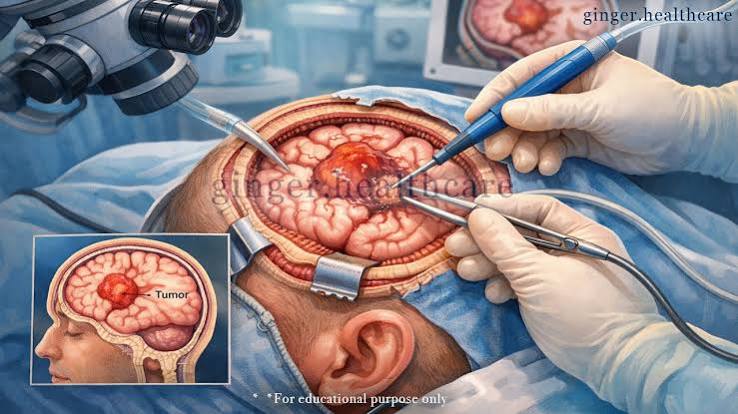
Brain tumor surgery is a neurosurgical procedure performed to remove all or part of a tumor located in or around the brain. Surgery may be recommended to relieve pressure on the brain, obtain tissue for diagnosis, reduce symptoms, or remove as much tumor as safely possible. Treatment depends on the tumor's type, size, location, and relationship to important areas of the brain.

Need help understanding this treatment?

Discuss your questions with
our Mumbai advisory team.

Treatment Information

Understanding Brain Tumor Surgery

Brain tumors may be benign or malignant and may originate within the brain or spread from another part of the body.

Symptoms can include:

  1. Persistent headaches
  2. Seizures
  3. Weakness or numbness
  4. Vision or speech changes
  5. Balance problems
  6. Personality or memory changes
  7. Nausea or vomiting

The aim of surgery is often maximal safe removal, meaning removing as much tumor as possible while protecting important neurological functions.

Techniques may include:

  1. Craniotomy
  2. Microsurgical tumor removal
  3. Image-guided neuronavigation
  4. Intraoperative monitoring
  5. Awake brain surgery in selected cases
  6. Endoscopic approaches for certain tumors

Some patients may require additional radiotherapy, chemotherapy, targeted therapy, or other treatment after surgery.

BEFORE SURGERY

Pre-Care

Patients may be advised to:

  1. Complete MRI, CT, or other imaging.
  2. Inform the doctor about all medicines.
  3. Discuss blood-thinning medication.
  4. Follow fasting instructions.
  5. Take seizure or steroid medication if prescribed.
  6. Complete blood tests and anaesthesia assessment.
AFTER SURGERY

Post-Care

Patients should:

  1. Take prescribed medicines.
  2. Keep the wound clean and dry.
  3. Avoid heavy physical activity initially.
  4. Attend neurological follow-up.
  5. Complete rehabilitation if recommended.
  6. Attend oncology consultations if additional treatment is required.

Seek urgent care for seizures, new weakness, speech difficulty, severe headache, repeated vomiting, confusion, or loss of consciousness.

Common Questions

Questions patients
often want clarified.

These answers provide general guidance. Your treating specialist should assess your individual condition and medical requirements.

Can every brain tumor be completely removed?
No. Complete removal depends on the tumor's location, type, and involvement with important brain structures.
Is brain tumor surgery always necessary?
No. Some tumors may be monitored or treated with radiation or medicines depending on their type and behaviour.
How long does surgery take?
It may take several hours depending on the complexity and location of the tumor.
Will I need additional treatment?
Some tumors require radiotherapy, chemotherapy, or other treatment after surgery.
What are the risks?
Risks can include bleeding, infection, seizures, stroke, neurological deficits, brain swelling, and anaesthesia-related complications.
Doctor discussing surgical treatment with patient
Independent Surgical Guidance

A clearer conversation
can change what comes next.

Understand the questions worth asking before your next consultation.