
Independent guidance for confident surgical decisions
Surgical Advisor
Home About Us
Blog Contact Us Get Surgical Guidance
Surgical Advisor Treatment

Brain Aneurysm Surgery

Neuro Surgery

Looking for a Brain Aneurysm Specialist in Mumbai?

A medical advisory service can help connect patients with experienced cerebrovascular neurosurgeons and interventional neuroradiology specialists in Mumbai.

Brain Aneurysm Surgery

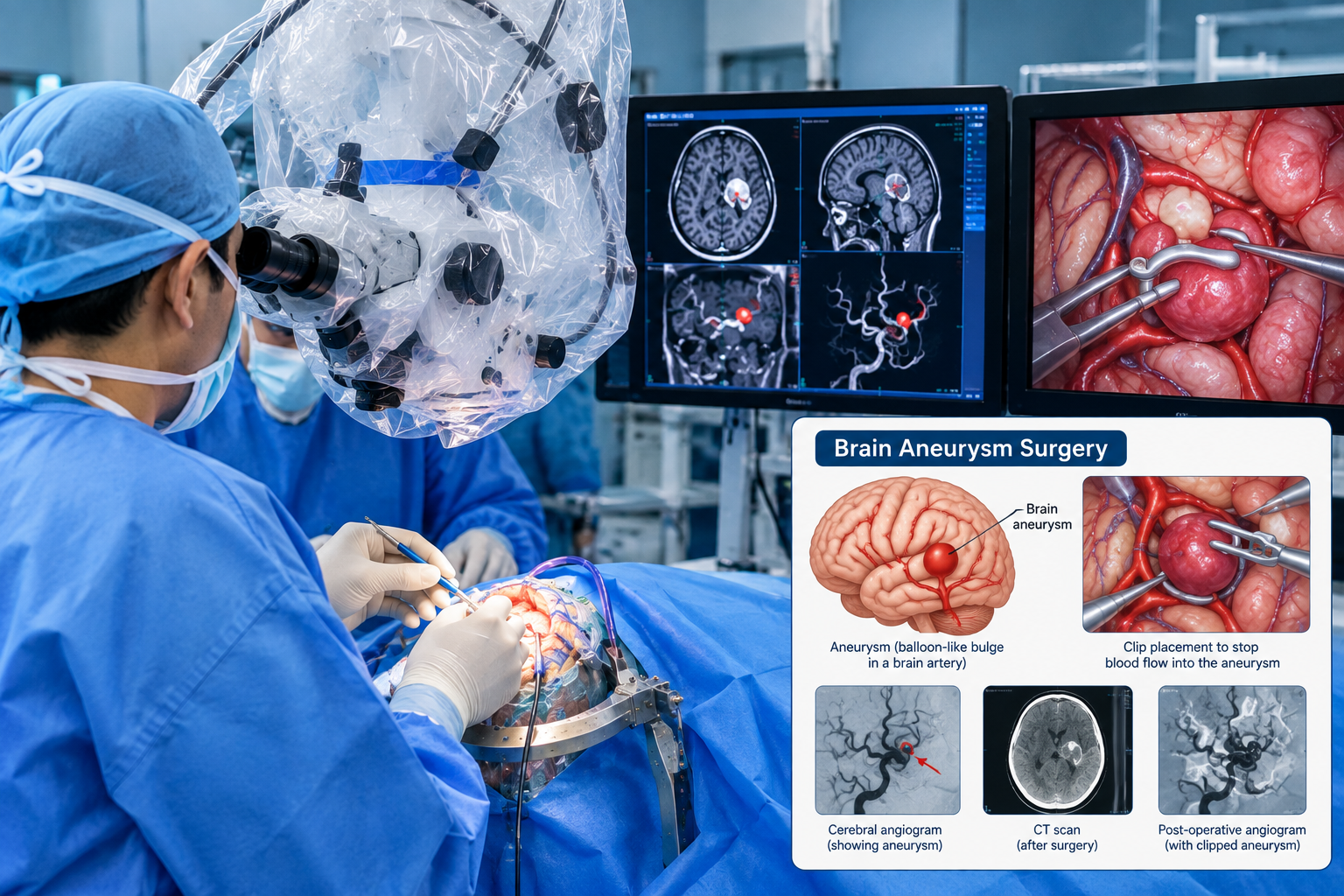
Brain aneurysm surgery is performed to prevent or stop bleeding from an abnormal bulge in a brain artery. Treatment may involve surgical clipping or minimally invasive endovascular techniques such as coiling, depending on the aneurysm's size, shape, location, and whether it has ruptured.

Need help understanding this treatment?

Discuss your questions with
our Mumbai advisory team.

Treatment Information

Understanding Brain Aneurysm Surgery

A brain aneurysm forms when a weakened area of an artery expands outward.

Many aneurysms cause no symptoms until they enlarge or rupture.

A ruptured aneurysm can cause bleeding around the brain known as a subarachnoid haemorrhage and requires emergency treatment.

Symptoms of rupture may include:

  1. Sudden extremely severe headache
  2. Vomiting
  3. Neck stiffness
  4. Loss of consciousness
  5. Seizures
  6. Vision problems
  7. Weakness or confusion

Surgical Clipping

During clipping, the neurosurgeon performs a craniotomy and places a small metal clip across the neck of the aneurysm to prevent blood from entering it.

Endovascular Treatment

A catheter is passed through a blood vessel to the aneurysm.

Treatment may involve:

  1. Coils
  2. Stents
  3. Flow-diverting devices
  4. Other endovascular techniques

The most appropriate treatment is determined by a neurovascular team.

BEFORE SURGERY

Pre-Care

Patients may require:

  1. CT, MRI, or cerebral angiography
  2. Blood tests
  3. Neurological assessment
  4. Blood pressure management
  5. Medication review
  6. Fasting before surgery


AFTER SURGERY

Post-Care

Patients should:

  1. Take prescribed medications.
  2. Control blood pressure.
  3. Attend follow-up imaging.
  4. Avoid smoking.
  5. Gradually resume activity.
  6. Complete rehabilitation if neurological deficits are present.

Seek emergency care for sudden severe headache, weakness, seizures, loss of consciousness, or new neurological symptoms.

Common Questions

Questions patients
often want clarified.

These answers provide general guidance. Your treating specialist should assess your individual condition and medical requirements.

Does every brain aneurysm require treatment?
No. Some small unruptured aneurysms may be monitored.
Is a ruptured aneurysm an emergency?
Yes. A ruptured aneurysm requires immediate hospital treatment.
What is the difference between clipping and coiling?
Clipping requires open surgery, while coiling is performed through blood vessels using a catheter.
Can an aneurysm return after treatment?
Recurrence is possible in some cases, so follow-up imaging may be recommended.
What are the risks?
Possible risks include stroke, bleeding, infection, vessel injury, seizures, neurological deficits, and anaesthesia complications.
Doctor discussing surgical treatment with patient
Independent Surgical Guidance

A clearer conversation
can change what comes next.

Understand the questions worth asking before your next consultation.