
Independent guidance for confident surgical decisions
Surgical Advisor
Home About Us
Blog Contact Us Get Surgical Guidance
Surgical Advisor Treatment

Hysterectomy

Gynec Surgery - Laparoscopy Surgery

Looking for a Hysterectomy Specialist in Mumbai?

A medical advisory service can help you connect with experienced gynecologists and minimally invasive gynecologic surgeons in Mumbai based on your diagnosis and treatment requirements.

Hysterectomy

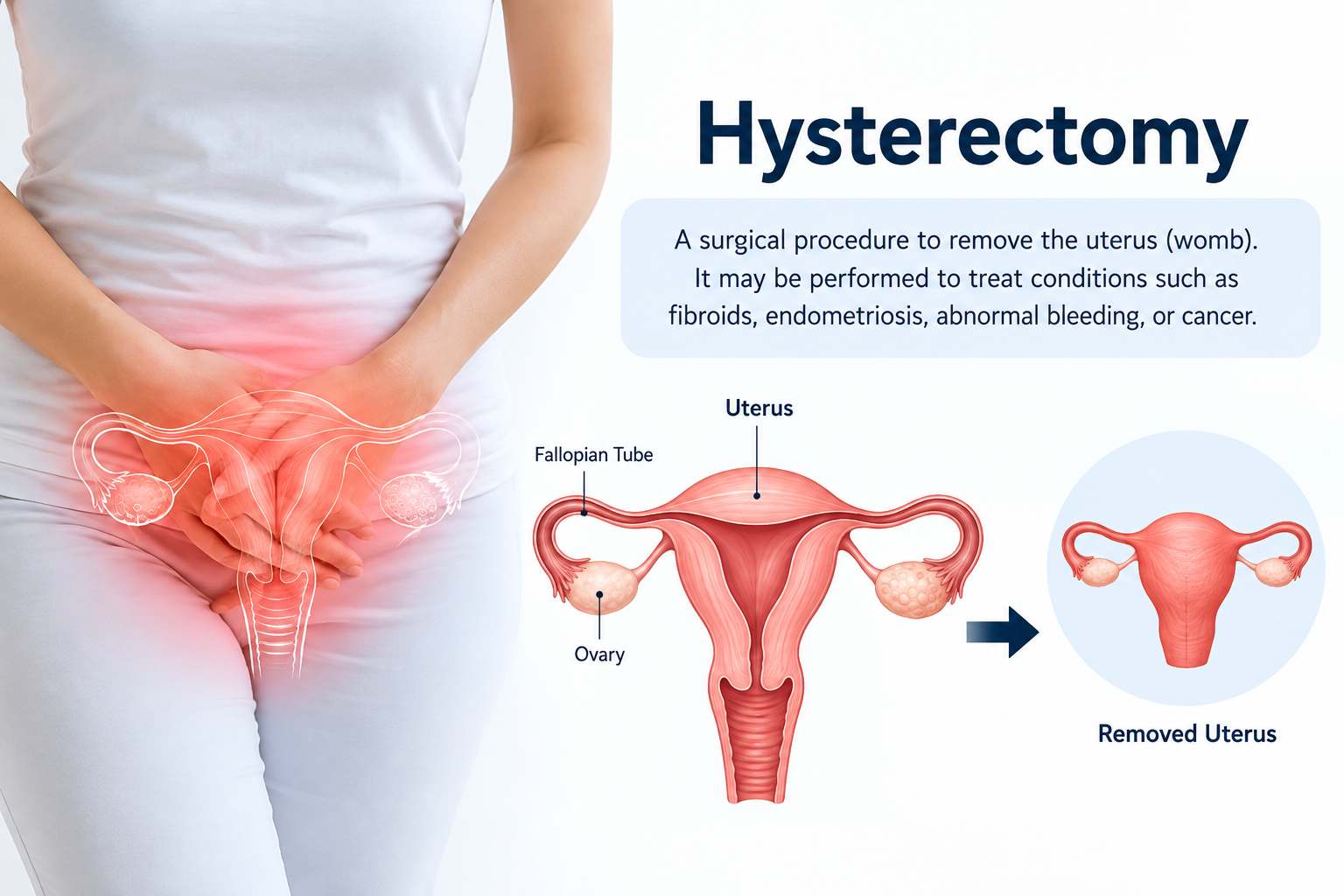
Hysterectomy is a surgical procedure to remove the uterus. It may be recommended for conditions such as fibroids, heavy or persistent bleeding, uterine prolapse, adenomyosis, certain cancers, or other gynecological problems that have not responded adequately to other treatments.

Need help understanding this treatment?

Discuss your questions with
our Mumbai advisory team.

Treatment Information

Understanding Hysterectomy

Different types include:

  1. Total hysterectomy: Removal of the uterus and cervix
  2. Subtotal hysterectomy: Removal of the uterus while retaining the cervix
  3. Radical hysterectomy: Removal of the uterus, cervix, and surrounding tissues, usually for selected cancers

The ovaries and fallopian tubes may or may not be removed depending on the diagnosis and patient's age.

Hysterectomy may be performed through:

  1. Abdominal surgery
  2. Vaginal surgery
  3. Laparoscopic surgery
  4. Robotic-assisted surgery

After hysterectomy, pregnancy is no longer possible and menstrual periods stop.

BEFORE SURGERY

Pre-Care

Patients may be advised to:

  1. Complete pelvic ultrasound or other imaging.
  2. Provide a complete medication list.
  3. Discuss blood-thinning medicines.
  4. Complete blood tests.
  5. Follow fasting instructions.
  6. Arrange help at home after surgery.
AFTER SURGERY

Post-Care

Patients should:

  1. Take prescribed medicines.
  2. Avoid heavy lifting initially.
  3. Keep incisions clean.
  4. Walk gradually.
  5. Avoid intercourse until medically cleared.
  6. Attend follow-up visits.

Seek medical care for heavy bleeding, fever, severe pain, wound discharge, chest pain, or shortness of breath.

Common Questions

Questions patients
often want clarified.

These answers provide general guidance. Your treating specialist should assess your individual condition and medical requirements.

Why is hysterectomy performed?
It may be recommended for fibroids, heavy bleeding, prolapse, adenomyosis, endometriosis, or certain cancers.
Will menopause occur immediately?
Only if both ovaries are removed. If the ovaries remain, natural hormone production can continue.
How long is recovery?
Recovery varies from several weeks depending on the surgical approach.
Can I become pregnant afterward?
No. Pregnancy is not possible after the uterus is removed.
What are the possible risks?
Risks include bleeding, infection, blood clots, bladder or bowel injury, and anaesthesia-related complications.
Doctor discussing surgical treatment with patient
Independent Surgical Guidance

A clearer conversation
can change what comes next.

Understand the questions worth asking before your next consultation.