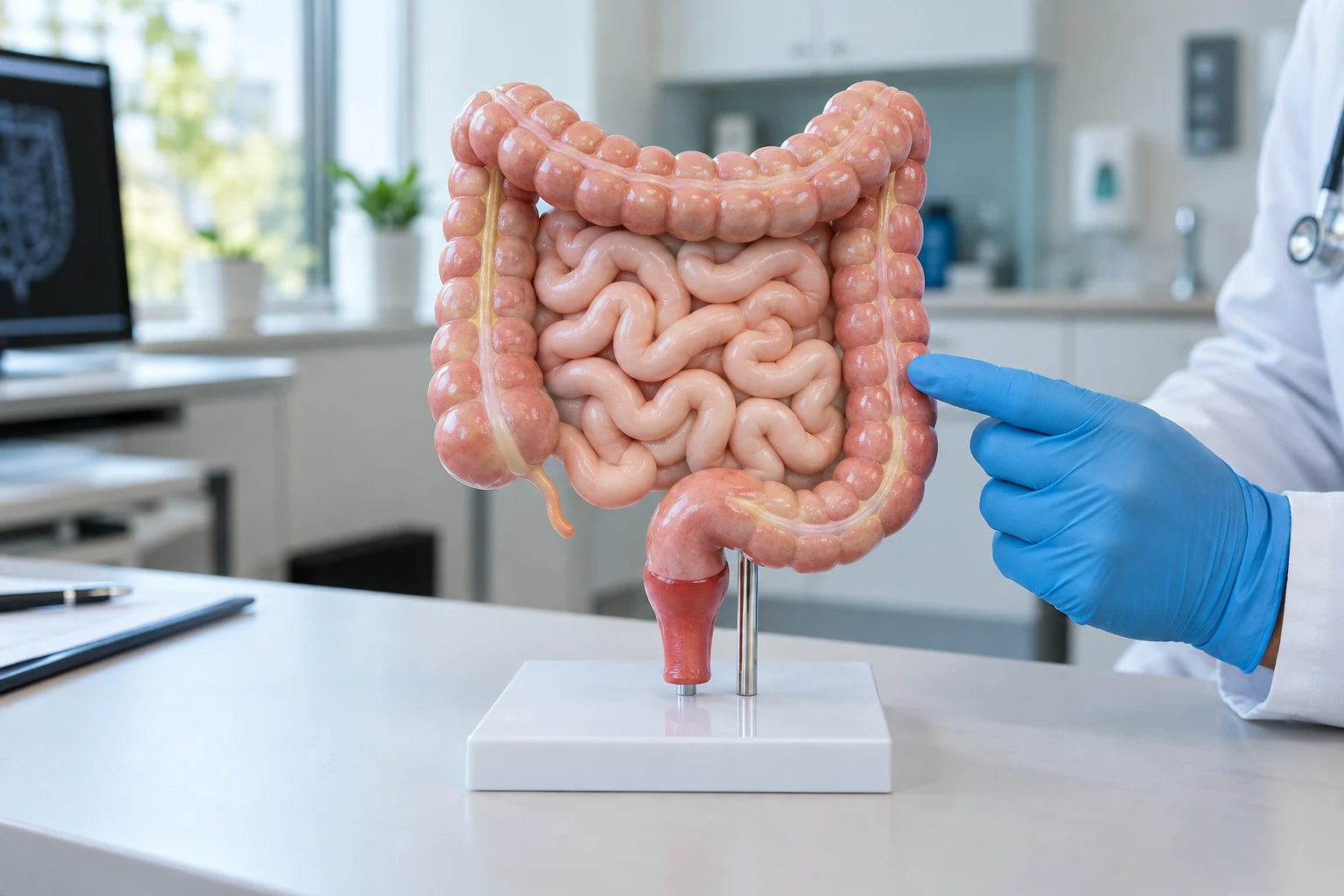
The small intestine is responsible for digesting food and absorbing most nutrients.
The large intestine, which includes the colon and rectum, absorbs water and helps form and store stool before bowel movements.
Conditions affecting these organs may be inflammatory, infectious, structural, functional, autoimmune, or related to abnormal growths.
Common small and large intestine conditions include:
- Irritable bowel syndrome (IBS)
- Inflammatory bowel disease (IBD)
- Crohn’s disease
- Ulcerative colitis
- Chronic constipation
- Chronic diarrhoea
- Intestinal infections
- Diverticular disease
- Diverticulitis
- Celiac disease
- Intestinal obstruction
- Polyps of the colon
- Colorectal cancer
- Gastrointestinal bleeding
- Malabsorption disorders
- Small intestinal bacterial overgrowth (SIBO)
- Functional bowel disorders
Irritable Bowel Syndrome (IBS)
IBS is a functional digestive disorder that can cause:
- Abdominal pain or cramping
- Bloating
- Constipation
- Diarrhoea
- Alternating constipation and diarrhoea
IBS does not usually cause visible damage to the intestine, but symptoms can significantly affect daily life.
Treatment may include dietary changes, medicines, stress management, and lifestyle modification.
Inflammatory Bowel Disease
Inflammatory bowel disease mainly includes:
- Crohn’s disease
- Ulcerative colitis
These conditions cause ongoing inflammation in parts of the digestive tract.
Symptoms may include:
- Persistent diarrhoea
- Abdominal pain
- Blood in stools
- Weight loss
- Fatigue
- Reduced appetite
Treatment may involve medication, nutrition support, monitoring, and surgery in selected cases.
Celiac Disease and Malabsorption
Celiac disease is an immune reaction to gluten that damages the lining of the small intestine.
It may cause:
- Diarrhoea
- Bloating
- Anaemia
- Weight loss
- Nutritional deficiencies
- Fatigue
Diagnosis may involve blood tests and endoscopic biopsy.
Diverticular Disease
Diverticula are small pouches that can develop in the wall of the colon.
When these become inflamed or infected, the condition is called diverticulitis.
Symptoms may include abdominal pain, fever, constipation, or changes in bowel habits.
Colon Polyps and Colorectal Cancer
Polyps are growths that develop on the inner lining of the colon.
Most are non-cancerous, but some types can gradually develop into colorectal cancer.
Colonoscopy allows doctors to detect and often remove polyps before they become more serious.