Independent guidance for confident surgical decisions
Surgical Advisor
Home About Us
Blog Contact Us Get Surgical Guidance
Surgical Advisor Treatment

Interventions

Gastroenterology

Looking for an Interventional Gastroenterology Specialist in Mumbai?

Complex gastrointestinal conditions may require a gastroenterologist with experience in advanced therapeutic and minimally invasive procedures. A medical advisory service can help you connect with experienced interventional gastroenterologists and advanced endoscopy specialists in Mumbai based on your diagnosis, procedure requirements, preferred location, and consultation needs. A specialist assessment can help determine whether endoscopic treatment, ERCP, stent placement, drainage, lesion removal, surgery, or another intervention may be appropriate.

Interventions

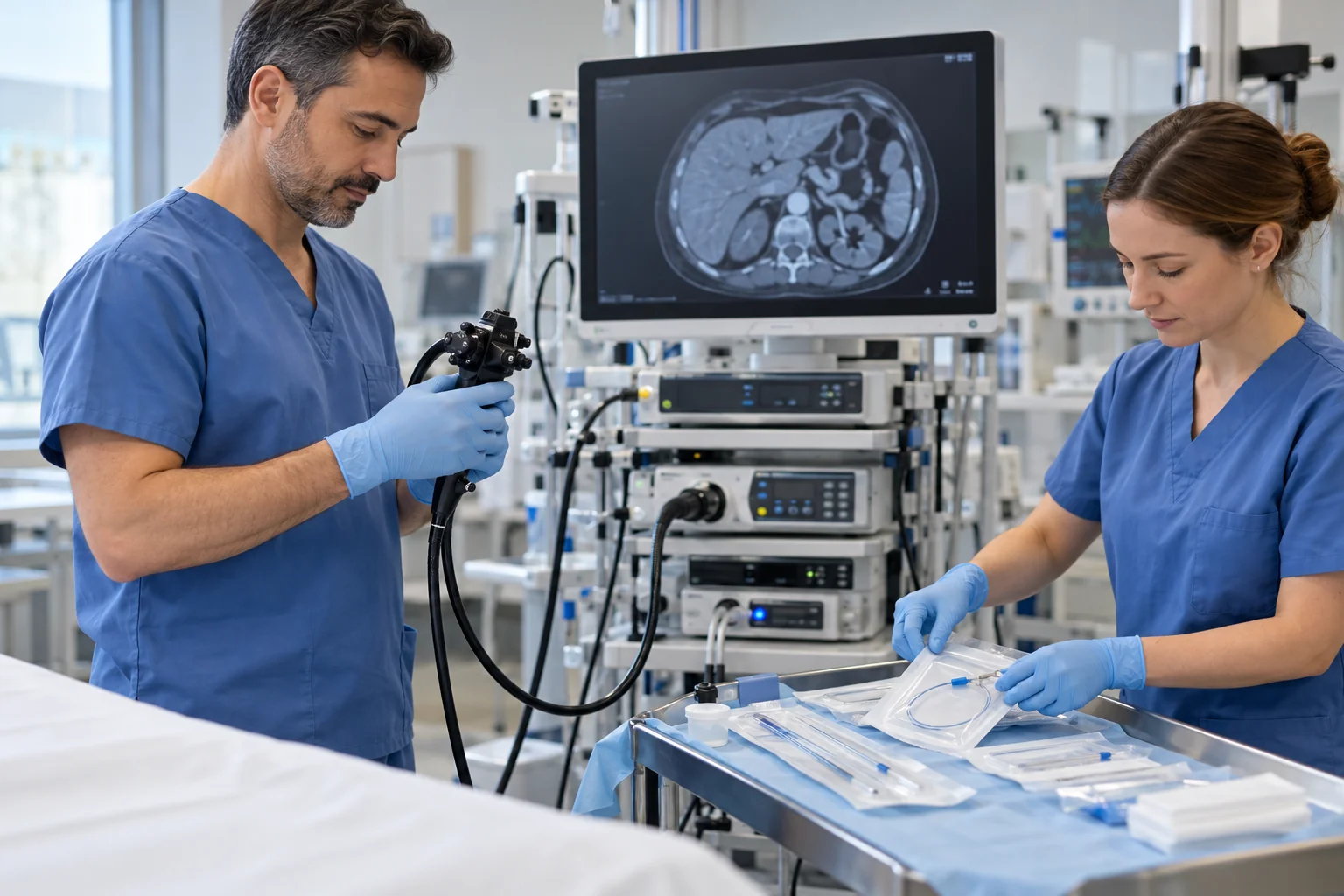
Gastrointestinal interventions are minimally invasive procedures used to diagnose, treat, or manage conditions affecting the digestive system without the need for major open surgery in many cases. These procedures may be performed using endoscopy, image guidance, catheters, stents, drainage techniques, or specialised therapeutic devices.

Interventional gastroenterology can help manage conditions such as gastrointestinal bleeding, bile duct obstruction, strictures, stones, fluid collections, feeding difficulties, and selected digestive tract lesions.

Need help understanding this treatment?

Discuss your questions with
our Mumbai advisory team.

Treatment Information

Understanding Interventions

Modern gastroenterology includes a wide range of procedures that allow doctors to treat digestive conditions through natural body openings or small access points.

These procedures are often used to:

  1. Stop gastrointestinal bleeding
  2. Remove stones
  3. Open narrowed areas
  4. Place stents
  5. Drain fluid collections
  6. Remove selected polyps or lesions
  7. Treat bile duct obstruction
  8. Obtain tissue samples
  9. Support nutrition
  10. Manage certain pancreatic or biliary conditions

The exact intervention depends on the patient's diagnosis, symptoms, imaging findings, and overall health.

Endoscopic Treatment of GI Bleeding

Endoscopy can be used not only to identify bleeding but also to treat it.

Techniques may include:

  1. Injection therapy
  2. Thermal coagulation
  3. Endoscopic clips
  4. Band ligation
  5. Other haemostatic methods

These treatments may be used for bleeding ulcers, varices, vascular lesions, or other causes of gastrointestinal bleeding.

Stricture Dilatation

A stricture is a narrowed area of the digestive tract.

Endoscopic dilatation may be performed using balloons or other devices to widen the narrowed segment.

It may be considered for:

  1. Esophageal narrowing
  2. Certain gastric outlet strictures
  3. Post-surgical narrowing
  4. Selected intestinal strictures

Stent Placement

A stent is a small tube placed inside a narrowed or blocked passage to keep it open.

Stents may be used in the:

  1. Esophagus
  2. Stomach
  3. Bile ducts
  4. Colon
  5. Pancreatic ducts

Stent placement may help relieve obstruction and improve swallowing, drainage, or bowel passage.

ERCP-Based Interventions

ERCP is commonly used for therapeutic procedures involving the bile ducts and pancreatic ducts.

Interventions may include:

  1. Removal of bile duct stones
  2. Placement of biliary stents
  3. Dilatation of strictures
  4. Drainage of obstructed ducts
  5. Tissue sampling
  6. Treatment of selected pancreatic duct problems

Endoscopic Drainage

Endoscopic drainage may be used for certain collections such as:

  1. Pancreatic pseudocysts
  2. Walled-off pancreatic necrosis
  3. Selected abscesses or fluid collections

Endoscopic ultrasound may be used to guide these procedures safely.

Polyp and Lesion Removal

Selected polyps and superficial lesions in the digestive tract can be removed endoscopically.

Techniques may include:

  1. Snare polypectomy
  2. Endoscopic mucosal resection
  3. Endoscopic submucosal dissection in selected cases

Feeding Tube Placement

When patients are unable to eat adequately by mouth for a prolonged period, a feeding tube such as a PEG tube may be placed endoscopically to provide nutrition directly into the stomach.

BEFORE SURGERY

Pre-Care

Patients may be advised to:

  1. Follow fasting instructions carefully.
  2. Inform the medical team about all medicines and supplements.
  3. Discuss aspirin, anticoagulants, and other blood-thinning medicines.
  4. Do not stop prescribed medicines unless specifically instructed.
  5. Inform the doctor about diabetes, heart disease, kidney disease, allergies, or pregnancy.
  6. Bring previous endoscopy, CT, MRI, MRCP, or laboratory reports.
  7. Complete blood tests or imaging if requested.
  8. Arrange transportation home if sedation or anaesthesia is planned.
  9. Understand whether hospital admission may be required.
  10. Follow any bowel preparation instructions if the colon is being treated.
AFTER SURGERY

Post-Care

After an interventional procedure, patients should follow the specific instructions provided by the gastroenterologist.

General recommendations may include:

  1. Rest until the effects of sedation have worn off.
  2. Avoid driving after sedation until medically permitted.
  3. Resume food and fluids according to medical advice.
  4. Take prescribed medicines exactly as directed.
  5. Follow instructions regarding antibiotics if given.
  6. Attend follow-up appointments.
  7. Complete repeat imaging or endoscopy if recommended.
  8. Follow specific stent-care or feeding-tube instructions when applicable.

Mild bloating, throat discomfort, or abdominal soreness may occur after some procedures.

Seek prompt medical attention if you develop severe abdominal or chest pain, persistent vomiting, high fever, vomiting blood, heavy rectal bleeding, black stools, jaundice, difficulty breathing, or marked abdominal swelling after a procedure.

Common Questions

Questions patients
often want clarified.

These answers provide general guidance. Your treating specialist should assess your individual condition and medical requirements.

What is meant by an interventional gastroenterology procedure?
It refers to a procedure that uses endoscopy or other minimally invasive techniques to actively treat a gastrointestinal condition rather than simply diagnose it.
Are these procedures an alternative to surgery?
In some cases, yes. Certain conditions can be managed endoscopically and may avoid or delay major surgery. However, surgery may still be necessary depending on the condition.
Are gastrointestinal interventions painful?
Most procedures are performed with sedation, anaesthesia, or pain control. Mild discomfort, bloating, or soreness may occur afterward depending on the intervention.
How long do these procedures take?
The duration varies widely. Simple procedures may take less than an hour, while complex interventions can take considerably longer.
Will I need to stay in the hospital?
Some procedures are performed as day-care treatments, while others require overnight observation or hospital admission depending on complexity and the patient's health.
What is a GI stent?
A gastrointestinal stent is a small tube placed inside a narrowed or blocked passage to keep it open and improve drainage or passage of food or stool.
Can endoscopy stop internal bleeding?
Yes. Many causes of gastrointestinal bleeding can be treated during endoscopy using clips, injections, heat-based treatment, banding, or other methods.
Are bile duct stones removable without surgery?
Many bile duct stones can be removed using ERCP. However, treatment depends on the stone size, anatomy, and overall clinical situation.
What are the possible risks of interventional procedures?
Risks depend on the procedure and may include bleeding, infection, perforation, pancreatitis, reactions to sedation, stent-related problems, or the need for additional treatment.
Doctor discussing surgical treatment with patient
Independent Surgical Guidance

A clearer conversation
can change what comes next.

Understand the questions worth asking before your next consultation.
