
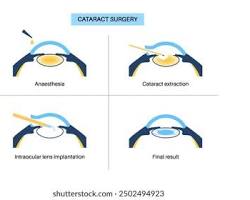
Cataract surgery is a common eye procedure performed to restore clear vision when the natural lens of the eye becomes cloudy due to a cataract. During the surgery, the cloudy lens is removed and replaced with a clear artificial intraocular lens, or IOL. The procedure is generally quick and is usually performed on a day-care basis.
A cataract develops when the natural lens inside the eye gradually becomes cloudy, causing symptoms such as blurred vision, glare, difficulty seeing at night, faded colours, and reduced visual clarity.
Cataract surgery is recommended when these vision problems begin to interfere with everyday activities such as reading, driving, working, or recognising faces.
During the procedure, the ophthalmologist makes a very small incision in the eye and removes the cloudy lens. In many cases, a technique called phacoemulsification is used, where ultrasound energy breaks the cataract into tiny pieces that are gently removed from the eye.
After removing the cataract, a clear artificial lens called an Intraocular Lens (IOL) is implanted in its place. Different types of IOLs may be available depending on the patient's eye condition, lifestyle, vision requirements, and doctor's recommendation.
Cataract surgery is generally performed under local or topical anaesthesia and usually does not require an overnight hospital stay. Most patients can return home on the same day.
Vision often begins to improve within a few days, although complete healing may take several weeks. The exact recovery period can vary depending on the patient's overall eye health and the type of surgery performed.
