
Independent guidance for confident surgical decisions
Surgical Advisor
Home About Us
Blog Contact Us Get Surgical Guidance
Surgical Advisor Treatment

Mastoidectomy

ENT Surgery

Looking for a Mastoid Surgery Specialist in Mumbai?

A medical advisory service can help connect patients with experienced otologists and ear surgeons in Mumbai.

Mastoidectomy

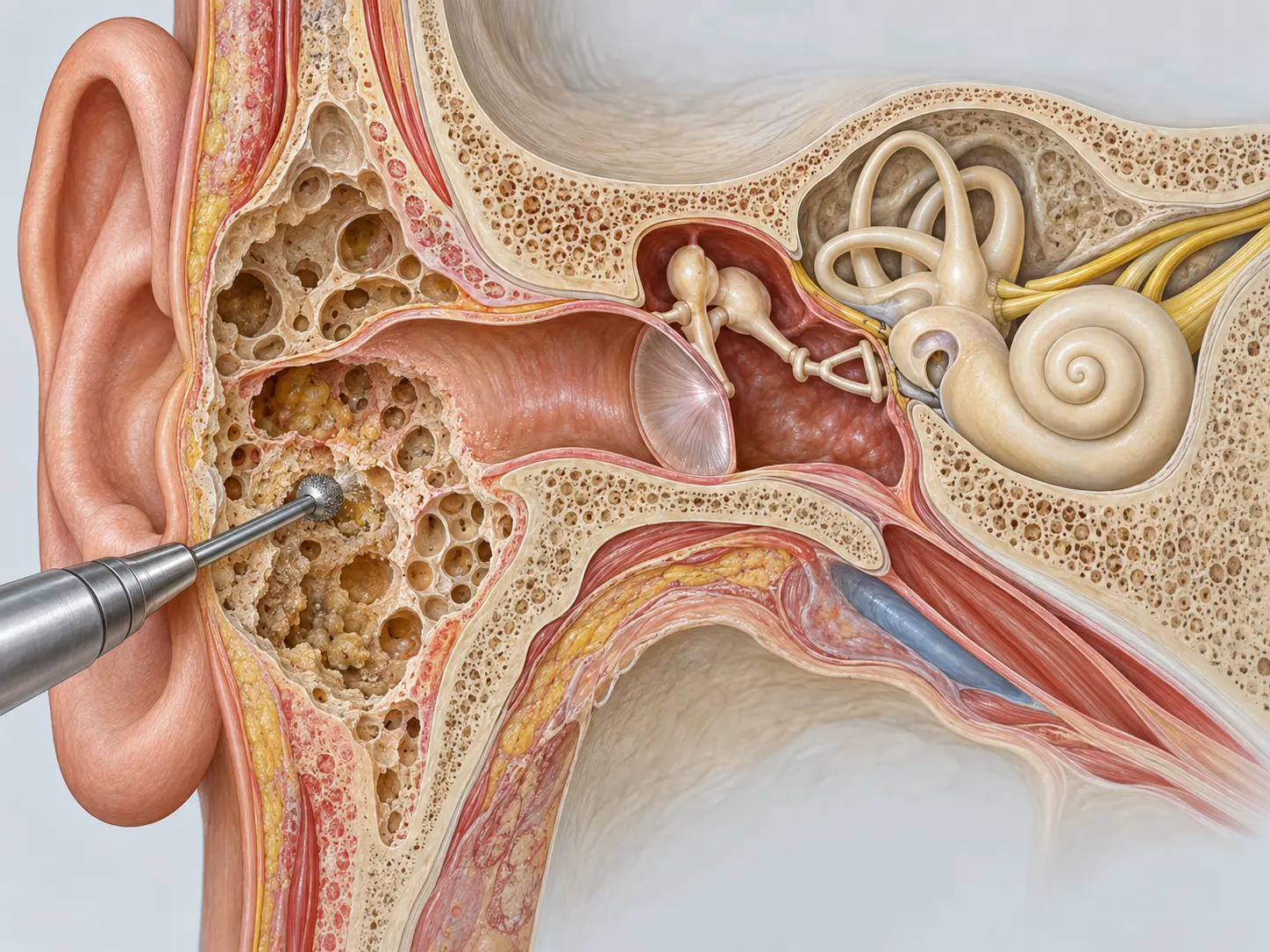
Mastoidectomy is an ear surgery used to remove infected or abnormal tissue from the mastoid bone behind the ear. It is commonly performed for chronic ear disease, cholesteatoma, or complications of persistent middle-ear infection.

Need help understanding this treatment?

Discuss your questions with
our Mumbai advisory team.

Treatment Information

Understanding Mastoidectomy

The mastoid contains air cells connected to the middle ear.

Surgery may be required for:

  1. Cholesteatoma
  2. Chronic mastoid infection
  3. Recurrent ear discharge
  4. Complications involving nearby structures
  5. Persistent disease not controlled with medicines

The exact technique depends on the extent of disease.

BEFORE SURGERY

Pre-Care

Patients may undergo:

  1. CT scan of the temporal bone
  2. Hearing tests
  3. Ear examination
  4. Blood tests
  5. Medication review


AFTER SURGERY

Post-Care

Patients should:

  1. Keep the ear dry.
  2. Avoid strenuous activity initially.
  3. Use prescribed medicines.
  4. Attend regular ear cleaning and follow-up.
  5. Report facial weakness, severe vertigo, fever, or heavy discharge.


Common Questions

Questions patients
often want clarified.

These answers provide general guidance. Your treating specialist should assess your individual condition and medical requirements.

What is a cholesteatoma?
It is an abnormal collection of skin cells in the middle ear or mastoid that can damage surrounding structures.
Is mastoidectomy major surgery?
It is a significant ear operation and requires specialist care.
Can hearing improve afterward?
It may improve, remain unchanged, or worsen depending on existing damage.
Will more surgery ever be needed?
Some patients require staged or revision procedures.
What are the risks?
Possible risks include hearing loss, dizziness, facial nerve injury, infection, tinnitus, and recurrence of disease.
Doctor discussing surgical treatment with patient
Independent Surgical Guidance

A clearer conversation
can change what comes next.

Understand the questions worth asking before your next consultation.